
Evaluate the architectural zenith achieved in Dravidian temple construction during the Imperial Chola period, with special reference to Brihadisvara Temple and Chola bronze sculptures.
Introduction
The Imperial Chola period (850 CE – 1279 CE) represents the golden age of South Indian architecture and art. Under visionary rulers like Raja Raja Chola I and Rajendra Chola I, the Dravidian architectural style transitioned from modest structural temples to colossal monuments of imperial power. This era marked the architectural zenith of temple construction, characterized by towering Vimanas, expansive courtyards, precision engineering, and the unparalleled metallurgical perfection of bronze sculptures.
Key Features of Chola Dravidian Architecture
- Emphasis on the Vimana: Unlike the later Pandya and Vijayanagara periods where the entrance gateways (Gopurams) dominated, Chola architecture focused heavily on the central sanctuary’s tower (Vimana).
- Extensive Mandapas: Introduction of pillared halls (Ardhamandapa, Mahamandapa, and Mukhamandapa) used for religious and administrative assemblies.
- Dravidian Pillars: Pillars became highly decorative, often featuring the Yali (a mythical lion-like creature) at the base.
- Integration of Art and Epigraphy: Temple walls served as public records, covered in detailed Tamil and Sanskrit inscriptions regarding grants, administration, and military conquests.
The Brihadisvara Temple: The Architectural Zenith
Dedicated in 1010 CE by Raja Raja Chola I in Thanjavur, the Brihadisvara Temple (Peruvudaiyar Kovil) is the supreme masterpiece of Chola engineering. It was built entirely of granite, a material notoriously difficult to carve, sourced from quarries over 50 kilometres away.
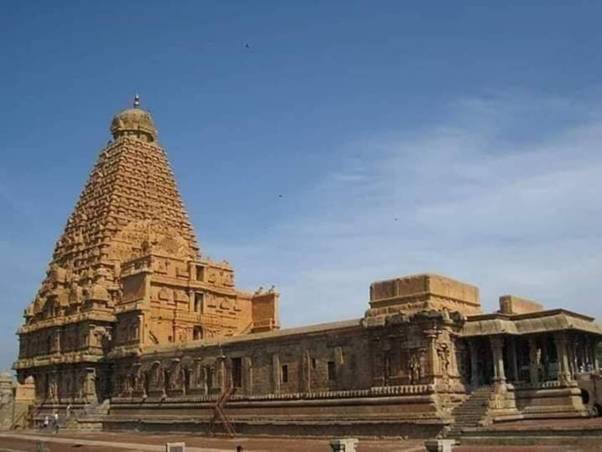
Brihadisvara Temple, Thanjavur. Source: AK Bhai / Getty Images
Architectural Innovations of Brihadisvara:
- The Dakshina Meru (Vimana): The primary tower rises to a staggering height of 216 feet (66 metres) with 13 receding tiers. Unlike most temples, the interior of this massive Vimana is entirely hollow, demonstrating a highly advanced understanding of structural load distribution. It was constructed using an interlocking stone technique without the use of binding mortar.
- The Monolithic Shikhara: The apex of the Vimana is crowned by a massive, octagonal, bulbous dome (Shikhara) estimated to weigh around 80 tonnes. It is believed that a multi-kilometre earthen ramp was constructed to haul this massive block to the top, utilizing elephant power.
- The Monolithic Nandi: The temple courtyard houses one of the largest Nandi (sacred bull) statues in India, carved from a single piece of rock, measuring 16 feet in length and weighing over 25 tonnes.
- Chola Frescoes: The ambulatory passageway around the sanctum contains exquisite Chola frescoes—painted using the true fresco technique over wet limestone plaster—depicting Shaivite mythology.
Chola Bronze Sculptures: The Metallurgical Pinnacle
While stone masonry scaled monumental heights, Chola artisans achieved global acclaim for their metalwork. Chola bronzes are considered some of the finest examples of solid metal casting in the world, created using the indigenous Cire Perdue (lost-wax) technique.

Chola Bronze Nataraja. Source: Heritage Images / Getty Images
Salient Features of Chola Bronzes:
- The Lost-Wax Process: Each sculpture was uniquely cast. A wax model was created, encased in clay, and heated. The melted wax was drained, and molten bronze (an alloy of copper, zinc, lead, and tin) was poured into the cavity, ensuring no two statues were exactly identical.
- Anatomical Perfection & Grace: The figures lacked heavy ornamentation, relying instead on sensuous realism, fluid body proportions, and expressive facial features (Bhava).
- The Nataraja Masterpiece: The most iconic Chola bronze is Shiva as Nataraja (The Lord of Dance), depicting the Ananda Tandava (Dance of Bliss). The iconography is profoundly symbolic:
- Damaru (Drum): Held in the upper right hand, symbolizing the rhythm of creation.
- Agni (Fire): Held in the upper left hand, representing destruction and transformation.
- Abhaya Mudra: The lower right hand gestures reassurance (“fear not”).
- Apasmara: The dwarf demon crushed beneath Shiva’s right foot, symbolizing the suppression of human ignorance and illusion.
- Prabhamandala: The surrounding cosmic ring of fire, representing the cyclical nature of time and the universe.
Conclusion
The Imperial Chola period was not merely an era of temple building; it was an epoch of structural and aesthetic revolution. The Brihadisvara Temple stands as a testament to their mastery over granite, geometry, and colossal scale, while the Chola bronzes highlight a nuanced understanding of metallurgy, anatomy, and spiritual symbolism. Together, these achievements represent an architectural and artistic zenith that continues to define India’s cultural heritage, rightfully earning their place as UNESCO Great Living Chola Temples.
TAMIL VERSION
பிற்காலச் சோழர் காலத்தில் திராவிட கோயில் கட்டடக்கலையில் எட்டப்பட்ட உச்சநிலையை, தஞ்சை பெரிய கோயில் மற்றும் சோழர் கால வெண்கலச் சிற்பங்கள் ஆகியவற்றின் சிறப்புப் பார்வையுடன் மதிப்பிடுக.
அறிமுகம் பேரரசுச் சோழர் காலம் (பொ.ஆ 850 – 1279) தென்னிந்தியக் கட்டடக்கலை மற்றும் கலையின் பொற்காலத்தைக் குறிக்கிறது. முதலாம் ராஜராஜ சோழன் மற்றும் முதலாம் ராஜேந்திர சோழன் போன்ற தொலைநோக்குப் பார்வை கொண்ட ஆட்சியாளர்களின் கீழ், திராவிட கட்டடக்கலைப் பாணியானது எளிமையான கட்டமைப்புப் கோயில்களில் இருந்து ஏகாதிபத்திய அதிகாரத்தின் பிரம்மாண்டமான நினைவுச் சின்னங்களாக மாறியது. மிக உயர்ந்த விமானங்கள், விரிவான முற்றங்கள், துல்லியமான பொறியியல் மற்றும் வெண்கலச் சிற்பங்களின் இணையற்ற உலோகவியல் பரிபூரணம் ஆகியவற்றைக் கொண்டு விளங்கும் இக்காலம் கோயில் கட்டுமானத்தின் கட்டடக்கலை உச்சநிலையைக் குறித்தது.
சோழர் கால திராவிட கட்டடக்கலையின் முக்கிய சிறப்பம்சங்கள்
- விமானத்திற்கு முக்கியத்துவம்: நுழைவாயில்கள் (கோபுரங்கள்) ஆதிக்கம் செலுத்திய பிற்கால பாண்டிய மற்றும் விஜயநகர காலங்களைப் போலன்றி, சோழர் கால கட்டடக்கலையானது மையக் கருவறையின் கோபுரத்தின் (விமானம்) மீது அதிக கவனம் செலுத்தியது.
- விரிவான மண்டபங்கள்: மத மற்றும் நிர்வாக சபைகளுக்காகப் பயன்படுத்தப்பட்ட தூண்களைக் கொண்ட மண்டபங்கள் (அர்த்தமண்டபம், மகாமண்டபம் மற்றும் முகமண்டபம்) அறிமுகப்படுத்தப்பட்டன.
- திராவிடத் தூண்கள்: தூண்கள் மிகவும் அலங்காரமாக மாறின, பெரும்பாலும் அவற்றின் அடிப்பகுதியில் யாளி (சிங்கம் போன்ற புராண உயிரினம்) உருவம் இடம்பெற்றது.
- கலை மற்றும் கல்வெட்டுகளின் ஒருங்கிணைப்பு: கோயில் சுவர்கள் பொது ஆவணங்களாகச் செயல்பட்டன, அவை மானியங்கள், நிர்வாகம் மற்றும் இராணுவ வெற்றிகள் தொடர்பான விரிவான தமிழ் மற்றும் சமஸ்கிருத கல்வெட்டுகளால் நிரப்பப்பட்டிருந்தன.
பிரகதீஸ்வரர் கோயில்: கட்டடக்கலையின் உச்சம் பொ.ஆ 1010 இல் தஞ்சாவூரில் முதலாம் ராஜராஜ சோழனால் அர்ப்பணிக்கப்பட்ட பிரகதீஸ்வரர் கோயில் (பெருவுடையார் கோயில்) சோழர் கால பொறியியலின் மிகச்சிறந்த படைப்பாகும். இது முற்றிலும் செதுக்குவதற்கு மிகவும் கடினமான பொருளாக அறியப்படும் கருங்கற்களால் கட்டப்பட்டது, இக்கற்கள் 50 கிலோமீட்டருக்கும் அப்பால் உள்ள கல் குவாரிகளில் இருந்து கொண்டுவரப்பட்டன.
பிரகதீஸ்வரர் கோயில், தஞ்சாவூர். ஆதாரம்: AK Bhai / Getty Images
பிரகதீஸ்வரர் கோயிலின் கட்டடக்கலைப் புதுமைகள்:
- தட்சிண மேரு (விமானம்): இதன் முதன்மைக் கோபுரம் 13 அடுக்குகளுடன் சுமார் 216 அடி (66 மீட்டர்) என்ற பிரம்மாண்டமான உயரத்திற்கு உயர்ந்து நிற்கிறது. பெரும்பாலான கோயில்களைப் போலன்றி, இந்த பிரம்மாண்டமான விமானத்தின் உட்புறம் முற்றிலும் வெற்றிடமாக உள்ளது, இது கட்டமைப்பு சுமைப் பகிர்வு குறித்த மிகவும் மேம்பட்ட புரிதலை வெளிப்படுத்துகிறது. எந்தவொரு சாந்தும் பயன்படுத்தப்படாமல், கற்களை ஒன்றோடொன்று இணைக்கும் நுட்பத்தைப் பயன்படுத்தி இது கட்டப்பட்டது.
- ஒற்றைக்கல் சிகரம்: விமானத்தின் உச்சியானது சுமார் 80 டன் எடையுள்ளதாகக் கருதப்படும் பிரம்மாண்டமான, எண்கோண வடிவ, குமிழ் போன்ற குவிமாடத்தால் (சிகரம்) அலங்கரிக்கப்பட்டுள்ளது. யானை பலத்தைப் பயன்படுத்தி இந்த பிரம்மாண்டமான கல்லை உச்சிக்குக் கொண்டு செல்ல பல கிலோமீட்டர் நீளமுள்ள மண் சாய்வுப் பாதை அமைக்கப்பட்டு, அதன் வழியாக கொண்டு செல்லப்பட்டதாக நம்பப்படுகிறது.
- ஒற்றைக்கல் நந்தி: கோயிலின் முற்றத்தில் இந்தியாவில் உள்ள மிகப்பெரிய நந்தி (புனிதக் காளை) சிலைகளில் ஒன்று உள்ளது, இது 16 அடி நீளமும் 25 டன்களுக்கும் அதிகமான எடையும் கொண்டு ஒரே பாறையில் செதுக்கப்பட்டுள்ளது.
- சோழர் கால ஓவியங்கள் (Frescoes): கருவறையைச் சுற்றியுள்ள திருச்சுற்றுப் பாதையில் மிகச்சிறந்த சோழர் கால ஓவியங்கள் உள்ளன—ஈரமான சுண்ணாம்புச் சாந்தின் மீது ‘ட்ரூ ஃப்ரெஸ்கோ’ (true fresco) நுட்பத்தைப் பயன்படுத்தி வரையப்பட்ட இவை—சைவப் புராணங்களைச் சித்தரிக்கின்றன.
சோழர் கால வெண்கலச் சிற்பங்கள்: உலோகவியலின் உச்சம் கல் கட்டுமானக் கலை பிரம்மாண்டமான உயரங்களை எட்டிய அதே வேளையில், சோழர் கால கைவினைஞர்கள் தங்களின் உலோக வேலைப்பாடுகளுக்காக உலகளாவியப் புகழைப் பெற்றனர். சோழர் கால வெண்கலச் சிற்பங்கள் உலகில் திட உலோக வார்ப்பிற்கான மிகச்சிறந்த எடுத்துக்காட்டுகளாகக் கருதப்படுகின்றன, அவை ‘சிரே பெர்ட்யூ’ (Cire Perdue) எனப்படும் உள்நாட்டு மெழுகு-அழிப்பு நுட்பத்தைப் (lost-wax technique) பயன்படுத்தி உருவாக்கப்பட்டன.
சோழர் கால வெண்கல நடராஜர். ஆதாரம்: Heritage Images / Getty Images
சோழர் கால வெண்கலச் சிற்பங்களின் முக்கிய அம்சங்கள்:
- மெழுகு-அழிப்பு முறை: ஒவ்வொரு சிற்பமும் தனித்துவமாக வார்க்கப்பட்டது. ஒரு மெழுகு மாதிரி உருவாக்கப்பட்டு, களிமண்ணால் மூடப்பட்டு சூடுபடுத்தப்படும். உருகிய மெழுகு வெளியேற்றப்பட்டு, உருகிய வெண்கலம் (தாமிரம், துத்தநாகம், ஈயம் மற்றும் தகரம் ஆகியவற்றின் கலவை) அந்த வெற்றிடத்திற்குள் ஊற்றப்பட்டது, இதன் மூலம் எந்த இரண்டு சிலைகளும் முற்றிலும் ஒரே மாதிரியாக இல்லை என்பது உறுதி செய்யப்பட்டது.
- உடற்கூறியல் பரிபூரணம் மற்றும் நளினம்: உருவங்களில் அதிகப்படியான ஆபரணங்கள் தவிர்க்கப்பட்டன, அதற்குப் பதிலாக உணர்வுபூர்வமான யதார்த்தம், சீரான உடல் விகிதாச்சாரங்கள் மற்றும் வெளிப்படையான முகபாவனைகள் (பாவம்) ஆகியவையே முதன்மைப்படுத்தப்பட்டன.
- நடராஜர் என்ற தலைசிறந்த படைப்பு: சோழர் கால வெண்கலச் சிற்பங்களில் மிகவும் அடையாளமாகத் திகழ்வது, ‘ஆனந்த தாண்டவத்தை’ சித்தரிக்கும் நடராஜராக (நடனத்தின் இறைவன்) சிவபெருமான் இருக்கும் சிலையாகும். இதன் உருவவியல் ஆழமான குறியீட்டுத் தன்மை கொண்டது:
- உடுக்கை (Damaru): மேலிருக்கும் வலது கையில் பிடிக்கப்பட்டுள்ளது, இது படைப்பின் தாளத்தைக் குறிக்கிறது.
- நெருப்பு (Agni): மேலிருக்கும் இடது கையில் பிடிக்கப்பட்டுள்ளது, இது அழிவு மற்றும் மாற்றத்தைக் குறிக்கிறது.
- அபய முத்திரை (Abhaya Mudra): கீழிருக்கும் வலது கை “அஞ்சாதே” என்ற உறுதியளிக்கும் சைகையைக் காட்டுகிறது.
- முயலகன் (Apasmara): சிவனின் வலது பாதத்தின் கீழ் மிதிக்கப்படும் குள்ள அரக்கன், மனிதனின் அறியாமை மற்றும் மாயை அடக்கப்படுவதைக் குறிக்கிறான்.
- பிரபாமண்டலம் (Prabhamandala): சுற்றியுள்ள நெருப்பு வளையம், காலம் மற்றும் பிரபஞ்சத்தின் சுழற்சித் தன்மையைக் குறிக்கிறது.
முடிவுரை பேரரசுச் சோழர் காலம் என்பது வெறுமனே கோயில் கட்டும் சகாப்தம் மட்டுமல்ல; அது கட்டமைப்பு மற்றும் அழகியல் புரட்சியின் காலகட்டமாகும். பிரகதீஸ்வரர் கோயில் கருங்கல் பயன்பாடு, வடிவியல் மற்றும் பிரம்மாண்டம் ஆகியவற்றில் அவர்கள் பெற்றிருந்த தேர்ச்சிக்கு ஒரு சான்றாக நிற்கிறது, அதே வேளையில் சோழர் கால வெண்கலச் சிற்பங்கள் உலோகவியல், உடற்கூறியல் மற்றும் ஆன்மீகக் குறியீடுகள் குறித்த நுட்பமான புரிதலை எடுத்துக்காட்டுகின்றன. ஒட்டுமொத்தமாக, இந்தச் சாதனைகள் இந்தியாவின் கலாச்சார பாரம்பரியத்தை தொடர்ந்து வரையறுக்கும் ஒரு கட்டடக்கலை மற்றும் கலைசார்ந்த உச்சத்தைக் குறிக்கின்றன, மேலும் அவை யுனெஸ்கோவின் (UNESCO) ‘அழியாச் சோழர் பெருங்கோயில்கள்’ என்ற இடத்தை நியாயமாகவே பெற்றுள்ளன.
