
Topic 1: Akvan Effect on Tamil Nadu: Heavy-Rain Alerts for Chennai and Northern Districts
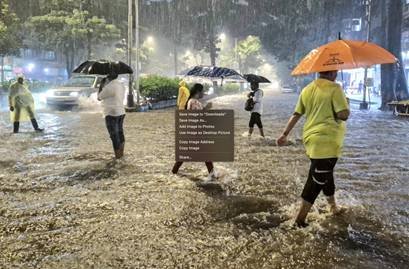
Representative image: heavy monsoon rain (photo: DD News); not of the current weather system.
Subject: Geography and Disaster Management (TN) – Cyclones and Rainfall Warnings
Syllabus
TNPSC Group I/II Mains – Geography of Tamil Nadu: monsoon systems, cyclones and disaster preparedness; current events of state importance.
Context
The Regional Meteorological Centre, Chennai, said on 16 November 2026 that the deep depression over the south-east and adjoining south-west Bay of Bengal would intensify into Cyclone Akvan by evening, and issued heavy-rain and wind warnings for north coastal Tamil Nadu, Puducherry and Karaikal for 17 and 18 November.
Main Body: Multi-Dimensional Analysis
1. System track: The deep depression, centred about 700 km east-southeast of Chennai at 8:30 a.m. on 16 November, was moving north-northwestwards; it was expected to become a cyclonic storm by 16 November evening and a severe cyclonic storm over the west-central Bay by 17 November evening.
2. Rain forecast for 17 November: Chennai, Tiruvallur and Chengalpattu districts are likely to get heavy rain at one or two places with thunder, lightning and gusty winds of 40-50 kmph; other north coastal districts, Puducherry and Karaikal may get moderate rain.
3. Rain forecast for 18 November: Heavy to very heavy rain is likely at one or two places over Chennai, Tiruvallur and Chengalpattu; heavy rain is likely over Kanchipuram, Ranipet, Tiruvannamalai, Villupuram and Mayiladuthurai, and over Puducherry, all with thunder and 40-50 kmph gusts.
4. Sea and wind warnings: Squally winds of 40-50 kmph, gusting to 60 kmph, are forecast along the north Tamil Nadu coast on 16 November, rising to 50-60 kmph gusting to 70 kmph on 17 November; fishermen were advised not to venture into these areas on those days.
5. Chennai city forecast: The sky will remain generally cloudy with light to moderate rain in some areas; maximum temperature around 30-31 degrees Celsius and minimum around 24-25 degrees Celsius.
6. Upper-air support systems: The RMC noted a trough running from the deep-depression region to the northern Maldives across the south-east and adjoining south-west Bay of Bengal at about 1.5 km above mean sea level, and a cyclonic circulation over the south-east Arabian Sea off the Kerala coast at about 3.1 km; together these sustain the moisture feed into the Bay system.
7. Regional spread on 18 November: Beyond the Chennai-Tiruvallur-Chengalpattu core, Cuddalore and the remaining north coastal belt and Karaikal are forecast moderate rain with thunder and 40-50 kmph gusts on 18 November, with light rain at a few places over south Tamil Nadu and generally dry weather elsewhere.
8. System history: The system began as a depression over the south-east Bay, concentrated into a deep depression over the south-east and adjoining south-west Bay in the early hours of 16 November, and moved north-northwestwards at about 6 kmph before the forecast evening upgrade into Cyclone Akvan.
9. The warning chain: The forecast originates with the IMD’s national bulletin on the system and is localised by RMC Chennai into district-wise rain, wind and sea-condition advisories, including the fishermen warning for 16 and 17 November.
10. Why the north coast is in focus: With the system tracking north-northwest towards the Andhra coast, Tamil Nadu’s north coastal districts lie on its southern rain flank, which is why the heaviest warned falls concentrate around Chennai, Tiruvallur and Chengalpattu rather than the southern districts.
11. What heavy to very heavy means: In IMD usage, heavy rain is 64.5 to 115.5 mm in 24 hours and very heavy is 115.6 to 204.4 mm, so the 18 November warning for the Chennai belt carries a defined rainfall range, not a loose phrase.
Positives, Negatives, & Government Schemes
| Category | Dimension / initiative | Explanation |
| Positive | Early, district-specific warnings | Chennai RMC named districts and dates two days ahead, giving civic bodies time to prepare. |
| Positive | Fishermen advisory with dates | Sea-condition warnings are tied to specific days (16 and 17 November), making compliance actionable. |
| Negative | Outer-band rain far from landfall | Tamil Nadu faces rain hazards although landfall is projected in Andhra Pradesh, which can breed complacency. |
| Scheme | State disaster response machinery | SDRF teams, district control rooms and fisherfolk communication networks activated under standard cyclone protocol. |
| Negative | Recurring disruption for fishermen | The stay-ashore advisory for 16 and 17 November comes close on the heels of the Arnab and Murasu alerts, squeezing livelihoods further in the Karteeka Masam period. |
| Government scheme | Impact-based district warnings | RMC Chennai issues date-specific, district-level heavy-rain forecasts with expected wind speeds, letting civic agencies pre-position pumps and response teams. |
| Positive | Enforceable advisory window | A clear date-bound fishermen advisory (no venturing on 16 and 17 November) is easier to communicate, comply with and enforce than an open-ended warning. |
| Positive | Sea-condition specificity | Forecast wind ranges for the coast (40-50 kmph gusting to 60, then 50-70) give fishing harbours and the coastal police clear enforcement thresholds. |
Examples
1. The IMD’s naming-stage forecast: the system becomes Akvan only at cyclonic-storm strength, showing how warning language escalates with intensity.
2. The 18 November alert placing Kanchipuram and Ranipet in the heavy-rain belt, showing the rain corridor extending inland beyond coastal districts.
3. Cyclones Arnab and Murasu crossed the Andhra coast earlier this month; Akvan is the season’s third named storm, testing back-to-back preparedness across the region’s coastal districts.
4. Chennai’s civic body routinely responds to such forecasts by desilting storm-water drains and stationing motor pumps at known flood-prone localities before heavy-rain windows.
5. The north-east monsoon, active from October to December, brings Tamil Nadu much of its annual rainfall, which is why late-season Bay systems matter more to the State than to most of India.
6. RMC Chennai issues its district warnings and Nowcast products in both English and Tamil, widening their reach among local officials and residents.
Way Forward
1. Track Chennai RMC updates on 17 and 18 November against realised rainfall in the warned districts.
2. Watch fishermen advisories and port warnings along the north Tamil Nadu coast.
3. Note civic preparedness in Chennai, Tiruvallur and Chengalpattu – pumps, shelters and control rooms.
4. Follow the system’s landfall between Nellore and Tuni on 20 November for residual rain over the state.
5. Keep the district-wise warning map updated in the state emergency operations centre as the track firms up, so advisories can be narrowed or extended without delay.
Conclusion
Akvan’s rain shield, not its landfall, is Tamil Nadu’s stake: precise, dated, district-level warnings are the state’s first line of defence, and their verification against realised rainfall is the measure of forecast value. With two storms already gone by this month, Akvan is as much a test of administrative stamina as of forecasting accuracy. Preparedness now is mostly about execution of a familiar drill.
Practice Mains Question
Discuss the role of impact-based, district-level forecasting in managing cyclone-related rainfall hazards in Tamil Nadu, with reference to the November 2026 warnings for Cyclone Akvan.
Topic 2: High Court Seeks a White Paper on Twenty Years of Library Book Procurement
File image: a Ministry of Education library programme event (photo: DD News); not connected to any library involved in the case.
Subject: Polity and Governance (TN) – Judiciary, Accountability and Public Libraries
Syllabus
TNPSC Group I/II Mains – governance in Tamil Nadu: judicial oversight of administration, public procurement, library and education services; current events of state importance.
Context
The Madurai Bench of the Madras High Court, hearing a contempt petition on 16 November 2026 over non-compliance with a 2024 order concerning the procurement of books for public libraries, said it would be in order if the Tamil Nadu government submitted a White Paper on the books procured for libraries during the last twenty years. The court observed that the alleged irregularities had shaken the conscience of the people and that faith in the system must be restored.
Main Body: Multi-Dimensional Analysis
1. The direction: A Division Bench of Justices G.R. Swaminathan and M.D. Sumathi said the government would do well to undertake a detailed probe and come out with a statement by the next hearing date explaining how the procurement of books for public libraries has taken place over the last twenty years and more. The suggestion of a White Paper places the onus on the executive to compile and publish a complete official account rather than respond piecemeal to individual allegations, and it converts the contempt proceeding into a wider accountability exercise covering two decades of purchases across the state’s library network.
2. The library cess question: The court took judicial notice of the fact that library cess is levied and collected, and directed that the affidavit to be filed by the authorities devote a paragraph to whether the cess amount so collected has been duly credited and how the amount has been spent so far. This is significant because the library cess, collected through local bodies under the public libraries framework, is the dedicated revenue stream for library services, and its accounting has rarely been subjected to public scrutiny at this level.
3. The investigation track: The bench observed that bogus publishers had already been identified, at least some of them, and that unless they were custodially interrogated it would never be known how much money was paid to which public servant. The judges noted that, unlike earlier procurement scandals, the present case rose not only in scale but also in the manner of commission, observing that for the first time artificial intelligence and digital processes had been subverted for sinister ends, while leaving the investigative steps to the police.
4. The enforcement response: Advocate General Vijay Narayan informed the court that five officials had been suspended in connection with the irregularities and assured that those involved would be dealt with, adding that any suggestion from the court on streamlining future procurement would be considered. The State Public Prosecutor submitted that, pursuant to a departmental inquiry and the court’s direction, the Directorate of Vigilance and Anti-Corruption, Chennai City, had registered a first information report for offences under the Bharatiya Nyaya Sanhita, 2023 and the Prevention of Corruption Act, 1988, naming the proprietor of Agal Vilakku among the accused.
5. The library legacy: The bench grounded its concern in Tamil Nadu’s library tradition, recalling that Periyar E.V. Ramaswamy and C.N. Annadurai had impressed upon society the importance of libraries and general reading. Tamil Nadu’s public library system, built on the Madras Public Libraries Act of 1948, is among the oldest statutory library networks in India, and the court’s remarks treat the integrity of that network as a matter of public trust rather than routine administration.
6. The procedural posture: The bench was hearing a contempt petition filed by an advocate from Tirunelveli district complaining of non-compliance with an order passed in 2024 in the same matter. Contempt jurisdiction allows the High Court, as a court of record under Article 215 of the Constitution, to enforce its own directions; running the case as a continuing mandamus-style proceeding means the court retains supervision until the procurement reforms and disclosures it has ordered are actually carried out, rather than treating each hearing as a closed episode.
Positives, Negatives, & Government Schemes
| Category | Dimension / initiative | Explanation |
| Scheme | Library cess | A dedicated cess collected through local bodies funds the public library system; the court now requires its crediting and utilisation to be placed on record. |
| Positive | Continuing judicial oversight | Hearing the matter as a contempt petition lets the bench monitor compliance with its earlier 2024 directions instead of starting afresh. |
| Negative | Procurement integrity | The alleged use of bogus publishers, with digital processes subverted, points to systemic weaknesses in how library stock is purchased statewide. |
| Positive | White Paper as an instrument | A White Paper compels a single, consolidated official account of twenty years of procurement, aiding legislative and public scrutiny. |
Examples
1. The matter was posted for further hearing on 20 November, when the State’s response to the court’s queries on procurement and cess utilisation is expected.
2. Suggestions on streamlining future procurement were placed before the bench by Badrinarayanan Seshadri of Kizhakku Pathippagam and two others, indicating stakeholder participation in the reform discussion.
3. The Directorate of Vigilance and Anti-Corruption is the state’s specialised anti-corruption agency, and its Chennai City unit registering the FIR brings the procurement allegations into the criminal process alongside the departmental suspensions.
Way Forward
1. Watch the State’s affidavit at the 20 November hearing, particularly the paragraph on library cess crediting and spending.
2. Track the Directorate of Vigilance and Anti-Corruption investigation and any custodial interrogation of the identified bogus publishers.
3. Note whether the government issues the White Paper or an equivalent detailed statement, and its coverage period.
4. Follow any revision of library book procurement norms, empanelment of publishers and verification procedures announced in response.
5. Follow the departmental inquiry outcomes for the five suspended officials and any recovery proceedings.
Conclusion
The White Paper suggestion converts a procurement scandal into an accountability exercise. Tamil Nadu’s library network is a statutory public service with its own dedicated cess, and the court’s direction makes clear that restoring faith in it requires a transparent account of two decades of purchases and the money that funded them, not only the prosecution of a few accused.
Practice Mains Question
Discuss the role of judicial oversight and instruments such as White Papers in restoring integrity to public procurement, with reference to the Madras High Court’s 2026 directions on library book purchases in Tamil Nadu.
Topic 3: Tamil Nadu Withdraws 600 Protest Cases Against 92,000 Farmers and Teachers
File image: the Tamil Nadu Legislative Assembly in session (photo: DD News).
Subject: Polity and Governance (TN) – Protest Rights and Executive Clemency
Syllabus
TNPSC Group I/II Mains – governance in Tamil Nadu: welfare measures, civil liberties; current events of state importance.
Context
The Tamil Nadu government issued orders on 16 November 2026 withdrawing 600 cases filed against about 92,000 farmers and teachers for organising protests between May 2021 and April 2026, following Chief Minister C. Joseph Vijay’s suo motu announcement in the Assembly on 2 September 2026.
Main Body: Multi-Dimensional Analysis
1. The orders: After examining the cases, the government decided to withdraw a total of 600 cases filed against 92,000 farmers and teachers, an official release said on 16 November.
2. The announcement: The withdrawal implements the Chief Minister’s suo motu statement in the Assembly on 2 September 2026, converting a floor commitment into executive action about ten weeks later.
3. The period covered: Cases registered between May 2021 and April 2026 – spanning the previous DMK administration and the first months of the TVK government – are within scope.
4. The legal route: Withdrawal from prosecution requires court sanction under Section 321 CrPC (Section 360 BNSS); the government orders initiate that process before the concerned courts.
5. The legal route: Withdrawal of prosecution is moved by the public prosecutor under Section 321 of the CrPC (Section 360 of the BNSS) and takes effect only with the court’s consent, so the government order begins a judicial process rather than closing the cases by itself.
6. The scale: After examining cases filed between May 2021 and April 2026, the government decided to withdraw 600 cases covering about 92,000 farmers and teachers, an official release said on 16 November.
7. The trigger: The orders follow Chief Minister Vijay’s suo motu announcement in the Assembly on 2 September 2026, converting a floor-of-the-House promise into administrative action about ten weeks later.
8. The character of the cases: The covered cases arise from protests organised to press demands; governments conventionally distinguish such agitational cases from those involving violence or grave offences when ordering withdrawals.
9. Who benefits: The beneficiaries are farmers and teachers who faced cases for organising protests between May 2021 and April 2026, a window spanning the end of the AIADMK government and most of the DMK government that followed.
10. Why governments withdraw such cases: Protest prosecutions clog courts and sour relations with large organised groups; withdrawal is a low-cost reconciliation tool, though it needs judicial consent in each case.
11. The examination stage: Between the announcement and the orders, departments examined each case for eligibility, which explains the roughly ten-week gap between 2 September and 16 November.
12. Constitutional footing: The power traces to executive authority over prosecution policy, but the consent requirement keeps it from becoming an unchecked political instrument, a balance courts have underlined in rulings on withdrawal of prosecution.
13. Court consent in practice: When the public prosecutor moves for withdrawal, courts examine whether it serves the ends of justice; consent is not automatic, and judges may refuse where the offences are grave.
Positives, Negatives, & Government Schemes
| Category | Dimension / initiative | Explanation |
| Positive | Relief at scale | Ninety-two thousand citizens exit the criminal process in one decision. |
| Positive | Announcement-to-order closure | The gap between the September announcement and November orders shows administrative follow-through. |
| Negative | Ad hoc clemency | Case-by-case protest criminalisation continues unless police practice itself changes. |
| Scheme | Withdrawal under Section 321 CrPC | Public prosecutors move courts for withdrawal; judicial consent completes the process. |
| Positive | A restorative signal | Withdrawing protest cases clears pending criminal proceedings that arose from demonstrations and lowers friction between the state and its own workforce and farm community. |
| Negative | Perception of selective relief | The May 2021 to April 2026 window will be scanned for inclusions and exclusions, and groups left outside it may demand parity. |
| Government scheme | Suo motu executive relief | Announcing relief suo motu in the Assembly, as on 2 September, publicly commits the government and sets departments a deadline to identify and process eligible cases. |
| Negative | Records need follow-through | Withdrawal ends prosecution, but those arrested may still need certified closure orders to clear records for employment and passport purposes. |
Examples
1. The May 2021-April 2026 window deliberately covering protests under two successive governments.
2. The suo motu format: the announcement came from the Chief Minister’s own initiative on the Assembly floor, not from a petition or agitation.
3. Successive Tamil Nadu governments have withdrawn protest cases after assuming office, treating it as a standard post-election reconciliation measure.
4. The suo motu Assembly announcement route, used here on 2 September, lets a chief minister pre-empt a debate and set the terms of the concession.
5. Teachers’ cases in the State have often arisen from protests over pay, regularisation and transfer rules; farmers’ cases from agitations on water, crop prices and land acquisition.
6. The 92,000 figure averages to about 150 named accused per case, reflecting how protest prosecutions typically array large groups.
7. Past withdrawal windows in the State have covered highway and rail blockade cases from water-sharing agitations.
8. Section 321 of the CrPC has continued into the BNSS as Section 360 with the same consent framework, keeping the legal route unchanged across the code change.
Way Forward
1. Watch court disposal of the withdrawal applications across districts.
2. Track whether similar relief extends to other protest categories.
3. Note police guidelines on registering cases against peaceful protests.
4. Follow any statement of objects explaining the selection criteria.
5. The prosecution must now move withdrawal petitions before the concerned courts, whose consent will formally close each case; tracking disposal district-wise would make the promise auditable.
6. Publishing a category-wise breakup of the 600 cases would let the public verify that the relief matches the announcement.
7. Teachers’ and farmers’ unions will watch whether cases outside the date window receive similar consideration.
8. Legal aid cells can help eligible farmers and teachers confirm whether their cases fall within the order’s window.
Conclusion
Withdrawing 600 cases at once corrects the symptom of protest criminalisation; the durable reform is police and prosecution practice that never registers such cases in the first place. The order’s real test is execution: how quickly the courts clear the withdrawals and how evenly the relief is spread. Fair, quick and even-handed execution will decide its political dividend.
Practice Mains Question
Discuss the executive power to withdraw prosecution and its use as an instrument of reconciliation with protesting citizens, with reference to Tamil Nadu’s November 2026 decision.
Topic 4: Anywhere Registration: Centralised Printing and Speed-Post Delivery of Property Documents
Illustrative image: NAKSHA, the national land-survey programme (image: DD News) – related to land records; not an image of the printing facility.
Subject: Governance (TN) – E-Governance and Registration Reform
Syllabus
TNPSC Group I/II Mains – Tamil Nadu administration: e-governance, public service delivery; current events of state importance.
Context
The Tamil Nadu Registration Department will set up a centralised facility to print registered property documents and deliver them to buyers by speed post under phase I of the Anywhere Registration initiative, according to a Government Order issued on 16 November 2026; first-time buyers in approved layouts and apartments need not visit a Sub-Registrar office at any stage.
Main Body: Multi-Dimensional Analysis
1. Administrative sanction: The G.O. of 16 November 2026 sanctions a centralised printing facility in financial year 2026-27 to ensure a contactless registration process, while reassuring citizens who prefer a physical copy alongside electronic delivery.
2. Procurement and tendering: The Inspector-General of Registration will directly procure security paper from Tamil Nadu Newsprint and Papers Limited and run a competitive tender to select a service provider to establish and operate the facility for five years.
3. Contract safeguards: The agreement must include uptime and service-level penalties, exit and asset-transfer provisions to the department at the end of five years, and data security and confidentiality obligations.
4. Delivery chain: The IGR will provide rent-free premises and onboard India Post for collection of printed documents and delivery to buyers, ahead of integration with the proposed contactless registration framework.
5. The security rationale: With no citizen-facing stage left, the printed document becomes the only physical evidence of a transaction between parties not verified in person; tamper-evident stationery, QR and serial verification and controlled custody are more reliably achieved in one audited central facility than across many Sub-Registrar offices.
6. The procurement model: The Inspector-General of Registration will directly procure security paper from Tamil Nadu Newsprint and Papers Limited and run a competitive tender to select a service provider to establish and operate the facility for five years.
7. Contract safeguards: The G.O. requires the service agreement to include uptime and service-level penalties, exit and asset-transfer provisions at the end of five years, and data security and confidentiality obligations.
8. The last mile: The IGR will provide rent-free premises for the facility and onboard India Post to collect printed documents and deliver them to property buyers, ahead of integration with the proposed contactless registration framework.
9. Why centralise: Since no citizen will visit the Sub-Registrar office, the printed document becomes the only physical evidence of a transaction between parties not verified in person; the G.O. reasons that tamper-evident stationery, QR and serial verification and controlled custody are more reliably achieved in one audited facility than across many offices with varying infrastructure and oversight.
10. What the buyer experiences: A buyer in an approved layout or apartment completes the steps remotely, the Sub-Registrar office verifies the transaction at the back end, and the registered document arrives by speed post in tamper-evident form.
11. The five-year horizon: A five-year service-provider term with asset-transfer provisions is designed to prevent vendor lock-in while giving the operator enough runway to recover setup costs.
12. The G.O.’s timeline: Administrative sanction in financial year 2026-27 means tendering, facility setup and India Post onboarding will run through the coming months before phase I goes live.
Positives, Negatives, & Government Schemes
| Category | Dimension / initiative | Explanation |
| Positive | Zero-visit registration | First-time buyers in approved layouts and apartments complete the transaction without entering a Sub-Registrar office. |
| Positive | Document security by design | Centralised, audited printing with QR and serial verification raises the anti-fraud standard. |
| Negative | Single-point dependency | One facility concentrates outage and breach risk, which service-level penalties must deter. |
| Scheme | TNPL security paper and India Post delivery | State-owned paper supply and the postal network keep the chain within accountable public institutions. |
| Positive | SROs become back-end nodes | Sub-Registrar offices shift to pure verification roles, removing citizen-facing queues and reducing scope for rent-seeking at the counter. |
| Government scheme | Anywhere Registration phase I | The centralised printing-and-dispatch facility is the first operational layer of the state’s contactless registration programme sanctioned for 2026-27. |
| Negative | A new single point of failure | Centralising printing concentrates risk: a facility outage or breach affects the whole State, which is why uptime penalties and exit clauses matter. |
| Positive | Document security upgrade | QR and serial verification on tamper-evident stationery makes forgery harder than with locally printed documents of varying quality. |
Examples
1. The Sub-Registrar office recast as a purely back-end verification node, with no citizen-facing role even in document issuance.
2. The five-year operator contract carrying exit and asset-transfer clauses so the department retains the capability at the end.
3. First-time buyers in approved layouts and apartments will be the earliest beneficiaries, able to complete a purchase without visiting the Sub-Registrar office at any stage of the transaction.
4. The model mirrors centralised passport printing and dispatch, where one secure facility plus postal delivery replaced office-level document handover.
5. Tamil Nadu Newsprint and Papers Limited, the state-backed paper manufacturer, supplying the security paper keeps the sensitive input within public-sector control.
6. The initiative builds on the State’s earlier digitisation of encumbrance certificates and online patta services, extending the same logic to the final registered document.
7. The Registration Department already provides many records online; secure physical delivery extends that convenience to those who want paper originals.
Way Forward
1. Track the tender outcome and the selected service provider.
2. Watch the integration of printing-dispatch with the full contactless registration framework.
3. Note grievance and re-issue mechanisms for lost or damaged documents.
4. Follow expansion from phase I categories to all registration types.
5. Onboarding India Post with tracked, tamper-proof dispatch and publishing service-level dashboards would make the contactless promise measurable.
6. Integrating the facility with the wider contactless registration framework, as the G.O. anticipates, should follow a pilot-district evaluation.
7. A pilot in one registration district before statewide rollout would surface dispatch and verification glitches early.
Conclusion
Anywhere Registration turns the Sub-Registrar office invisible to the citizen; its success will be judged by document security, delivery reliability and whether zero-visit service reaches beyond first-time buyers. Done well, the facility turns registration from an office visit into a postal delivery, with document security as the new frontier. The success metric is simple: registered documents reaching buyers securely, without a single office visit. Every step is already sanctioned on paper.
Practice Mains Question
Evaluate Tamil Nadu’s Anywhere Registration initiative as a model of contactless public service delivery, highlighting its security architecture and institutional safeguards.
Topic 5: Monsoon Relief for Salt Pan Workers Raised from Rs 5,000 to Rs 7,000 per Family
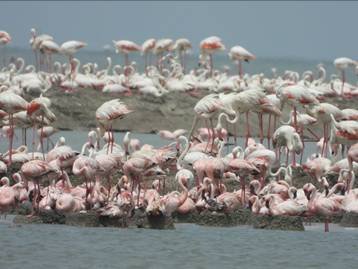
File image: flamingos at the Thoothukudi salt pans (photo: DD News) – the pans where harvesting halts during the monsoon.
Subject: Social Justice and Labour Welfare (TN) – Welfare Boards and Seasonal Workers
Syllabus
TNPSC Group I/II Mains – social justice and labour welfare in Tamil Nadu: welfare boards for unorganised workers, livelihood support schemes; current events of state importance.
Context
The Tamil Nadu government announced on 16 November 2026 an increase in the annual monsoon relief assistance for registered salt pan workers from Rs 5,000 to Rs 7,000 per family. During the 2026-2027 financial year, 23,979 salt pan worker families are set to benefit, with the state government bearing the full expenditure of Rs 16.78 crore for the enhanced package.
Main Body: Multi-Dimensional Analysis
1. The enhancement: The relief rises by Rs 2,000 per family per year and is paid to salt pan worker families registered under the Tamil Nadu Manual Workers Social Security and Welfare Board. The assistance is a recurring annual scheme, not a one-time grant, and the enhancement applies from the current financial year. An official release stated that the directive fulfilled a long-standing demand of the workers to safeguard their livelihoods during the rainy season, when salt production comes to a complete halt.
2. The announcement chain: The government order follows an announcement made in the Legislative Assembly by the Industries Minister on 25 August 2026, showing the movement of a floor commitment into an issued order within about twelve weeks. This announcement-to-order sequence is the standard administrative route for welfare enhancements: a budgetary or Assembly assurance, followed by departmental appraisal, financial concurrence and a government order.
3. The fiscal footprint: At 23,979 beneficiary families and Rs 7,000 each, the enhanced package costs Rs 16.78 crore in 2026-2027, fully borne by the state government without a central share. The modest absolute outlay relative to the state budget makes this a targeted livelihood-support measure rather than a major fiscal commitment, but its per-family value is significant for households that lose their entire seasonal income for several months.
4. The sector it protects: Tamil Nadu is India’s second-largest salt producer after Gujarat, with major salt pans at Thoothukudi, Vedaranyam and Kanyakumari and smaller pans along the coast. Production stops during the north-east monsoon, leaving workers without steady income precisely when household expenses continue. The welfare-board registration requirement ties the benefit to documented worker status, which also strengthens the labour registry for other entitlements such as accident assistance, education aid and pension-linked benefits.
5. The design limits: The relief is seasonal income support, not wage employment or asset creation. Its effectiveness depends on registration coverage, timely disbursement before the monsoon peaks, and periodic revision against inflation. Workers outside the welfare board’s rolls, including casual and migrant labour in smaller pans, fall outside the benefit unless registration drives reach them.
6. The welfare board framework: The Tamil Nadu Manual Workers Social Security and Welfare Board registers workers in scheduled manual employments, including salt pan work, and administers their welfare benefits. Registration brings a worker into a documented entitlement channel covering accident assistance, medical assistance, education assistance for children, marriage assistance and pension-type benefits, of which the monsoon relief is the seasonal income-support component. The 1982 Tamil Nadu Manual Workers (Regulation of Employment and Conditions of Work) Act supplies the statutory basis for such welfare boards, making Tamil Nadu among the earlier states to institutionalise unorganised-worker welfare.
7. The salt economy context: Salt production in Tamil Nadu is concentrated in the coastal districts, with Thoothukudi hosting the largest complex of pans and Vedaranyam and Kanyakumari hosting smaller ones. The industry supports thousands of worker households directly and sustains linked employment in transport, iodisation and packaging. Because production halts entirely during the monsoon months, the workforce faces a predictable annual income collapse, which is exactly the gap a recurring seasonal relief is designed to bridge. Demand-side measures like this relief complement supply-side measures such as pan infrastructure, iodisation support and worker housing taken up from time to time.
Positives, Negatives, & Government Schemes
| Category | Dimension / initiative | Explanation |
| Scheme | Monsoon relief enhancement | Annual assistance for registered salt pan worker families raised from Rs 5,000 to Rs 7,000, benefiting 23,979 families in 2026-2027. |
| Positive | Full state funding | The Rs 16.78 crore outlay is borne entirely by the state, avoiding delays linked to central releases. |
| Positive | Announcement-to-order closure | The August Assembly announcement has been converted into an issued order within the same season it was meant to serve. |
| Negative | Registration dependency | Only families enrolled with the Manual Workers Welfare Board qualify, leaving unregistered workers at risk of exclusion. |
| Positive | Predictable annual support | A recurring seasonal payment lets worker households plan around the monsoon income gap instead of relying on ad hoc relief. |
Examples
1. Salt pans at Thoothukudi, among the largest in the state, suspend harvesting through the monsoon months, which is the income gap the relief is designed to bridge.
2. The Tamil Nadu Manual Workers Social Security and Welfare Board administers a range of benefits for registered unorganised workers, of which this seasonal relief is one component.
3. The Industries Minister’s 25 August 2026 announcement in the Assembly, which the November order now implements, illustrates how welfare enhancements typically travel from a floor assurance to a funded government order.
4. The north-east monsoon months, when pans lie idle, are also when worker households report the highest dependence on credit, which seasonal relief is meant to reduce.
Way Forward
1. Watch the disbursement schedule and whether payments reach families before the monsoon peaks.
2. Track registration drives that bring remaining salt pan workers under the welfare board.
3. Note future revisions of the relief amount against price rise.
4. Follow whether similar seasonal relief is extended to other weather-dependent occupations.
5. Watch budget provision for the relief in the next year’s demand for grants, which shows whether the enhancement is institutionalised.
6. Note whether the welfare board publishes district-wise beneficiary counts, which would show where registration gaps remain among salt pan workers.
Conclusion
The Rs 2,000 enhancement is a modest but concrete improvement in seasonal income security for one of Tamil Nadu’s oldest coastal occupations. Its real test is coverage: the benefit reaches only families on the welfare board’s register, so registration drives and timely disbursal matter as much as the headline figure.
Practice Mains Question
Examine the role of statutory welfare boards in providing income security to seasonal and unorganised workers in Tamil Nadu, with reference to the 2026 enhancement of monsoon relief for salt pan workers.
Topic 6: Third-Party Certification System Introduced for Planning Permission in Tamil Nadu

Representative image: an urban building project (photo: DD News); illustrative of the planning permission system.
Subject: Polity and Governance (TN) – Urban Governance and Ease of Doing Business
Syllabus
TNPSC Group I/II Mains – governance in Tamil Nadu: urban administration, regulatory reform and ease of doing business; current events of state importance.
Context
The Tamil Nadu government has issued a government order introducing a third-party certification-based planning permission system for residential, commercial and industrial buildings, under which registered architects and Grade I registered engineers are empowered to issue certification for planning permission. The system was reported on 16 November 2026.
Main Body: Multi-Dimensional Analysis
1. The certification route: Under the new system, an applicant submits the planning permission application online, and once the registered architect or Grade I registered engineer certifies the plan, the approved plan and proceedings can be downloaded. This shifts the approval function from a departmental queue to an empanelled professional who takes responsibility for compliance, a model associated with self-certification and trust-based regulation reforms.
2. The building categories covered: For residential buildings, the system covers plots with a floor space index of up to 750 square metres, a maximum height of 14 metres, stilt plus three floors or ground plus two floors, and up to eight dwelling units. Commercial buildings up to an FSI of 300 square metres and 14 metres in height are covered, as are white or green category industrial buildings in layouts developed by SIDCO, SIPCOT and ELCOT or other approved industrial layouts, up to an FSI of 2,500 square metres and a height of 18.3 metres.
3. The verification and penalty design: Officials will conduct random verification of at least ten per cent of the buildings approved through third-party certification, and registered engineers or architects found responsible for violations, deviations or misrepresentation of facts will be blacklisted. The competent authority can revoke a permission obtained through misrepresentation or fraud, and action follows under sections 56 and 57 of the Tamil Nadu Town and Country Planning Act, 1971, with the applicant and the third party jointly and severally liable to prosecution, including under section 236 of the Bharatiya Nyaya Sanhita, 2023.
4. The exclusions: The scheme does not apply to construction in Coastal Regulation Zones, areas notified by the Hill Area Conservation Authority, ecologically sensitive areas and other notified areas. It also excludes natham lands, lands classified as agriculture, institutional, special and hazardous, non-urban use zones, sites under street alignments and road-widening schemes, and areas reserved for public purposes in Master Plans, New Town Development Plans, Detailed Development Plans and Grid of Roads plans, keeping higher-risk categories under direct official scrutiny.
5. The inclusion demand: The Registered Engineers’ Welfare Association (CMDA and DTCP) has requested that Grade II and Grade III registered engineers also be brought under the system, arguing that more than one lakh such engineers have long experience in planning permission applications and that their livelihoods depend on urban planning work. The demand shows how regulatory reform redistributes work among professional grades and creates pressure for phased inclusion.
6. The administrative framework: Planning permission in Tamil Nadu is administered by the Chennai Metropolitan Development Authority in the Chennai metropolitan area and by the Directorate of Town and Country Planning elsewhere in the state, under the Tamil Nadu Town and Country Planning Act, 1971. Introducing third-party certification into this framework delegates the compliance-verification function for defined low-risk building categories to empanelled professionals, while the authorities retain post-approval verification, revocation and prosecution powers. This is consistent with the wider ease-of-doing-business reform agenda, under which states have been moving routine building approvals online and toward self-certification or professional-certification models.
7. The risk-calibrated design: The categories brought under certification are deliberately low-rise and low-complexity: small residential plots, small commercial buildings and environmentally screened white or green category industrial buildings inside approved industrial layouts. Higher-risk categories, including buildings in coastal regulation zones, hill-area conservation zones and sensitive land classifications, stay with direct official scrutiny. This risk calibration is the central design feature: the state speeds up approvals where the safety and environmental stakes are lowest, and concentrates its own review capacity where the stakes are highest.
Positives, Negatives, & Government Schemes
| Category | Dimension / initiative | Explanation |
| Scheme | Third-party certification | Empanelled architects and Grade I registered engineers certify plans for defined building categories, replacing the standard departmental approval route. |
| Positive | Speed and predictability | Online submission with professional certification shortens approval timelines for routine housing and small commercial projects. |
| Negative | Enforcement burden shifts | Random verification of at least ten per cent of buildings must actually be resourced, or deterrence weakens. |
| Positive | Accountability chain | Blacklisting of certifying professionals and joint and several liability for fraud create consequences on both sides of the application. |
Examples
1. A ground-plus-two-floor house on a small urban plot with up to eight dwelling units can now be approved on an architect’s certification without a departmental site-level review.
2. White and green category industrial buildings in SIDCO and SIPCOT layouts, which meet environmental screening norms, qualify for the certified route up to 2,500 square metres of FSI.
3. Other states have used similar professional-certification models for low-risk buildings; Tamil Nadu’s version adds an explicit ten per cent random verification floor and blacklisting, which some earlier models lacked.
4. The requirement that approved plans and proceedings be downloaded after online submission creates a digital record trail for every certified permission, aiding later verification.
Way Forward
1. Watch the notification of the empanelled professional lists and the online workflow for downloading approved plans.
2. Track the actual conduct of the ten per cent random verification and the first blacklisting actions.
3. Note whether Grade II and Grade III registered engineers are included by amendment.
4. Follow exclusion-list disputes, particularly on natham and CRZ-affected plots.
5. Track approval-time statistics published by CMDA and DTCP before and after the system, which will show whether certification actually shortens timelines.
6. Note whether municipalities and town panchayats outside the CMDA area receive separate instructions for implementing the certified route.
Conclusion
Third-party certification trades procedural delay for professional accountability: the state speeds up routine approvals while reserving its enforcement energy for random audits and penal action. Its success will be measured less by the number of fast approvals than by how rigorously the verification and blacklisting provisions are used.
Practice Mains Question
Discuss third-party certification as a regulatory reform in urban planning, examining its benefits for ease of doing business and the safeguards needed against misuse, with reference to Tamil Nadu’s 2026 planning permission system.
Topic 7: Centre for Advanced Genomics Opens at Christian Medical College, Ranipet
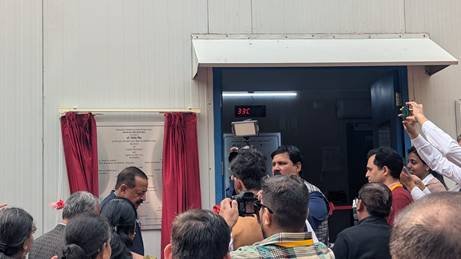
Representative image: the inauguration of a government research facility for cell and gene therapy (photo: DD News); not the CMC Ranipet centre itself.
Subject: Science, Technology and Health (TN) – Genomics and Health Infrastructure
Syllabus
TNPSC Group I/II Mains – science and technology and health in Tamil Nadu: biotechnology, genomic medicine, health infrastructure; current events of state importance.
Context
A Centre for Advanced Genomics was inaugurated at Christian Medical College, Ranipet, on 16 November 2026. The facility provides high-end genetic testing within CMC and is intended to support precision healthcare, translational research and medical education, according to health officials.
Main Body: Multi-Dimensional Analysis
1. The facility: The centre is equipped with Next-Generation Sequencing platforms for high-throughput genomic testing and high-performance bioinformatics pipelines, and has the capacity to process hundreds of samples at a time. Next-Generation Sequencing reads millions of DNA fragments in parallel, allowing clinicians to decode genetic profiles of individual patients far faster and at lower cost than first-generation sequencing methods, and the bioinformatics layer converts raw sequence output into clinically usable findings.
2. The clinical range: The facility will enable rapid and accurate diagnosis of complex cancers, rare inherited disorders and infectious diseases, as well as susceptibility to lifestyle diseases. For rare inherited disorders, where families often spend years moving between specialists, genomic diagnosis can end what is called the diagnostic odyssey; in oncology, tumour profiling guides targeted therapy choices; and in infectious disease, sequencing supports pathogen identification and outbreak tracking.
3. The precision medicine turn: By decoding genetic profiles of individual patients, the multidisciplinary team at the centre is expected to help clinicians deliver personalised, targeted therapies rather than one-size-fits-all treatment. This is the clinical core of precision medicine: treatment decisions informed by the patient’s genetic makeup, the molecular subtype of the disease and predicted drug response, which improves outcomes and reduces trial-and-error prescribing.
4. The research and training role: As a hub within a premier teaching hospital, the centre will train current and coming generations of physicians, geneticists and biomedical scientists, and collaboration between clinicians and researchers within the hospital setting is expected to facilitate discoveries that feed back into healthcare. Anderson Diagnostic Service Private Limited has provided the technological infrastructure and operational service, an example of institutional partnership for high-cost laboratory capacity.
5. The wider context: India’s genomics capacity has expanded through national efforts such as the Genome India Project, which is cataloguing genetic variation across Indian populations, and states have been adding sequencing capacity for cancer care, rare diseases and infection surveillance. A genomics centre in Ranipet extends such capacity into Tamil Nadu’s referral network, reducing the need to send samples to distant metropolitan laboratories and shortening turnaround time for patients in northern Tamil Nadu.
6. The national genomics backdrop: India’s national genomics effort is anchored by the Genome India Project, a multi-institution programme coordinated under the Department of Biotechnology that is cataloguing genetic variation across thousands of Indian genomes to build a reference resource for Indian populations. Regional sequencing and diagnostic centres complement this national effort by converting genomic capability into patient-facing services. A centre at CMC Ranipet adds to Tamil Nadu’s capacity in both the diagnostic and the research layers, at a time when genomic data is increasingly central to cancer care, rare-disease diagnosis and infection surveillance.
7. The data and ethics dimension: Genomic testing generates sensitive personal data whose misuse carries risks of discrimination and privacy breach, so consent, secure storage and purpose limitation are integral to a credible genomics service. India’s Digital Personal Data Protection framework classifies health data as sensitive personal data, and clinical genomics programmes are expected to operate with informed consent and institutional ethics oversight. For a teaching hospital, the additional responsibility is ensuring that research use of patient samples follows approved protocols and that findings return benefit to patients rather than remaining purely academic.
8. The affordability question: The public value of advanced genomic testing depends on price and referral access. Where state health insurance and institutional subsidies absorb part of the cost for poorer patients, such centres reduce diagnostic inequality; where they do not, high-end testing remains confined to those who can pay. The centre’s partnership model, with a private diagnostics provider supplying infrastructure and operations, makes this question of subsidised access for referred patients especially relevant.
Positives, Negatives, & Government Schemes
| Category | Dimension / initiative | Explanation |
| Positive | Faster diagnosis | In-house high-throughput sequencing shortens the time from sample to result for cancers, rare disorders and infections. |
| Positive | Training capacity | A teaching-hospital location embeds genomic skills in medical education rather than confining them to commercial labs. |
| Negative | Access and cost | High-end genetic tests remain expensive; public benefit depends on referral pathways and financial support for poorer patients. |
| Scheme | Precision healthcare | Genomic profiling supports targeted therapy selection, aligning with national precision-medicine and bioeconomy goals. |
Examples
1. Rare inherited disorders, which affect a large number of Indian families and often go undiagnosed for years, are a primary target of genomic testing services.
2. India’s disease-sequencing capacity built during recent years for infection surveillance shows how genomic infrastructure serves both individual care and public health.
3. The Genome India Project’s catalogue of Indian genetic variation addresses the long-standing problem that global reference genomes under-represent Indian populations, which limits the accuracy of variant interpretation for Indian patients.
4. Next-Generation Sequencing capacity deployed for infection surveillance in recent years demonstrated how sequencing infrastructure built for one purpose can be pivoted to another, a flexibility the Ranipet centre also carries.
5. CMC’s location in Ranipet places advanced diagnostics within reach of patients from the northern districts, who previously travelled to Vellore town or Chennai for comparable testing.
6. High-throughput platforms processing hundreds of samples at a time allow the centre to serve both individual diagnostics and cohort-level research studies.
Way Forward
1. Watch the range of test panels the centre offers and their pricing for referred patients.
2. Track publications and translational research output from the centre.
3. Note collaborations with government medical colleges and public health programmes.
4. Follow the centre’s role in training genetic counsellors and laboratory scientists.
5. Follow whether the centre’s services are integrated into government referral networks, which would extend access beyond paying patients.
6. Note ethics and data-governance practices the centre publishes for genomic data handling.
Conclusion
The Ranipet genomics centre adds high-end diagnostic, research and training capacity to Tamil Nadu’s health system. Its public value will be determined by whether its tests become accessible to patients beyond those who can pay, and by how well its research and training functions feed the state’s wider healthcare network.
Practice Mains Question
Examine the significance of genomic medicine for healthcare in Tamil Nadu, covering diagnosis, precision treatment and capacity building, with reference to the Centre for Advanced Genomics at CMC, Ranipet.
Topic 8: Mekamalai Hill Villages: Ministerial Outreach and the Hill Development Deficit
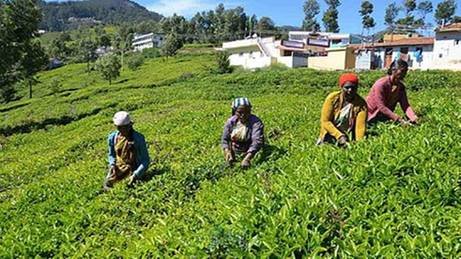
File image: tea garden workers in the Nilgiris hills (photo: DD News) – representative of Tamil Nadu’s hill regions; not of Mekamalai.
Subject: Governance (TN) – Hill Area Development and Tribal Welfare
Syllabus
TNPSC Group I/II Mains – Tamil Nadu geography and welfare: hill and tribal communities, regional development, welfare delivery; current events of state importance.
Context
A Tamil Nadu minister met residents of the Mekamalai and Varusanadu hill villages in the Kadamalai-Mayilai block of Theni district on 16 November 2026 to hear grievances about the long-pending development needs of the hill habitations, including road access, drinking water and land rights. (Reported in a daily news roundup; a dedicated full report was not available.)
Main Body: Multi-Dimensional Analysis
1. The outreach: The minister met hill residents in person to hear their grievances directly, a direct-contact approach to an issue residents describe as long neglected. Field-level hearings by ministers in remote habitations matter because hill villages often depend on block-level officers for every service, and a ministerial visit can unblock files that routine channels do not move.
2. The setting: Mekamalai and Varusanadu are hill villages in the Kadamalai-Mayilai union of Theni district, a region of dispersed hill habitations where access roads, drinking water, transport and land rights are recurring demands. Distance from the block headquarters raises the cost of every service, from school access to health referrals, and small population size can push such habitations down the priority order of standard schemes.
3. The recurring demands: For hill villages of this kind, the standard development agenda includes all-weather road connectivity, protected drinking water supply, regular bus services, recognition of land rights including pattas where applicable, functional primary health access and school transport. Each of these maps onto an existing state scheme or department, so the policy question is convergence and last-mile delivery rather than the absence of programmes.
4. The caveat: The account available is a same-day roundup entry, and fuller reporting on the specific grievances and commitments was not yet published, so details should be treated as preliminary until an official release or detailed coverage appears. The value of the topic for examination purposes lies in the hill-development framework it illustrates rather than in the particulars of one visit.
5. The welfare architecture: Hill and tribal habitations in Tamil Nadu are served through a layered framework: the Adi Dravidar and Tribal Welfare Department runs hostels, scholarships and livelihood support; the Tribal Sub-Plan channels earmarked funds across departments; the Tamil Nadu Adi Dravidar Housing and Development Corporation finances housing and self-employment; and the Forest Rights Act, 2006 provides for recognition of individual and community forest rights, including pattas, for eligible forest-dwelling communities. For remote hill villages, the binding constraint is usually not the absence of schemes but the difficulty of accessing them, which is why direct outreach and single-window grievance camps are recurring administrative instruments in such blocks.
6. The Theni context: Theni district lies along the Western Ghats foothills, with hill settlements such as those in the Varusanadu valley depending on hill agriculture, including cardamom, coffee and pepper in the higher reaches, and on daily-wage work in the plains. Connectivity shapes everything: where a motorable road and a bus route exist, school attendance, health referrals and market access improve measurably; where they do not, habitations remain effectively cut off during heavy rain. The Meghamalai region nearby illustrates both the ecological sensitivity of these hills and the development expectations of their residents, which successive hill-area development programmes have sought to balance.
7. The delivery test: The meaningful measure of such visits is the follow-through: whether the grievances recorded are entered into a tracked system, whether line departments receive deadlines, and whether works such as road laying, water schemes and patta processing are subsequently sanctioned and completed. Tamil Nadu’s experience with hill-area development shows that one-time camps produce lists, but only reviewed commitments produce works; district-level review meetings and published action-taken reports are the instruments that close the loop.
Positives, Negatives, & Government Schemes
| Category | Dimension / initiative | Explanation |
| Positive | Direct ministerial contact | Hill residents presented grievances to a minister in person rather than through intermediaries, shortening the grievance channel. |
| Scheme | Hill area development programmes | State hill-area and tribal welfare schemes fund roads, water supply and habitations in such blocks, providing the delivery framework. |
| Negative | Thin public record | A roundup-level report leaves the specific demands and assurances undocumented pending an official release. |
| Negative | Last-mile cost | Dispersed small habitations raise the per-capita cost of roads, water and transport, slowing coverage. |
| Scheme | Forest Rights Act, 2006 | Recognition of individual and community forest rights, including pattas, addresses the land-rights demand common to hill villages. |
| Positive | Tracked follow-through | Entering recorded grievances into a reviewed system with departmental deadlines converts an outreach visit into deliverable works. |
Examples
1. The Kadamalai-Mayilai block setting, where hill habitations depend on block-level delivery of roads and drinking water.
2. Other Western Ghats foothill habitations in Theni district face similar access and service-delivery constraints, making Mekamalai representative of a wider pattern.
3. Forest Rights Act pattas issued to eligible hill residents elsewhere in the state show how land-rights recognition can be delivered when the district administration processes claims to completion.
4. Hill-area drinking water schemes under state rural supply programmes illustrate the type of project that converts a grievance about water into a completed asset.
5. Single-window grievance camps conducted in tribal blocks by the district administration are an established instrument for bringing scheme applications to residents who cannot travel to block offices.
Way Forward
1. Watch for a detailed official release on the grievances heard and assurances given during the visit.
2. Track fund allocations or project announcements for Mekamalai and Varusanadu under hill-area and tribal welfare heads.
3. Note follow-up visits or review meetings on the commitments made.
4. Follow coverage in Theni-district media for resident responses and verification of delivery.
5. Watch for sanction orders or works listings naming Mekamalai and Varusanadu under roads, water supply or housing heads in the months following the visit.
6. Note whether the district administration publishes an action-taken report on the grievances recorded during the outreach.
Conclusion
Ministerial presence on the hill is a start, not a solution. Mekamalai’s test is whether documented commitments on roads, water and land rights follow the visit, delivered through the existing hill-area and tribal welfare framework with verifiable timelines.
Practice Mains Question
Examine the development deficits of Tamil Nadu’s hill villages and the administrative measures needed to address them, with reference to the Mekamalai region of Theni district.
