
Topic 1: Annan Seer Scheme: Tamil Nadu Issues Eligibility Guidelines for Marriage Assistance
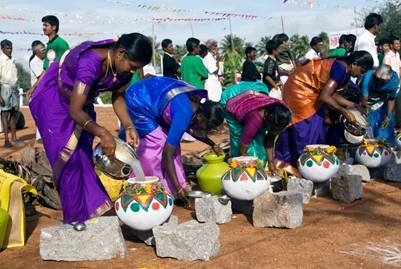
Representative image: Pongal festivities in Tamil Nadu (DD News archive photo); not of the Annan Seer scheme itself.
Subject: Social Welfare – Government Schemes
Syllabus
TNPSC Group II/IV: Welfare schemes of the Tamil Nadu government; social justice and women empowerment
Context
The Tamil Nadu government issued detailed guidelines on 17 November 2026 for the Annan Seer scheme, under which eligible brides receive an eight-gram gold coin and a silk saree at the time of their marriage. The Government Order from the Social Welfare and Women Empowerment Department sets out income limits, exclusions, an online application route and a verification and appeals process. The State has already allocated Rs 812 crore for the scheme.
Main Body: Multi-Dimensional Analysis
1. Eligibility criteria: The annual family income of the bride must not exceed Rs 2.5 lakh; the bride and groom must have attained the minimum legal age for marriage, and the bride’s name must be included in the family ration card.
2. Exclusion list: Families filing income tax returns or paying professional tax, owning four-wheelers for personal use, holding more than five acres of wetland or ten acres of dryland, or consuming over 3,600 units of electricity a year are excluded, as are elected representatives other than panchayat members, government and PSU employees and pensioners, families with GST sales turnover above Rs 50 lakh, and brides who have already received marriage assistance under other schemes.
3. Application window: Applications open 60 days before the proposed marriage date and close on the date of marriage; for marriages held between 5 October 2026 and 15 January 2027, applications will be accepted until 15 January 2027, giving the scheme retrospective cover for its launch quarter.
4. Online-only route: Applications can be submitted only online through the Tamil Nadu e-Seva portal or through e-Seva centres, with Aadhaar and ration card numbers verified through the online system, reducing discretion at the counter.
5. Proof and tracking: The bride must submit the wedding invitation and proof of marriage registration in Tamil Nadu within 15 days of the wedding; every eligible application gets a separate identification number, with status updates by SMS, WhatsApp and email.
6. Appeals with verification: A rejected applicant is told the reason and may appeal; appeals are verified through spot inspections, adding a field check to what is otherwise a fully digital pipeline.
7. The gold component: The eight-gram gold coin continues Tamil Nadu’s long policy lineage of supporting a bride’s thali, updated here as a coin, while the silk saree supports the State’s handloom sector through bulk procurement.
8. Administrative plumbing: Because applications ride on the e-Sevai portal, the scheme inherits existing Aadhaar and ration-card verification rails rather than building a new database, which shortens rollout time and limits duplication.
9. Verification and fraud control: Aadhaar and ration-card cross-checks at the application stage block duplicate and ghost claims, while the separate identification number per application creates an audit trail from submission to disbursal.
10. Women-centric design: Framing the benefit around the bride, with the marriage-registration proof requirement, reinforces both women’s asset ownership and the formal registration of marriages in the State.
11. Budget credibility: An allocation of Rs 812 crore already in place means the scheme launches funded rather than awaiting supplementary grants, the most common cause of welfare-scheme stumbles in their first year.
12. A model for gender-linked welfare: The scheme sits within the State’s wider architecture of women-targeted support, and its performance will be watched as a test of whether asset-linked assistance changes household outcomes over time.
Positives, Negatives, & Government Schemes
| Category | Dimension / initiative | Explanation |
| Positive | Clear targeting criteria | Defined income and asset exclusions reduce leakage and make eligibility predictable for applicants. |
| Positive | Retrospective window | Covering marriages from 5 October 2026 prevents the launch quarter’s brides from missing the benefit. |
| Negative | Digital-only access | An online-only application route can exclude rural families without connectivity, though e-Seva centres partly bridge the gap. |
| Government scheme | Annan Seer | Eight-gram gold coin and silk saree for eligible brides; Rs 812 crore allocated; administered by the Social Welfare and Women Empowerment Department. |
| Positive | SMS, WhatsApp and email updates | Real-time status alerts reduce the need for applicants to visit offices repeatedly. |
| Negative | Exclusion edge cases | Families just above the asset lines, such as a single old four-wheeler, may be excluded despite genuine need. |
Examples
1. The income ceiling of Rs 2.5 lakh mirrors the threshold used in several Tamil Nadu welfare schemes, keeping targeting consistent across departments.
2. Other States run comparable marriage-assistance programmes, but Tamil Nadu’s inclusion of a gold component continues a policy lineage going back to earlier thali-gold schemes.
3. The e-Sevai portal already handles caste, income and residence certificates, so the scheme rides on proven digital plumbing.
4. The spot-inspection appeal mechanism follows the pattern used in ration-card and pension verifications in the State.
5. The 15-day window for submitting registration proof ties the benefit to formal marriage registration, nudging registration rates upward.
6. Bulk saree procurement for welfare schemes has historically been routed through Co-optex, giving the silk component a ready procurement channel.
7. The 60-day application window aligns with typical wedding-invitation lead times in the State, making compliance practical.
8. Welfare-scheme delivery through e-Seva centres has earlier supported scholarship and pension applications in the State, so staff familiarity is high.
9. Clear written guidelines at launch reduce the scope for local-level misinterpretation that plagued earlier benefit schemes in their first months.
Way Forward
1. Publish district-wise application and approval dashboards so coverage gaps become visible early.
2. Pair the scheme with marriage-registration camps so the 15-day proof requirement does not exclude eligible brides.
3. Audit spot-inspection outcomes of appeals quarterly to keep the rejection process honest.
4. Track budget utilisation against the Rs 812-crore allocation in the supplementary estimates.
5. Monitor rejection rates by district in the first quarter to catch over-strict or inconsistent verification.
6. Study whether the gold-coin component should be indexed to gold prices so its real value does not erode.
7. Review the exclusion list after the first year to correct borderline injustices flagged by the appeals data.
Conclusion
The Annan Seer guidelines convert a budget announcement into an administrable scheme with defined eligibility, digital delivery and an appeals channel. Its success will be measured by how smoothly rural and low-connectivity families can access the online system and how quickly benefits reach brides before their wedding dates. Clear guidelines at launch are the scheme’s strongest feature; consistent implementation is what it must now prove.
Practice Mains Question
Discuss the design features of the Annan Seer scheme and examine the challenges of delivering welfare benefits through online-only application systems.
Topic 2: HPV-DNA Testing for Cervical Cancer to Roll Out in Five High-Burden Tamil Nadu Districts
File image: the Union Health Ministry chairing a national health review (photo: DD News).
Subject: Health – Public Health Programmes
Syllabus
TNPSC Group II/IV: Health programmes of Tamil Nadu; National Health Mission; women and child health
Context
Tamil Nadu will implement HPV-DNA testing for cervical cancer in the five high-burden districts of Dharmapuri, Villupuram, Tiruvannamalai, Perambalur and Ariyalur in the first phase, covering 1,24,215 women. The State government permitted the Mission Director of the National Health Mission to run the programme under the Tamil Nadu Cancer Care Mission, acting on an announcement the Chief Minister made in the Assembly early this year, according to the order reported on 17 November 2026.
Main Body: Multi-Dimensional Analysis
1. The disease burden: The Tamil Nadu Cancer Registry Project 2023 report recorded 87,156 new cancer cases in the State, 37,931 among men and 49,225 among women, with the projected figure for 2026 approaching one lakh at 94,098; cervical cancer remains a leading cause of illness and death among women despite being largely preventable.
2. From VIA to HPV-DNA: Tamil Nadu has screened for breast, cervical and oral cancers at institutional level since 2012, using Visual Inspection with Acetic Acid for cervical cancer; HPV-DNA testing is objective, highly sensitive and reproducible, with a high negative predictive value, which is why the WHO recommends it as the primary screening modality.
3. Alignment with global targets: The WHO’s 90-70-90 elimination framework calls for screening 70 per cent of women with a high-performance test by age 35 and again by 45; the Tamil Nadu programme operationalises that target at district scale.
4. Financing and approval: The Government of India approved Rs 869.50 lakh in the NHM Record of Proceedings 2026-27 under state-specific initiatives and innovations, at an indicative cost of Rs 700 per test for women aged 35.
5. Phased design: The first phase concentrates on five districts where the burden is highest; expansion to other districts will follow in phases based on Government of India approval, allowing the State to debug logistics before scaling.
6. Institutional home: Placing the programme under the Tamil Nadu Cancer Care Mission links screening to treatment pathways, so a positive test connects to diagnosis and care rather than ending at detection.
7. Why five districts first: Concentrating the first phase in Dharmapuri, Villupuram, Tiruvannamalai, Perambalur and Ariyalur lets the programme build laboratory and logistics muscle where incidence data shows the greatest need, before a statewide scale-up.
8. Cost discipline: At an indicative Rs 700 per test, the programme must still secure consumable supplies at scale; procurement quality will determine whether the budgeted cost holds in practice.
9. Screening architecture: The order builds on the State’s institutional screening since 2012 and the organised cancer screening programme, replacing a subjective visual method with a laboratory test whose quality can be standardised and audited.
10. Equity dimension: The chosen districts are largely rural, so the programme brings a molecular diagnostic to women who would otherwise depend on distant tertiary centres for anything beyond visual inspection.
11. A national signal: If the five-district phase meets its coverage targets, Tamil Nadu’s experience will feed directly into national policy on replacing visual inspection with HPV-DNA as the primary screen under the National Programme for Prevention and Control of Cancer.
12. From visual to molecular: Visual inspection depends heavily on the examiner’s training and local conditions, while a laboratory DNA test returns the same answer whoever conducts it, which is why global guidance has moved in this direction.
Positives, Negatives, & Government Schemes
| Category | Dimension / initiative | Explanation |
| Positive | Superior test sensitivity | HPV-DNA testing catches precancerous risk earlier and more reliably than visual inspection, reducing interval cancers. |
| Positive | Targeted first phase | Starting in high-burden districts directs scarce funds where preventable deaths are concentrated. |
| Negative | Scale constraints | Phased expansion means women in other districts wait, and test supply chains must be built before scale-up. |
| Government scheme | Tamil Nadu Cancer Care Mission | The State’s umbrella for cancer prevention, screening and treatment, now hosting the HPV-DNA programme. |
| Positive | Union funding approval | Rs 869.50 lakh approved in the NHM Record of Proceedings 2026-27 under state-specific initiatives gives the programme a funded first year. |
| Negative | Follow-up gap risk | A positive HPV-DNA result without assured colposcopy and treatment pathways wastes the screening gain. |
Examples
1. Tamil Nadu’s cancer screening since 2012 gives it an existing network of screened populations into which the new test can be slotted.
2. The Rs 700 per-test costing makes the programme one of the more affordable DNA-based screening efforts attempted at state scale in India.
3. WHO’s 90-70-90 targets also include vaccinating 90 per cent of girls by age 15, reminding policy that screening works alongside vaccination.
4. The choice of Dharmapuri and Villupuram reflects registry data showing elevated cervical cancer incidence in northern Tamil Nadu.
5. Population-based NCD screening already run by the State offers a platform for community mobilisation around the new test.
6. The State’s population-based NCD screening already brings women into contact with the health system, lowering the mobilisation cost for the new test.
7. Sikkim and a few other States have piloted HPV-based screening, providing operational lessons Tamil Nadu can borrow.
8. The 90-70-90 WHO framework pairs the screening target with treatment of 90 per cent of detected disease, which the Cancer Care Mission linkage is meant to secure.
9. The projected one-lakh new cancer cases in 2026 give urgency to shifting screening upstream toward prevention and early detection.
Way Forward
1. Build cold-chain and laboratory capacity in the five districts before the first camps begin.
2. Run awareness drives so that eligible women actually present for testing, since sensitivity gains mean little without coverage.
3. Publish phase-one results to make the evidence case for national scale-up.
4. Integrate test-positive follow-up into the Cancer Care Mission’s treatment grid with tracked timelines.
5. Set district-level coverage targets against the 1,24,215-women plan and publish monthly progress.
6. Pre-position treatment slots so that screen-positive women are seen within defined timelines.
7. Document cost per detected lesion in phase one to guide the State’s case for nationwide adoption.
Conclusion
The HPV-DNA rollout moves Tamil Nadu’s cervical cancer strategy from visual inspection to molecular screening in the districts that need it most. The programme’s value will be decided by coverage, follow-up discipline and the speed of phased expansion to the rest of the State. If phase one proves the logistics, Tamil Nadu could become the national reference for molecular cervical-cancer screening at scale.
Practice Mains Question
Examine the significance of shifting cervical cancer screening from visual inspection methods to HPV-DNA testing, with reference to Tamil Nadu’s programme.
Topic 3: Film Shooting Permissions in Tamil Nadu to Go Entirely Online
File image: a Ministry of Information and Broadcasting event (photo: DD News).
Subject: Governance – E-Governance and Ease of Doing Business
Syllabus
TNPSC Group II/IV: E-governance initiatives of Tamil Nadu; administrative reforms
Context
The Tamil Nadu government has launched a pilot project, reported on 17 November 2026, under which filmmakers can obtain shooting permissions online instead of approaching multiple offices. The pilot covers no-objection certificates from multiple departments through a single application, including shoots planned at the Government M.G.R. Film and Television Institute’s floors in Taramani, Chennai.
Main Body: Multi-Dimensional Analysis
1. Single-window design: Once an application with details such as location, date and time is received, it is routed electronically to the authorities concerned; in Chennai these are the Greater Chennai Corporation Commissioner, the Greater Chennai Police Commissioner and the Avadi and Tambaram commissionerates, while in districts the Personal Assistant (General) to the District Collector is responsible.
2. Role of the DIPR: Clearances move between the routing authorities, and the Department of Information and Public Relations issues the final permission, making the DIPR the single face of the system to the applicant.
3. The alarm mechanism: To avoid communication gaps, an alarm system alerts officials in districts and in the DIPR office 48 hours before scheduled shoots, so that permissions, bandobast and logistics are synchronised before the unit arrives.
4. Nodal officer network: Nodal officers in each department and in district collectorate will coordinate to ensure permissions are granted on time, adding named accountability to what was previously a queue of file movements.
5. Pilot discipline: The project is explicitly a pilot launched on the previous Friday; the formal launch will follow feedback, allowing the government to fix workflow bugs before statewide rollout.
6. Economic logic: Film and television production is a services employer with long local supply chains; cutting permission friction is a low-cost ease-of-doing-business intervention for the creative economy.
7. Inter-departmental routing: The application’s journey from the filmmaker to the corporation, police and commissionerates, and back to the DIPR, is automated end to end, replacing the earlier practice of physically carrying files between offices.
8. Coverage of public facilities: Bringing the Government M.G.R. Film and Television Institute’s shooting floors in Taramani into the same window shows the system is meant to be comprehensive rather than a partial convenience.
9. Discretion reduction: Time-stamped digital applications shrink the room for informal payments and preferential queuing that physical permissions invite.
10. Data dividend: Centralised records of where and when shoots happen give the State, for the first time, a real map of its film-economy geography.
11. Accountability through alerts: Because officials receive automated alerts 48 hours before a scheduled shoot, silence or inaction becomes traceable, which is the practical meaning of accountability in a routed-file system.
12. Why the Tamil industry needs it: With annual production volumes among the highest in India, every day of permission delay multiplies into crores of holding cost across the industry, making administrative speed an economic issue, not a mere convenience.
13. A governance template: The pilot’s architecture, one window, defined routing, automatic escalation, is directly reusable for other permission-heavy sectors such as event licensing, tourism clearances and advertising hoardings, which is why its results will be studied well beyond the film industry.
Positives, Negatives, & Government Schemes
| Category | Dimension / initiative | Explanation |
| Positive | Single application | One online form replaces multiple office visits, cutting time and discretion. |
| Positive | Built-in alerts | The 48-hour alarm system reduces last-minute coordination failures at shooting locations. |
| Negative | Pilot-stage uncertainty | Until the formal launch, processes can change, and departments must still staff the nodal-officer roles. |
| Government scheme | e-Sevai and single-window systems | The new facility extends Tamil Nadu’s e-governance stack into the cultural economy. |
| Positive | Feedback-driven rollout | A pilot that must pass a feedback stage before formal launch builds user trust and fixes workflow gaps. |
| Negative | Staffing the nodal roles | Nodal officers in every department and collectorate need training and authority, without which the online routing stalls. |
Examples
1. Tamil Nadu’s earlier single-window clearances for industry provide the template for departmental routing used here.
2. The inclusion of the M.G.R. Film Institute’s floors shows the system covers public facilities as well as outdoor locations.
3. Kerala and Telangana run comparable online film-permission portals, offering benchmarks for turnaround time.
4. The Avadi and Tambaram commissionerates being named separately reflects Chennai’s expanded policing map.
5. The 48-hour alert mirrors event-permission practice in cities that manage large public gatherings.
6. The pilot launched on the previous Friday shows the government testing the workflow with live applications before announcing a formal launch.
7. The 48-hour advance alerts give local police time to plan bandobast for shoots in busy public areas.
8. Chennai’s corporation and police commissionerates being named as routing authorities shows the system handles the busiest urban jurisdiction first.
9. Film cities elsewhere in India report that permission delays rank among producers’ top complaints, the exact friction this pilot targets.
10. The pilot covers both outdoor locations and studio floors, so its feedback will reflect the full range of permission scenarios the formal system must handle.
Way Forward
1. Publish a service-level timeline for each department’s clearance so delays become attributable.
2. Extend the system to tracking of shootings on government heritage sites with conservation safeguards.
3. Collect structured feedback from production houses during the pilot and publish the response.
4. Integrate the permission data with police and civic planning for traffic and crowd management.
5. Set a target turnaround, for instance seven working days, and publish performance against it after the formal launch.
6. Bring permissions for drones and aerial filming into the same window as a second phase.
7. Study integration with the Centre’s India Cine Hub so foreign productions get one national doorway.
8. Publish an annual report of permissions granted, timelines and locations once the system is formal.
9. Extend the alarm logic to post-shoot completion reporting so locations are restored and complaints closed.
10. Train local-body staff on the routing rules so applications do not stall at the first desk.
Conclusion
The online film-permission pilot is a modest but telling e-governance reform: it takes a discretionary, multi-window process and makes it traceable. If the pilot’s feedback loop is honoured, Tamil Nadu can position itself as the easiest State in India to shoot in. The creative economy notices friction quickly; a working single window can shift real production decisions toward Tamil Nadu.
Practice Mains Question
Discuss how single-window online clearance systems improve governance, using Tamil Nadu’s film shooting permission pilot as an example.
Topic 4: Vice-Chancellor Appointments: Tamil Nadu Tells High Court it is Working with the Governor
File image: a Tamil Nadu government heritage building (photo: DD News).
Subject: Polity and Education – Governor-State Relations and Higher Education
Syllabus
TNPSC Group II/IV: Governor’s role in universities; Centre-State and Governor-State relations; higher education administration
Context
The Tamil Nadu government informed the Madras High Court on 17 November 2026 that it is working with the Governor to find a solution for appointing vice-chancellors to 14 State universities that are functioning without regular heads. Advocate-General Vijay Narayan sought reasonable time before Justice N. Anand Venkatesh, who adjourned the hearing by three weeks.
Main Body: Multi-Dimensional Analysis
1. The litigation knot: The deadlock arises from cases challenging amendments, passed during the previous regime, that transferred the power to appoint vice-chancellors from the Governor, as chancellor, to the State government; until these are decided, appointments are frozen.
2. The Supreme Court undertaking: The State had given an undertaking to the Supreme Court that vice-chancellor appointments will not be made until the main cases pending before the High Court are disposed of, which is why even willing candidates cannot be appointed today.
3. The court’s prod: On 3 November the High Court took judicial notice that 14 universities are functioning without vice-chancellors and warned that the anomaly directly impacts higher education, including students, staff, teachers and retired employees.
4. A possible middle path: Justice Anand Venkatesh wondered whether the government is considering returning to the original practice of the Governor appointing vice-chancellors as chancellor; the Advocate-General responded that it was premature to say so and sought time.
5. The State’s stated preference: The government told the court that a body of academicians should choose vice-chancellors and that this body should be balanced, signalling a search-committee model rather than a unilateral appointment by either side.
6. The pension trigger: The submissions came on contempt petitions against Annamalai University over delayed pension payments, showing how the leadership vacuum feeds administrative paralysis down to retiree benefits.
7. The contempt context: The submissions were made on a batch of contempt petitions against Annamalai University for delaying pension benefits, which ties the vice-chancellor vacuum directly to failures in statutory obligations toward retirees.
8. Judicial management: By adjourning for three weeks after recording that the government is working with the Governor, the court has created a defined window in which a negotiated outcome must appear or litigation will resume.
9. The academicians’ body proposal: By telling the court that a balanced body of academicians should choose vice-chancellors, the government is offering a design that can meet both its control concerns and the Governor’s constitutional role as chancellor.
10. Cost of delay: Fourteen universities without regular heads means delayed appointments of faculty, stalled research administration and weakened standing in accreditation processes.
11. Reading the bench: Justice Anand Venkatesh’s question about returning to the original practice reads less as a direction than as an invitation for the parties to consider every option, including hybrid models, during the consultation window.
12. The pattern across States: Similar chancellor-State contests have surfaced in other States in recent years, and courts have consistently pushed both parties toward negotiated, constitutionally anchored solutions rather than outright victories for either side.
13. Why timely leadership matters: A regular vice-chancellor anchors syndicate and senate functioning, approves appointments and represents the university in accreditation; prolonged vacancies quietly degrade each of these functions, making resolution of the dispute an academic-quality issue and not only a political one.
Positives, Negatives, & Government Schemes
| Category | Dimension / initiative | Explanation |
| Positive | Dialogue over confrontation | Working with the Governor instead of litigating every point opens a negotiated exit from the freeze. |
| Negative | Fourteen leaderless universities | Search committees, syndicates and long-pending decisions drift without regular vice-chancellors. |
| Negative | Pension distress | The Annamalai University contempt petitions show staff and retirees paying the cost of the impasse. |
| Government scheme | Search-committee model | A balanced body of academicians choosing vice-chancellors is the government’s stated preference before the court. |
| Positive | Court as catalyst | The 3 November judicial notice of 14 vacant posts forced the issue onto the government’s priority list. |
| Negative | Amendment litigation unresolved | Until the validity of the appointment-power amendments is settled, any appointment route remains legally fragile. |
Examples
1. Tamil Nadu’s 2022 amendments shifting appointment power to the State followed similar moves in Kerala and West Bengal, all of which ended in litigation.
2. The Supreme Court has in earlier cases insisted that UGC regulations govern vice-chancellor search committees where universities receive central funds.
3. Annamalai University’s financial distress predates the current deadlock, but the absence of a regular vice-chancellor has slowed corrective decisions.
4. Other States have used officiating or in-charge vice-chancellors to bridge gaps, an option the Tamil Nadu freeze has constrained.
5. The 3 November judicial notice by the court is a rare step showing judicial impatience with prolonged vacancies.
6. Similar Governor-State conflicts over vice-chancellors in Kerala reached the Supreme Court, which pressed for UGC-compliant search processes.
7. The freeze has already stretched across the tenure cycle, meaning some universities have run on in-charge arrangements for over a year.
8. The court’s three-week adjournment mirrors its practice of granting structured time when governments signal genuine movement.
9. UGC regulations prescribe search-committee composition, giving both sides a ready-made neutral framework to adopt.
10. The Advocate-General’s caution that it was premature to confirm any route preserves negotiating space with the Governor while the consultations run.
Way Forward
1. Conclude the government-Governor consultations within the three-week adjournment window and place the outcome before the court.
2. Expedite disposal of the main cases on the amendments so the legal cloud lifts one way or the other.
3. Interim measures, such as empowered officiating arrangements, should protect students and pensioners during the transition.
4. Codify a transparent search-committee process acceptable to both sides to prevent recurrence.
5. Use the three-week window to agree on search-committee compositions acceptable to both the government and the Governor.
6. Prioritise universities with the most acute administrative distress, such as Annamalai, in the first appointments.
7. Bring the agreed appointment mechanism before the court as a consent-based roadmap at the next hearing.
Conclusion
The vice-chancellor impasse has moved from confrontation to negotiation, with the court keeping the pressure on. The next hearing after three weeks will show whether Governor-State consultations can produce appointments that survive judicial scrutiny and restore leadership to 14 universities. A negotiated settlement here could become a template for resolving Governor-State deadlocks elsewhere without years of litigation.
Practice Mains Question
Examine the constitutional and administrative issues in the appointment of vice-chancellors of State universities, with reference to the Tamil Nadu situation.
Topic 5: 108 Emergency Response Service: Monsoon-Readiness Review and 100-Ambulance Fleet Expansion
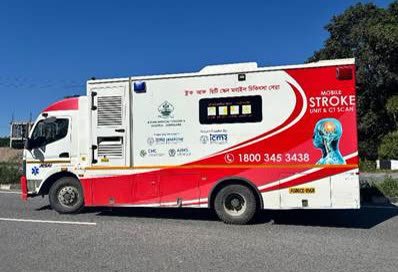
Representative image: a government mobile medical unit (photo: DD News); not a Tamil Nadu 108 ambulance.
Subject: Health Governance – Emergency Services
Syllabus
TNPSC Group II/IV: Health infrastructure of Tamil Nadu; disaster preparedness; public service delivery
Context
Tamil Nadu’s 108 emergency response network underwent a top-level readiness review on 17 November 2026, when the Chief Minister inspected the Emergency Response Call Centre at the Directorate of Medical and Rural Health Services premises in Teynampet, Chennai, assessed the ambulance network’s preparedness for the northeast monsoon and cyclone season, and directed officials to expedite the procurement of 100 additional ambulances already sanctioned.
Main Body: Multi-Dimensional Analysis
1. What the review covered: The inspection examined the various types of emergency ambulances operated by EMRI GHS on behalf of the State government, with officials questioned about preparations and safety measures for natural disasters, including floods and cyclones, and emergencies from continuous rainfall during the northeast monsoon.
2. The GPS backbone: Officials briefed the review on how emergency ambulances are allocated to calls based on movements tracked through the Global Positioning System, the operational core that matches the nearest vehicle to each emergency.
3. The helpline ecosystem: The review covered supplementary services around 108: the 104 health helpline, the 14416 tele-mental-health service, the 102 service that transports mothers back home after childbirth, and the 155377 free hearse service.
4. Fleet expansion: The government has already issued orders to procure 100 additional ambulances; the review directed that procurement be expedited and the vehicles brought into public service at the earliest.
5. Timing logic: The inspection came as the State braces for heavy northeast monsoon spells and as Cyclone Akvan approaches the neighbouring Andhra coast, when emergency call volumes historically spike.
6. Why it matters for the exam: The 108 network is a standing case study in emergency health governance: a free, State-funded service delivered through a specialised operator, with GPS-based dispatch and a family of support helplines built around it.
7. The operator model: The 108 service is run by EMRI GHS on behalf of the State, a public-private arrangement in which the government funds and oversees while a specialised operator manages fleet and call operations.
8. Monsoon-specific review: The Chief Minister’s questions focused on flood and cyclone readiness, reflecting the season when ambulance demand, road blockages and response-time pressure all peak together.
9. Dispatch intelligence: GPS-tracked allocation means the nearest available ambulance responds, and the call centre can rebalance the fleet toward emerging flood zones as rainfall patterns shift.
10. Service continuity in disasters: The review explicitly covered safety measures for crews and vehicles during floods and cyclones, protecting the responders who are themselves at risk in severe weather.
11. Why the timing matters: The northeast monsoon delivers Tamil Nadu’s heaviest rainfall weeks, and cyclone-season emergencies multiply call volumes; reviewing readiness in mid-November is reviewing it at the moment of maximum leverage.
12. Prevention as the frontier: The plan to analyse call data for road-safety measures extends the ambulance network’s role from response to prevention, using its unique real-time vantage point on where accidents actually happen.
13. Fleet as public infrastructure: With nearly 700 ambulances already deployed and 100 more sanctioned, the State is building one of the largest publicly funded emergency fleets in the country, and its utilisation data will inform how other States size their own services.
Positives, Negatives, & Government Schemes
| Category | Dimension / initiative | Explanation |
| Positive | Preparedness review before peak season | Inspecting readiness before heavy-rain forecasts improves response when call loads surge. |
| Positive | Fleet augmentation | 100 additional ambulances will cut response times, especially in high-load urban corridors. |
| Negative | Dependence on GPS and call infrastructure | Network or system failures during disasters can degrade allocation when it is needed most. |
| Government scheme | 108 ambulance service | Free emergency response service run with EMRI GHS, supported by 104, 102, 14416 and 155377 helplines. |
| Positive | Integrated helpline family | 104, 102, 14416 and 155377 services around the 108 core make the system a broader health-access platform. |
| Negative | Procurement lag risk | Sanctioned ambulances that arrive late miss the very season they were ordered for. |
Examples
1. The 108 service in Tamil Nadu is among the oldest in the national EMRI network and is studied as a model of public-private emergency care.
2. The 102 mother-transport service reduces post-delivery complications by guaranteeing the return journey for mothers and infants.
3. The 14416 tele-mental-health line was scaled nationally after the pandemic and remains a referral channel during disaster stress.
4. During previous Chennai floods, 108 ambulances were pre-positioned in low-lying zones, a practice the monsoon review is likely to repeat.
5. The free hearse service 155377 addresses a dignity gap that families otherwise face at moments of bereavement.
6. Health Minister K.G. Arunraj and Health Secretary Darez Ahamed accompanied the inspection, signalling departmental accountability at the top.
7. The Teynampet call centre at the Directorate of Medical and Rural Health Services is the nerve centre for statewide 108 dispatch.
8. EMRI’s model, pioneered in Hyderabad and scaled nationally, makes Tamil Nadu’s 108 part of the world’s largest emergency network.
9. The 104 helpline absorbs non-emergency medical queries, keeping 108 lines free for genuine emergencies.
10. Directing expedited procurement converts the inspection from optics into an administrative order with a verifiable output, the induction of 100 ambulances.
Way Forward
1. Publish monsoon-readiness metrics for the 108 fleet, including average response times by district.
2. Complete the 100-ambulance procurement within a declared timeline and report induction publicly.
3. Stress-test the call centre against flood-season surges with simulation drills.
4. Integrate 108 dispatch data with disaster-control rooms during cyclone alerts.
5. Announce a public deadline for inducting the 100 new ambulances and track it monthly.
6. Run joint drills between 108 dispatch and district disaster cells before the next heavy-rain forecast.
7. Audit GPS uptime and call-answer times as standing performance indicators.
8. Publish monthly average response times by district as a standing accountability metric.
9. Integrate the call centre’s flood-zone data with the disaster management authority’s live dashboards.
10. Conduct monsoon-season mock drills so crews and dispatchers rehearse flood and cyclone response together.
Conclusion
The readiness review links routine health infrastructure to disaster preparedness at the right moment in the monsoon calendar. The measure of the exercise will be response times and coverage once the heavy-rain days arrive, and the speed with which the new ambulances join the fleet. The inspection sets the expectation; response times during the coming monsoon days will deliver the verdict.
Practice Mains Question
Discuss the role of emergency response services like 108 in disaster preparedness, with reference to Tamil Nadu’s monsoon readiness.
Topic 6: Tamil Nadu Ministers Press the Centre for Infrastructure Funds and Pending Education Dues
Archive image: the Union Education Minister speaking in Parliament (photo: DD News).
Subject: Centre-State Relations – Fiscal Federalism
Syllabus
TNPSC Group II/IV: Centre-State financial relations; infrastructure development of Tamil Nadu
Context
Two Tamil Nadu ministers met Union ministers in New Delhi on 17 November 2026 with funding demands. Aadhav Arjuna sought support from Ports Minister Sarbananda Sonowal for maritime projects worth several thousand crore rupees, while School Education Minister Rajmohan pressed Education Minister Pralhad Joshi for the release of pending dues to Tamil Nadu, including Samagra Shiksha funds that education officials put at over Rs 5,000 crore.
Main Body: Multi-Dimensional Analysis
1. The maritime ask: Aadhav Arjuna sought Rs 118 crore for developing Rameswaram Port and launching an international passenger ferry between Rameswaram and Talaimannar in Sri Lanka; Rs 4,700 crore for the Cuddalore Greenfield Deep Sea Port; and Rs 900 crore for promenades and boat jetties at Marina and Mamallapuram with a Chennai-Puducherry passenger ferry.
2. Inland waterways: Puducherry and the Buckingham Canal figured again in the demand for Rs 2,700 crore to rehabilitate and deepen National Waterway IV, plus Rs 1,200 crore to deepen the Pamban channel to ten metres to connect the western and eastern coastal regions.
3. The education dues: Rajmohan submitted a memorandum on pending dues and scheme issues; the Samagra Shiksha releases have been held up amid the State’s resistance to conditions tied to the PM SHRI scheme and the National Education Policy, a central flashpoint in fiscal federalism.
4. The Union response: Pralhad Joshi posted on X that the discussions covered key State priorities including Samagra Shiksha and Jawahar Navodaya Vidyalayas, and said the meeting reaffirmed the commitment to strengthening school education and inclusive growth for Tamil Nadu’s students.
5. Federal pattern: The visits continue a sequence in which Tamil Nadu ministers carry project and dues memoranda to Delhi, reflecting both the scale of pending transfers and the government’s preference for direct engagement over public confrontation.
6. Strategic geography: The Rameswaram-Talaimannar ferry and Pamban deepening tie Tamil Nadu’s infrastructure agenda to India’s Sri Lanka connectivity and to coastal shipping on the east coast.
7. The Cuddalore bet: At Rs 4,700 crore, the Cuddalore Greenfield Deep Sea Port is the largest single ask, intended to add deep-draft cargo capacity on the northern Tamil Nadu coast and decongest existing ports.
8. Ferries as connectivity: The Rameswaram-Talaimannar and Chennai-Puducherry ferry proposals treat the sea as passenger infrastructure, with strategic value for Sri Lanka ties and tourism respectively.
9. The dues arithmetic: Education officials put the pending Samagra Shiksha releases at over Rs 5,000 crore, a sum large enough to affect textbooks, uniforms and school-maintenance cycles across the State.
10. Engagement strategy: Sending the ministers who own the subjects, ports for maritime asks and school education for dues, keeps each conversation technical and harder to deflect into generalities.
11. Why Pamban matters: Deepening the Pamban channel to ten metres would let larger vessels pass between the Gulf of Mannar and Palk Bay, shortening coastal voyages and boosting Rameswaram’s port economy alongside the proposed Sri Lanka ferry.
12. Federalism in practice: The visit illustrates how routine federalism works: States bring lists, the Centre responds within its scheme rules, and persistence across repeated meetings, more than any single encounter, moves files.
Positives, Negatives, & Government Schemes
| Category | Dimension / initiative | Explanation |
| Positive | Direct ministerial engagement | Face-to-face memoranda keep the dues issue on the Union agenda and create written records of demands. |
| Negative | Conditionality deadlock | Education funds remain hostage to disagreements over NEP-linked conditions, hurting school programmes on the ground. |
| Government scheme | Samagra Shiksha | The integrated school-education scheme whose pending releases form the core of the State’s dues claim. |
| Positive | Specific, costed demands | Rupee figures attached to each project make the memoranda actionable rather than rhetorical. |
| Negative | Appraisal backlog | Large port and waterway projects face long central appraisal cycles, so announcements can outrun sanctions by years. |
Examples
1. Tamil Nadu’s earlier delegations secured in-principle nods on metro and highway projects, showing the memorandum route can yield results.
2. The Cuddalore greenfield port has figured in State budgets as a flagship for north-coast cargo capacity.
3. Kerala and other opposition-ruled States have similarly pressed Delhi over pending scheme dues this year.
4. The Rameswaram-Talaimannar link revives a pre-1980s sea connection suspended during the Sri Lankan civil war.
5. National Waterway IV development has been repeatedly announced, making funding the real test.
6. The Buckingham Canal’s revival as National Waterway IV has been announced in earlier budget cycles without full funding, making persistence necessary.
7. Pamban channel deepening to ten metres would link fishing and cargo movement between the State’s two coasts through the Palk Strait side.
8. The Union Education Minister’s public post on Samagra Shiksha and Navodaya Vidyalayas after the meeting signals that the door remains open despite the policy disagreements.
9. Tamil Nadu’s consistent demand for its share of centrally sponsored scheme funds predates the current government, giving the claims institutional continuity.
10. The Rs 118-crore Rameswaram ask is the smallest on the list and the most strategically symbolic, pairing port development with an international passenger link.
Way Forward
1. Convert the meetings into written timelines for each project’s appraisal and sanction.
2. Separate the education-dues negotiation from policy disagreements so children are not the bargaining cost.
3. Publish the memoranda so the Assembly and public can track follow-through.
4. Sequence the maritime projects by readiness so early wins build the case for the larger ports.
5. Seek in-principle approvals first for the smaller, quicker projects such as the Rameswaram ferry to build momentum.
6. Table the pending-dues position in the next GST Council or finance-minister-level engagement as well.
7. Prepare detailed project reports in advance so appraisal does not stall for want of documentation.
8. Place the dues claim in formal correspondence after each meeting so the record survives beyond social-media posts.
9. Track each ask through a dedicated officer until a formal written reply is received from the Centre.
Conclusion
The Delhi visits put concrete numbers on Tamil Nadu’s infrastructure ambitions and its pending-dues grievance in the same week. Whether the engagements produce sanctions and releases will test both the Centre’s responsiveness and the State’s project preparation. Specific asks with specific numbers give the Centre something it can say yes to; the follow-up machinery must now keep the files moving.
Practice Mains Question
Discuss the issues in Centre-State financial relations with reference to Tamil Nadu’s pending education dues and infrastructure funding demands.
Topic 7: Madras High Court Orders Mandatory Licensing and Tagging of Cattle in Urban Areas
Archive image: proceedings of a State Assembly that ordered a stray-cattle tagging drive (photo: DD News).
Subject: Judiciary and Urban Governance – Animal Control
Syllabus
TNPSC Group II/IV: Important judgments and directions; urban local bodies; public safety
Context
The Madras High Court on 17 November 2026 ordered mandatory licensing and tagging of cattle kept in urban areas across Tamil Nadu, directing civic bodies to impound animals let loose on roads and impose heavy penalties on owners. The First Division Bench of Chief Justice Sushrut Arvind Dharmadhikari and Justice G. Arul Murugan passed the order on a public interest petition by M. Kamesh of Thiruverkadu.
Main Body: Multi-Dimensional Analysis
1. The statutory hook: The court ordered all urban civic bodies to strictly comply with Section 3 of the Tamil Nadu Animals and Birds in Urban Areas (Control and Regulation) Act, 1997, which bars keeping notified animals in urban areas except under licence conditions.
2. Tagging and drives: Every licensed animal must be tagged for owner identification, and dedicated teams must conduct regular day and night drives to seize cattle found straying or tethered on public roads, with jurisdictional police providing protection to the municipal teams.
3. Economic deterrence: Impounded cattle must not be released casually without collecting the enhanced daily maintenance and feeding charges fixed by the government in 2022; civic bodies may also collect administrative penalties.
4. Endgame for unclaimed animals: If owners fail to claim seized cattle and pay dues within the statutory time, authorities should auction the animals or hand them over to recognised Gaushalas.
5. Criminal route for repeat offenders: For owners who continually let cattle stray, the licensing officer or police must file written complaints before the jurisdictional judicial magistrate for prosecution under Sections 11 and 12 of the Act, with public notices warning of penalties.
6. Institutional follow-through: The Municipal Administration Secretary and the Director General of Police must issue circulars within four weeks to local body commissioners and police authorities to ensure statewide compliance.
7. Day and night drives: The direction for regular daytime and night-time seizure drives acknowledges that the menace peaks after dark, when visibility is low and accidents involving cattle are most deadly.
8. Police backing for civic teams: Requiring jurisdictional police to protect municipal teams during drives addresses the ground reality that owners sometimes obstruct or threaten impounding staff.
9. Licensing as the foundation: Section 3 compliance means every urban cow or buffalo must enter a licensing register, converting an invisible problem into a countable one and enabling graduated enforcement.
10. Prosecution for repeat offenders: Sections 11 and 12 complaints before judicial magistrates move habitual violators from fines into criminal process, raising the cost of defiance.
11. A dormant statute revived: The 1997 Act gave urban bodies the licensing power for decades; the court’s order matters because it converts that dormant power into a duty with timelines, circulars and named officers responsible for compliance.
12. Balance with animal welfare: Because auction provisions apply to unclaimed animals, the order implicitly pushes civic bodies toward shelters and cattle pounds, requiring investment in humane facilities alongside enforcement.
13. The court’s supervision continues: By keeping the petition alive with a further hearing scheduled, the bench has signalled that compliance will be monitored rather than assumed, which is the mechanism that has driven results in earlier road-safety and civic-compliance cases before the High Court.
Positives, Negatives, & Government Schemes
| Category | Dimension / initiative | Explanation |
| Positive | Road safety rationale | Stray cattle cause night-time accidents; licensing and impounding target the hazard at its source. |
| Positive | Owner accountability through tagging | Tags convert anonymous strays into traceable property, enabling penalties. |
| Negative | Enforcement capacity | Civic bodies lack pounds, staff and vehicles for sustained drives, risking paper compliance. |
| Government scheme | 1997 Act enforcement | The order operationalises a nearly three-decade-old statute that had gone largely unenforced. |
| Positive | Time-bound institutional action | Circulars from the Municipal Administration Secretary and the DGP within four weeks give the order an administrative clock. |
| Negative | Auction and gaushala limits | Unclaimed-cattle auctions and shelter handovers depend on facilities and demand that may not exist at scale. |
Examples
1. Thiruverkadu’s complaint that prompted the PIL described cattle roaming main roads to the annoyance and danger of road users.
2. The 2022 enhancement of maintenance and feeding charges was designed to make impounding costly for negligent owners.
3. Other States, including Haryana, have launched tagging drives for stray cattle this year, showing a national enforcement trend.
4. Chennai and Madurai have earlier run impounding drives that lapsed once public attention faded.
5. Gaushala handover provisions recognise the practical limits of government cattle pounds.
6. The PIL came from a Thiruverkadu resident, showing how citizen petitions continue to drive civic enforcement in Tamil Nadu.
7. The court’s reference to enhanced 2022 maintenance charges shows the fee deterrent was already designed but not used.
8. Public notices warning of penalties, ordered by the court, replicate the deterrence messaging used in helmet and drunk-driving drives.
9. The order applies statewide to all urban civic bodies, not just Chennai, recognising that the menace is worst in fast-growing tier-two towns.
10. The direction that police protect impounding teams anticipates resistance and prevents drives from collapsing at the first confrontation.
Way Forward
1. Verify the four-week circulars are issued and set district-level compliance reporting.
2. Fund cattle pounds and trained catching teams before drives begin, or the order will stall.
3. Publish accident data linked to stray animals to keep enforcement honest and targeted.
4. Pair penal action with owner counselling and dairy-livelihood alternatives in peri-urban belts.
5. Inventory urban cattle pounds and upgrade them before mass impounding begins.
6. Track accident statistics in the months after enforcement to measure the order’s real impact.
7. Coordinate with dairy cooperatives so seized milch cattle are cared for during custody.
8. Set up a public dashboard of impoundings, penalties collected and animals auctioned or sheltered.
9. Coordinate licensing drives with stray-dog and waste-management enforcement for a unified urban-safety push.
10. Report compliance to the court with ward-wise data on licences issued and animals impounded.
Conclusion
The High Court has converted a dormant 1997 statute into a statewide compliance mandate with deadlines. The test now is municipal capacity: without pounds, teams and budgets, licensing and tagging orders risk joining the list of unenforced directions. Judicial will is now on record; municipal capacity will decide whether the roads actually clear.
Practice Mains Question
Examine the judicial approach to urban stray-cattle management in Tamil Nadu and the administrative challenges in implementing such directions.
Topic 8: Tamil Nadu Raises Welfare Benefits for Dairy Farmers under the Anna Welfare Fund

Infographic: India’s rising milk output and livestock coverage (image: DD News).
Subject: Rural Economy – Cooperatives and Welfare Funds
Syllabus
TNPSC Group II/IV: Dairy development in Tamil Nadu; cooperative movement; welfare schemes
Context
The Tamil Nadu government has amended the Restructured Perarignar Anna Co-operative Milk Producers Welfare Fund Rules, 2010, raising accident-related compensation and marriage assistance for members of village-level milk cooperatives. The Government Order, published in the Tamil Nadu Government Gazette on 11 November and reported on 17 November 2026, follows an announcement by Dairy Development Minister C. Vijayalakshmi during the September Assembly debate.
Main Body: Multi-Dimensional Analysis
1. Higher death compensation: Compensation payable to a member’s family in the event of accidental death rises from Rs 4 lakh to Rs 5 lakh, a 25 per cent increase in the scheme’s core safety-net benefit.
2. Disability cover: Assistance for permanent total disability, including loss of two limbs in an accident, increases from Rs 2.25 lakh to Rs 2.5 lakh.
3. Marriage assistance: Support for the marriage of a member’s eligible daughter rises sharply from Rs 60,000 to Rs 1 lakh, updated in two provisions under Rule 15 of the Rules.
4. Funding the benefits: The monthly contribution to the welfare fund deducted from milk suppliers rises from Rs 10 to Rs 15 under amended Rule 11, so the enhanced benefits are financed by a small increase in members’ own contributions.
5. The cooperative base: Around 3.9 lakh dairy farmers supply approximately 36 lakh litres of milk daily through the cooperative network anchored by Aavin, making the welfare fund one of the State’s largest producer safety nets.
6. Policy lineage: The announcement-to-gazette cycle, from the September demands-for-grants debate to the November notification, shows the scheme moving through the standard legislative-administrative pipeline within one quarter.
7. The contributory principle: Because the fund runs on member deductions, the Rs 5 monthly increase is the price of the enhanced benefits, keeping the scheme actuarially honest rather than dependent on annual budget goodwill.
8. Coverage scale: With about 3.9 lakh member farmers, even the revised benefits represent a contingent liability the fund must provision for across accident and marriage claims each year.
9. Marriage-assistance jump: The rise from Rs 60,000 to Rs 1 lakh corrects years of erosion against rising wedding costs and brings the dairy fund’s benefit closer to other State marriage-assistance schemes.
10. Institutional responsiveness: The September announcement to November gazette cycle shows the cooperative department can move from promise to entitlement within a quarter, a benchmark for other welfare departments.
11. Reading the numbers: A Rs 5 monthly rise in contributions against benefit increases of Rs 1 lakh in death compensation and Rs 40,000 in marriage assistance is actuarially modest, suggesting the fund’s corpus was healthy enough to absorb the upgrade.
12. Stability for the cooperative dairy sector: Welfare certainty keeps farmers inside the cooperative fold, which in turn stabilises procurement for Aavin and the consumers who depend on its pricing discipline.
13. A template for producer welfare: The pattern of small, regular member deductions funding life-event assistance is the cooperative movement’s original promise, and the dairy fund’s upgrade shows that model still working at scale in Tamil Nadu.
Positives, Negatives, & Government Schemes
| Category | Dimension / initiative | Explanation |
| Positive | Meaningful benefit hikes | Death, disability and marriage benefits all rise, with marriage assistance up by two-thirds. |
| Positive | Self-financing design | The Rs 5 rise in monthly contribution keeps the fund contributory rather than budget-dependent. |
| Negative | Still modest cover | Rs 5 lakh for accidental death remains thin against the loss of a family’s primary earner. |
| Government scheme | Anna Co-operative Milk Producers Welfare Fund | The restructured 2010 fund covering dairy farmers in the cooperative network. |
| Positive | Gazette-backed certainty | Publication in the Tamil Nadu Government Gazette on 11 November makes the enhanced benefits enforceable entitlements, not promises. |
| Negative | Awareness gap | Many member families learn of welfare benefits only after a tragedy, delaying claims. |
Examples
1. Aavin’s village-level primary societies form the membership base whose deductions finance the fund.
2. Similar producer welfare funds exist for weavers and fishermen in Tamil Nadu, built on the same contributory principle.
3. The September Assembly announcement route follows the standard practice of welfare enhancements being unveiled in departmental demand debates.
4. The 36 lakh litres of daily cooperative milk flow gives a sense of the fund’s exposure across seasons.
5. Contributory welfare models keep benefits stable across budget cycles, unlike fully State-funded schemes.
6. The rules amended date from 2010, when the fund was restructured under Perarignar Anna’s name, part of a long cooperative-welfare tradition in the State.
7. Aavin’s procurement network touches most of the State’s districts, giving the fund an unmatched rural reach for enrolment drives.
8. The fund’s twin provisions under Rule 15 cover daughters’ marriages, reflecting the social reality of wedding expenditure in rural households.
9. Fishermen and weaver welfare funds in the State use the same deduction-based financing, allowing cross-fund comparisons of performance.
10. The daily flow of about 36 lakh litres through cooperative societies is the economic base on which the welfare fund’s sustainability rests.
Way Forward
1. Track claim-settlement times so the higher amounts translate into faster relief, not just larger promises.
2. Review the adequacy of the Rs 5-lakh death benefit periodically against wage and price levels.
3. Enrol the remaining non-member dairy farmers so the safety net covers the full supplier base.
4. Publish the fund’s annual accounts to keep the contribution increase credible.
5. Run an enrolment and awareness campaign through primary societies so every supplying farmer is covered.
6. Digitise claim filing with society-level assistance to cut settlement delays.
7. Review benefit levels every two to three years against inflation.
8. Audit claim-settlement performance annually and table it in the Assembly alongside the department’s demands.
9. Publicise the revised benefits through milk societies so eligible farmers file claims promptly when events occur.
10. Digitise the welfare-fund records so claims are tracked and settled within a fixed time.
11. Extend the fund’s coverage reviews to accident-disability benefits as medical costs rise.
Conclusion
The welfare-fund amendments deliver tangible, self-financed improvements to a large producer community without fresh budget strain. The next test is administrative: quick, transparent claim settlement that makes the enhanced benefits felt in village-level dairy households. Small, regular enhancements of this kind are how welfare funds stay relevant; the habit matters as much as the amounts.
Practice Mains Question
Discuss the role of contributory welfare funds in protecting rural producers, with reference to Tamil Nadu’s dairy farmers’ welfare fund.
