
Topic 1: Tamil Nadu Sanctions Rs 6,513 Crore for 2,221 Road Works Covering 4,126 km
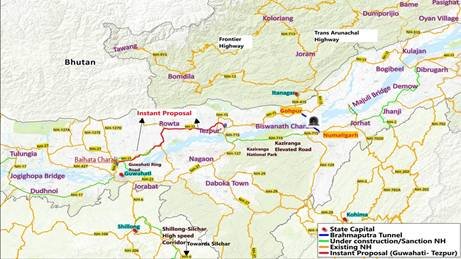
Representative image: route map of a highway corridor under development (image: DD News).
Subject: Infrastructure – Roads and Highways
Syllabus
TNPSC Group I/II: Infrastructure development in Tamil Nadu; State highways; public works and government orders
Context
The Tamil Nadu highways department has sanctioned Rs 6,513.18 crore for 2,221 road works covering a total length of 4,126 km across the State, with a government order issued on 17 November 2026 and details released on 19 November, under the Comprehensive Road Infrastructure Development Programme.
Main Body: Multi-Dimensional Analysis
1. The sanction: Rs 6,513.18 crore has been sanctioned for 2,221 works covering 4,126 km, one of the largest single tranches of road works approved by the State, spread across state highways, major district roads and other district roads.
2. State highways share: Rs 2,722.04 crore is earmarked for 589 state highway works, the trunk network that carries inter-district traffic and connects district headquarters with national highways.
3. District roads: Rs 1,009.67 crore goes to 419 major district road works and Rs 2,781.47 crore to 1,213 other district road works, the network that directly serves villages, markets and small towns.
4. Widening to four and six lanes: 28 works will widen 84.86 km of two-lane highways into four-lane or six-lane roads, and seven projects will widen existing four-lane roads into six-lane stretches, targeting corridors where traffic has outgrown capacity.
5. Six-lane corridors identified: The seven four-to-six lane projects include the Manapparai-Thuvarankurichi road (10 km, Rs 95 crore), the Hogenakkal-Pennagaram-Dharmapuri-Tirupattur road (12.5 km, Rs 105 crore), the Thandalam-Thakkolam road (5.5 km, Rs 48.5 crore), the Palladam-Avinashi-Puliampatti road (6 km, Rs 45.25 crore), the Musiri-Pudukkottai-Alangudi-Sethubavachathiram road (7.44 km, Rs 43 crore), the Arcot-Villupuram road (5.4 km, Rs 40.55 crore) and the Old Mahabalipuram Road near Thiruporur (2.6 km, Rs 37.68 crore).
6. Rural connectivity: 446 works at Rs 1,924.20 crore will widen 1,373.76 km of other district roads from single lane to intermediate lane, and 188 works at Rs 1,196.07 crore will upgrade 492.46 km of single-lane roads into two-lane roads with paved shoulders.
7. Bypasses and ring roads: Five bypasses, ring roads and link roads covering 15.31 km at Rs 283.05 crore include a 6.2 km Outer Ring Road for Sivakasi at Rs 134.58 crore, a 2.26 km bypass for Pallikonda, a 3.74 km ring road for Mannargudi, a link road to the Mayiladuthurai bypass and a 2.11 km bypass for Ulundurpet.
8. Long-pending bridges: Three high-level bridge projects have received administrative sanction: a bridge on the Nagari-Pallipet road connecting Nediyam Colony near Tiruttani at Rs 35 crore, a bridge across the Bhavani river on the Karattadipalayam-Bungalowpudur road in Anthiyur at Rs 25 crore, and a bridge on the Keelakidaram-Valinokkam road in Mudukulathur at Rs 6.65 crore.
9. Programme umbrella: The works are implemented under the Comprehensive Road Infrastructure Development Programme, the State’s standing framework for widening, strengthening and upgrading the road network with budgetary support.
10. Cost per kilometre: The sanction works out to an average of roughly Rs 1.6 crore per km across 4,126 km, a blended figure that spans expensive six-laning and low-cost rural widening, which is why the corridor-wise break-up matters more than the headline.
11. Economic rationale: Road investment carries high employment and connectivity multipliers in a State whose manufacturing clusters, from Sivakasi’s fireworks to Tiruppur’s knitwear and Coimbatore’s engineering units, depend on reliable freight movement.
12. Inter-generational roads: Many of the 446 intermediate-lane upgrades serve habitations that received their first blacktop under earlier rural road programmes, so the sanction deepens an existing network rather than only extending it.
13. Bridge equity: The three sanctioned bridges, in Tiruttani, Anthiyur and Mudukulathur, address precisely the links whose absence forces long detours for school buses, ambulances and farm transport in the affected blocks.
14. Administrative sanction stage: Administrative sanction is the stage at which funds are committed and design begins; tendering, land acquisition and construction follow, so the figures announced are sanctioned costs rather than completed expenditure.
Positives, Negatives, & Government Schemes
| Category | Dimension / initiative | Explanation |
| Positive | Balanced allocation | Funding is split across state highways, major district roads and other district roads, so rural connectivity advances alongside trunk capacity. |
| Positive | Decongestion | Bypasses for Sivakasi, Pallikonda, Mannargudi, Mayiladuthurai and Ulundurpet divert through-traffic out of town centres. |
| Negative | Execution risk | Sanctioning 2,221 works at once tests contractor capacity, land acquisition and quality supervision; delays typically occur between sanction and completion. |
| Government scheme | Comprehensive Road Infrastructure Development Programme | Tamil Nadu’s umbrella programme for widening and upgrading state highways and district roads. |
| Government scheme | Paved shoulder programme | Upgrading single-lane roads to two-lane roads with paved shoulders to improve safety on rural corridors. |
Examples
1. The Sivakasi Outer Ring Road addresses a chronic bottleneck in the firecracker manufacturing hub, where heavy vehicle movement through town raises safety risks.
2. The Bhavani river bridge in Anthiyur restores a long-pending link for villages in Erode district that depend on circuitous crossings.
3. Paved shoulders on single-lane roads reduce accidents involving two-wheelers and pedestrians, the most vulnerable road users in rural Tamil Nadu.
4. Six-laning the Old Mahabalipuram Road near Thiruporur responds to the IT corridor’s traffic growth south of Chennai.
5. Intermediate-lane standards, between single and two-lane, are a cost-effective upgrade suited to moderate-traffic rural roads.
6. Ring roads for temple towns like Mannargudi ease festival-season congestion that otherwise paralyses narrow urban streets.
Way Forward
1. Publish a work-wise dashboard with timelines so citizens can track each of the 2,221 sanctioned works.
2. Sequence land acquisition and utility shifting early, the stages where road projects most often stall.
3. Apply the quality audit mechanisms of the highways department uniformly across contractors and districts.
4. Integrate the new corridors with bus services and freight planning so capacity gains convert into economic gains.
5. Audit completed works for riding quality a year after construction, when poor workmanship first shows.
6. Table an annual outcome report on CRIDP works in the Assembly so legislative oversight matches the scale of sanction.
7. Coordinate with the rural development department so panchayat roads feeding the upgraded district roads are strengthened in tandem, avoiding last-mile mismatches.
Conclusion
The Rs 6,513 crore sanction is a statement of intent across every tier of the road network, from six-lane corridors to village roads. Its real test lies in execution speed and construction quality, which determine whether 4,126 km of sanctioned works become 4,126 km of better travel within the plan period.
Practice Mains Question
Examine the role of road infrastructure in the economic development of Tamil Nadu, with reference to the State’s Comprehensive Road Infrastructure Development Programme.
Topic 2: Aadhaar-Based Identification Prescribed for Two Livestock Welfare Schemes in Tamil Nadu

Representative image: a dairy outlet (photo: DD News); the two schemes support livestock-based livelihoods of rural women.
Subject: Governance – Welfare Delivery and Aadhaar
Syllabus
TNPSC Group II/IV: Social welfare schemes of Tamil Nadu; e-governance; Aadhaar and service delivery
Context
The Tamil Nadu government has prescribed Aadhaar-based identification for beneficiaries of the Vetri Magalir Goat Rearing Scheme and the Free Milch Cow Distribution Scheme, through two notifications of the Animal Husbandry, Dairying, Fisheries and Fishermen Welfare Department published in the Tamil Nadu Government Gazette on 17 November 2026, with alternative verification mechanisms to prevent exclusion.
Main Body: Multi-Dimensional Analysis
1. The requirement: Beneficiaries of the two livestock schemes must undergo Aadhaar authentication or furnish proof of possession of an Aadhaar number, making Aadhaar the primary identity key for these benefits.
2. Enrolment facilitation: For those yet to obtain Aadhaar, the department has been directed to facilitate enrolment in coordination with registrars and to set up enrolment centres at convenient locations, placing the burden of inclusion on the administration rather than the applicant.
3. Alternative documents: Pending allotment of Aadhaar numbers, adult beneficiaries can establish identity using the enrolment acknowledgement and any one of several prescribed documents, including voter identity cards, ration cards, passports, driving licences and disability certificates.
4. Children’s provisions: Separate provisions cover children, accepting documents such as birth certificates and school records, subject to parental or guardian consent for enrolment, and benefits cannot be denied to children solely for authentication failure or absence of an Aadhaar number.
5. Authentication failure handling: The notifications provide for alternative biometric authentication or one-time passwords if fingerprint, iris or facial authentication fails, and where even these are not possible, benefits can be extended after offline verification of Aadhaar QR codes or paperless e-KYC documents.
6. Audit trail: The department must maintain records of exception cases for periodic review and audit, and has been directed to follow the Centre’s exception-handling mechanism so legitimate beneficiaries are not excluded.
7. The schemes covered: The Vetri Magalir Goat Rearing Scheme supports women’s livestock-based livelihoods, and the Free Milch Cow Distribution Scheme provides milch animals to eligible rural women, both aimed at supplementing household income through dairying and small ruminant rearing.
8. Legal basis: Aadhaar-based identification for benefits flows from Section 7 of the Aadhaar Act, 2016, which permits the State to require Aadhaar authentication for subsidies and services funded from the Consolidated Fund, subject to alternatives for those without Aadhaar.
9. Gazette route: Issuing the requirement through notifications in the Tamil Nadu Government Gazette gives it legal force and public notice, the standard route by which scheme eligibility conditions are formalised.
10. Women-focused design: Both schemes name women’s empowerment as their object: goats and milch cows create assets in women’s names, an approach consistent with the broader evidence that assets controlled by women improve household nutrition and schooling outcomes.
11. Precedent pattern: Aadhaar-based identification has been progressively notified for scheme after scheme across India under Section 7, and Tamil Nadu’s notifications follow the standard template of primary authentication plus documented exceptions.
12. Administrative data value: Authenticated beneficiary lists allow the Animal Husbandry Department to track asset distribution, veterinary follow-up and insurance linkage across schemes without duplication.
13. Beneficiary scale: Goat rearing and milch cow distribution reach tens of thousands of rural women each year in Tamil Nadu, which is why the identity framework governing them carries weight beyond the two schemes named in the notifications.
14. Grievance channel: A workable complaints mechanism is the difference between a safeguard and a slogan; the notifications’ direction to follow the Centre’s exception-handling mechanism imports an established escalation ladder into the two schemes.
15. From card to credential: The layered design, Aadhaar first, enrolment acknowledgement next, prescribed documents after that, offline verification last, mirrors how digital identity systems worldwide reconcile inclusion with integrity, and Tamil Nadu’s notifications encode that hierarchy explicitly for field officers.
Positives, Negatives, & Government Schemes
| Category | Dimension / initiative | Explanation |
| Positive | Leakage control | Aadhaar authentication reduces duplicate and ghost beneficiaries in schemes that distribute physical assets like goats and cows. |
| Positive | Exception handling | The detailed fallback mechanisms, from alternative documents to offline verification, operationalise the rule that no genuine beneficiary should be denied for want of Aadhaar. |
| Negative | Implementation risk | Rural connectivity gaps and biometric failures can still delay benefits at the last mile, where monitoring is weakest. |
| Government scheme | Vetri Magalir Goat Rearing Scheme | Tamil Nadu scheme distributing goats to women beneficiaries to build livestock-based rural livelihoods. |
| Positive | Asset creation | Goat and cow distribution builds productive assets for rural women rather than one-time cash relief. |
Examples
1. A woman in a remote village without Aadhaar can still receive her goat unit by producing a ration card and enrolment acknowledgement.
2. The offline Aadhaar QR code route allows verification without live connectivity, important in interior blocks with weak networks.
3. Similar Aadhaar seeding has been applied to the Public Distribution System and MGNREGA wage payments, where duplicate removal produced measurable savings.
4. The child-specific provisions mirror national norms that prohibit denial of benefits such as mid-day meals for lack of Aadhaar.
5. Periodic audit of exception records converts an exclusion safeguard from a paper promise into a checkable process.
6. Disability certificates are explicitly listed among alternative identity documents, ensuring that beneficiaries with disabilities are not filtered out by a biometric-first design.
7. The notifications require the department to maintain records of exception cases for periodic review and audit, a provision that converts discretion into a documented, inspectable process.
Way Forward
1. Track grievance data on authentication failures in the two schemes and publish resolution times.
2. Ensure enrolment camps reach blocks with low Aadhaar saturation before strict enforcement begins.
3. Train field-level veterinary and revenue staff on the exception mechanisms, not only on the primary Aadhaar route.
4. Audit exception records regularly and act on patterns that indicate systematic exclusion.
5. Publish scheme-wise exclusion and exception statistics so the safeguard machinery stays visible and auditable.
6. Link the authenticated beneficiary database to veterinary care schedules so distributed animals receive timely health coverage.
Conclusion
The notifications apply the standard architecture of Aadhaar-linked delivery, primary authentication with layered fallbacks, to Tamil Nadu’s livestock welfare schemes. The design is sound on paper; its credibility will rest on how faithfully the exception mechanisms work for the last beneficiary in the queue.
Practice Mains Question
Discuss the use of Aadhaar-based identification in welfare delivery, its safeguards against exclusion, and its application to Tamil Nadu’s livestock schemes.
Topic 3: Presenceless Registration Logs 3 Lakh Documents in 90 Days, Earns Rs 1,358 Crore
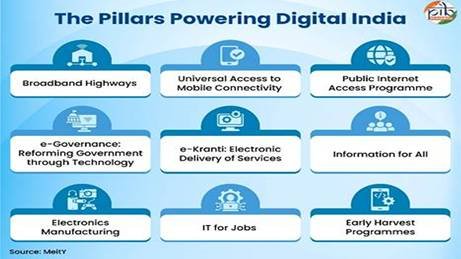
The pillars of Digital India (image: DD News); presenceless registration is the State’s latest e-governance service.
Subject: Governance – E-Governance and Registration
Syllabus
TNPSC Group II/IV: E-governance initiatives of Tamil Nadu; Registration Department; citizen services
Context
Tamil Nadu’s presenceless document registration system has facilitated the registration of 3,03,705 documents in 90 days, generating Rs 1,357.85 crore in revenue and saving nearly 15 lakh people time and avoidable expense, the Registration Department said on 19 November 2026.
Main Body: Multi-Dimensional Analysis
1. The facility: Launched by Chief Minister C. Joseph Vijay on 17 August 2026, the presenceless system lets applicants submit documents entirely online without visiting sub-registrar offices, initially made mandatory for the first sale of residential plots and flats.
2. Extension to bank-linked deeds: Following the initial response, mandatory online registration was extended from 15 September 2026 to the deposit of title deeds and receipt deeds involving banks and financial institutions, covering the loan-documentation layer of property transactions.
3. Scale achieved: In 90 days the system registered 3,03,705 documents and generated Rs 1,357.85 crore in revenue, while nearly 15 lakh people were saved the time and expense of visiting sub-registrar offices.
4. Round-the-clock access: Applicants can submit documents at any hour, including holidays and auspicious hours, pay registration charges online before submission, and make corrections until the documents are formally submitted.
5. Simultaneous submission: The facility provides for simultaneous submission of sale deeds and related bank loan documents, collapsing what was a two-office process into one digital workflow.
6. Paperless family deeds: A separate paperless registration facility for family-related deeds, covering release, gift settlement, partition and cancellation of gift settlement deeds, was introduced on 5 November 2026 and had registered 19,850 documents by 17 November.
7. Self-drafting option: The department has introduced an option for applicants to prepare their own registration documents, reducing dependence on document writers and intermediaries.
8. Phased expansion: The Registration Department said the presenceless facility would be extended to other categories of documents in phases, with software improvements based on feedback from the public, builders, banks and financial institutions.
9. Institutional significance: The Registration Department is among Tamil Nadu’s biggest revenue earners through stamp duty and registration fees, so its digitisation touches both citizen convenience and the State’s own finances.
10. From queue to workflow: Presenceless registration converts a physical queue, with its scope for rent-seeking and touts, into a logged digital workflow where every correction and payment leaves a trail.
11. Resident welfare: The department estimates nearly 15 lakh people were saved time and avoidable expense in 90 days, a welfare gain that accrues disproportionately to ordinary families making their largest lifetime transaction.
12. Trust architecture: Online registration depends on digital signatures, e-stamping integration and Aadhaar-based verification working together; the 90-day volumes suggest the underlying rails held under real load.
13. Fiscal context: Registration revenue is among the top own-revenue sources for Tamil Nadu, and the Rs 1,357.85 crore collected through the new channel in 90 days indicates that digital migration has not dented collections.
14. Change management: The department’s commitment to software improvements based on feedback from the public, builders, banks and financial institutions reflects an iterative rollout style that large e-governance systems need to survive contact with real users.
15. Citizen arithmetic: Saving fifteen lakh people a visit each translates into crores of person-hours retained for work and family, an invisible productivity dividend that e-governance evaluations rarely quantify but citizens feel immediately.
16. Benchmark value: Ninety days is long enough to judge adoption: crossing three lakh documents suggests citizens and document writers have both migrated, since a system used only under compulsion typically shows higher correction rates and complaints than this rollout has reported.
Positives, Negatives, & Government Schemes
| Category | Dimension / initiative | Explanation |
| Positive | Convenience | Removing the mandatory office visit saves applicants travel, waiting and informal costs across lakhs of transactions. |
| Positive | Revenue assurance | Rs 1,357.85 crore in 90 days shows digitisation and revenue collection are compatible; digital payment trails also reduce leakage. |
| Negative | Digital divide | Citizens without digital access or literacy need assisted modes, or the reform shifts costs onto intermediaries. |
| Government scheme | Presenceless registration | Tamil Nadu Registration Department’s fully online document registration facility launched in August 2026. |
| Government scheme | Paperless family deeds | Online registration of release, gift settlement, partition and cancellation deeds introduced in November 2026. |
Examples
1. A buyer in another State can complete the first sale registration of a Chennai flat without travelling, a routine case under the new system.
2. Extending the facility to deposit of title deeds matters because nearly every housing loan involves one, multiplying the convenience gain.
3. Registering family settlement deeds online reduces disputes that arise when such deeds are delayed or left unregistered.
4. The Registration Act, 1908 governs document registration in India; Tamil Nadu’s reform digitises within that century-old statutory frame.
5. Auspicious-hour registrations, a Tamil Nadu cultural fixture, no longer require overnight queues at sub-registrar offices.
6. Banks benefit directly: deposit of title deeds registered online shortens loan disbursal cycles and reduces documentation disputes.
7. The paperless family-deeds facility registered nearly twenty thousand documents in under two weeks, evidence of pent-up demand among families who earlier postponed registration.
8. Sub-registrar offices remain open for deed categories not yet covered, so the reform is additive rather than exclusionary at this stage.
9. The correction-until-submission feature reduces the registrar-level rejections that once forced repeated visits, converting quality control into a private, asynchronous step.
Way Forward
1. Extend the facility to remaining deed categories in phases with clear timelines.
2. Monitor rejection and correction rates to identify friction points in the online workflow.
3. Provide assisted registration through e-sevai centres for citizens without digital access.
4. Publish monthly data on documents, revenue and grievances for public accountability.
5. Integrate registration data with the land records modernisation programme so title verification becomes seamless across departments.
6. Commission an independent security and privacy audit of the registration platform, given the sensitivity of property records it now handles.
7. Publish uptime and transaction-failure statistics for the portal monthly, since trust in presenceless registration rests on the system working at the moment a family needs it.
Conclusion
Three lakh documents in ninety days marks presenceless registration as one of Tamil Nadu’s most successful e-governance rollouts. The next phase should focus on inclusion, ensuring that the convenience created online is available to those still offline, and on extending the model to all major deed categories.
Practice Mains Question
Evaluate the impact of e-governance on public service delivery in Tamil Nadu, with reference to the presenceless registration system of the Registration Department.
Topic 4: Non-High-Rise Buildings with Pre-October 26 Permits Can Rise to 19.5 Metres

Representative image: an aerial view of a planned urban area (photo: DD News).
Subject: Urban Development – Building Rules
Syllabus
TNPSC Group II/IV: Urban governance and development regulation in Tamil Nadu; TNCDBR 2019; CMDA and DTCP
Context
The Tamil Nadu housing and urban development department has clarified that buildings with valid planning permission or building permits issued before 26 October 2026 can also be raised to 19.5 metres without obtaining revised approval, extending the benefit of the revised height limit for non-high-rise buildings notified on 26 October under the Tamil Nadu Combined Development and Building Rules, 2019.
Main Body: Multi-Dimensional Analysis
1. The clarification: In a letter dated 16 November 2026, department secretary R. Kirlosh Kumar directed the Commissioner of Town and Country Planning and the member secretary of the Chennai Metropolitan Development Authority to extend the benefit to buildings that had secured valid approvals before 26 October.
2. What changed: The government had issued an order on 26 October 2026 revising the maximum permissible height of non-high-rise buildings from 18.3 metres to 19.5 metres under the TNCDBR 2019, subject to a maximum of stilt plus five floors or ground plus five floors.
3. Who benefits: Buildings with approved heights exceeding 16 metres and up to 18.3 metres can now be raised to 19.5 metres, with the existing approval deemed to cover the additional height, sparing owners a fresh approval cycle.
4. Conditions attached: The exemption applies only if the planning permission or building permit remains valid and there is no change to the approved floor plan, number of floors, dwelling units, built-up area, Floor Space Index, plot coverage, setbacks or parking arrangements; only the height may increase, within the 19.5 metre ceiling.
5. No regularisation: The department has clarified that the relaxation will not regularise any other deviation from the approved plan, drawing a line between prospective height relief and retrospective condonation.
6. Fee rationalisation: Separately, the directorate of municipal administration has revised the method of calculating consolidated fees for revised building plan approvals: applicants now pay only the fee for the additional built-up area, after deducting the amount already paid for the originally approved area.
7. Why the fee fix matters: Earlier, an applicant who had obtained approval for one lakh square feet and sought to add ten thousand square feet would be charged for the entire 1.1 lakh square feet; the revision removes this double charging, a long-standing industry grievance.
8. Regulatory frame: The TNCDBR 2019 unified development rules across Tamil Nadu, replacing separate rulebooks for the Chennai metropolitan area and the rest of the State, with the CMDA regulating the Chennai metropolis and the DTCP the other regions.
9. Urban economics: The height relaxation works like a marginal FSI increase: the same plot supports more built volume, which in supply-constrained urban markets can moderate prices at the margin and improve project viability.
10. Transition equity: Owners whose permits were processed just before 26 October would otherwise have been penalised by timing alone; deemed approval removes an arbitrary cliff edge between two applicants days apart.
11. High-rise boundary: The NHRB category matters because crossing into high-rise classification triggers additional requirements, from fire safety clearances to structural norms; keeping buildings under the revised ceiling preserves a simpler compliance pathway.
12. Administrative clarity: Issuing the clarification through a letter to the heads of the DTCP and CMDA, the two plan-approval authorities, ensures uniform application across the State’s two regulatory jurisdictions.
13. Market signal: Rationalising the revised-plan fee removes a disincentive that pushed owners toward unauthorised additions; when compliance becomes cheaper than evasion, enforcement burdens fall across the system.
14. Planning principle: The frozen-parameter condition, no change to floors, units, FSI, coverage, setbacks or parking, keeps the relaxation inside the plan’s approved environmental and servicing envelope, which is what makes deemed approval legally defensible.
Positives, Negatives, & Government Schemes
| Category | Dimension / initiative | Explanation |
| Positive | Housing supply | An extra permissible floor on compliant buildings adds dwelling units in built-up areas without new land, a supply-side response to urban housing demand. |
| Positive | Procedural relief | Deemed approval for the height increase eliminates a redundant approval cycle for owners who secured permits under the old ceiling. |
| Negative | Infrastructure load | Taller buildings on existing plots intensify demand on water, sewerage and roads that were planned for lower densities. |
| Government scheme | TNCDBR 2019 | The Tamil Nadu Combined Development and Building Rules, the unified development code under which the height revision operates. |
Examples
1. An apartment project approved at 18 metres in 2025 can now add height up to 19.5 metres without re-entering the approval queue, provided every other parameter stays frozen.
2. The five-floor cap means the extra 1.2 metres typically translates into slightly higher ceilings or one compact additional floor, not unbounded vertical growth.
3. CMDA handles Chennai metropolitan approvals while DTCP covers the rest of the State, so the clarification letter was addressed to both authorities.
4. The fee rationalisation directly helps homeowners adding a room or floor to an approved plan, who earlier paid fees on the entire built-up area afresh.
5. Non-high-rise classification keeps such buildings outside the stricter fire NOC and lift norms that apply to high-rises, which is why the 18.3 to 19.5 metre line matters.
6. The clarification mirrors transition provisions that accompanied earlier building rule changes, where pending and approved applications were grandfathered to avoid litigation.
7. Owners whose permits have lapsed cannot claim the deemed approval, which preserves the discipline of permit validity periods across the system.
Way Forward
1. Monitor local bodies for consistent application of the deemed-approval clarification.
2. Pair height relaxations with infrastructure adequacy assessments in dense wards.
3. Publish the revised fee schedule clearly so applicants are not overcharged at counters.
4. Review compliance through random inspections so height additions stay within the frozen-parameter conditions.
5. Study the cumulative impact of height relaxations on ward-level infrastructure every two years and recalibrate where strain shows.
6. Communicate the deemed-approval conditions through local body helpdesks so small owners, not just large developers, can use the clarification correctly.
Conclusion
The clarification is a tidy piece of regulatory housekeeping: it extends a liberalised height norm to those caught mid-stream by the change, and fixes an irrational fee rule. The wider question it raises, whether urban infrastructure keeps pace with incremental densification, will need attention as the additional floors materialise.
Practice Mains Question
Discuss the role of development regulations such as the TNCDBR 2019 in shaping urban growth in Tamil Nadu, and the balance between easing construction norms and infrastructure capacity.
Topic 5: Chief Minister Inaugurates 12 Civic Projects Worth Rs 175 Crore; Theni Wins Cleanest City Award
Representative image: a wetland with wildlife (photo: DD News); restored urban lakes act as flood buffers.
Subject: Urban Development – Municipal Infrastructure and Awards
Syllabus
TNPSC Group II/IV: Local bodies and municipal administration in Tamil Nadu; Swachh Survekshan; urban infrastructure
Context
Chief Minister C. Joseph Vijay on 18 November 2026 inaugurated 12 completed civic projects worth Rs 174.9 crore executed by the Greater Chennai Corporation, the Directorate of Municipal Administration and the Chennai Metropolitan Water Supply and Sewerage Board, and laid the foundation for a 5.3 km green corridor between Kathipara junction and the Chennai airport entrance; the event also marked Tamil Nadu’s showing in the Swachh Survekshan 2025-26 awards.
Main Body: Multi-Dimensional Analysis
1. The package: The 12 projects worth Rs 174.9 crore span three executing agencies: three projects of the Greater Chennai Corporation worth Rs 97.3 crore, eight projects of the Directorate of Municipal Administration worth Rs 73.6 crore, and one sewage treatment plant of the CMWSSB.
2. GCC projects: The Greater Chennai Corporation’s share includes the restoration of Kadapakkam Lake in the Manali zone at Rs 58.3 crore, a waste transfer station at Thattankulam in Pulianthope built for Rs 35 crore, and a sponge park developed at Mathur MMDA for Rs 4 crore.
3. DMA projects: The Directorate of Municipal Administration’s eight projects worth Rs 73.6 crore include new bus stands at Ranipet, Srivilliputhur and Komarapalayam together costing Rs 34.2 crore, drinking water development works at Vellakovil at Rs 13.7 crore, an onion market at Madurai’s Mattuthavani vegetable market at Rs 10.3 crore, a modern vegetable market at Virudhachalam at Rs 5.4 crore, a sports stadium at Pollachi at Rs 5 crore, and an additional hospital building at the Government Hospital in Thittakudi at Rs 5 crore.
4. CSR-funded sewage plant: The CMWSSB built a one million litres per day sewage treatment plant at Kotturpuram with Rs 4 crore from Amazon’s corporate social responsibility funding, on 6,000 square feet of Water Resources Department land near the confluence of the Buckingham Canal and the Adyar River; Amazon will meet operation and maintenance expenses for ten years.
5. Green corridor foundation: The Chief Minister laid the foundation stone for a 5.3 km green corridor between Kathipara junction in Guindy and the Chennai airport entrance, along with a park near the airport, the two projects estimated at Rs 11.2 crore.
6. Swachh Survekshan recognition: Theni-Allinagaram Municipality was named the cleanest city of Tamil Nadu in the Swachh Survekshan 2025-26 awards, presented by President Droupadi Murmu in New Delhi on 11 November, and the Greater Chennai Corporation received the Union Housing and Urban Affairs Ministry’s award for the city with the best Non-Motorized Transport system.
7. Lake restoration significance: Kadapakkam Lake’s restoration at Rs 58.3 crore continues Chennai’s programme of reviving urban water bodies, which serve flood moderation, groundwater recharge and local cooling in a city repeatedly hit by both floods and water scarcity.
8. Sponge park concept: The Mathur MMDA sponge park is designed to absorb and retain rainwater, a nature-based approach to urban flood management that complements drains and canals.
9. Metrorail-age urbanism: Bus stands, markets and stadia inaugurated across district towns reflect the tier-two urbanisation of Tamil Nadu, where municipal infrastructure must catch up with populations that have outgrown town panchayat-era facilities.
10. Award economics: Swachh Survekshan rankings matter beyond prestige: they influence investor perception of municipal management and have pushed cities to professionalise solid waste contracts and grievance systems.
11. Water body strategy: Kadapakkam Lake’s restoration fits Chennai’s post-2015 flood lesson that water bodies are drainage infrastructure; restored lakes hold monsoon surplus and recharge aquifers that buffer summer scarcity.
12. Public markets: Investments in onion and vegetable markets at Madurai and Virudhachalam modernise the first mile of the food supply chain, where poor infrastructure translates directly into post-harvest losses.
13. Institutional pluralism: That three agencies, a corporation, a directorate and a water board, delivered the twelve projects shows the fragmented anatomy of urban delivery in Tamil Nadu, where coordination across bodies is itself an achievement.
14. Gateway politics: Airport corridor projects carry symbolic weight beyond their cost, since they shape a visitor’s first impression; the Rs 11.2 crore foundation is small money for large signalling value about the administration’s urban priorities.
Positives, Negatives, & Government Schemes
| Category | Dimension / initiative | Explanation |
| Positive | Distributed benefits | Projects are spread across Chennai and towns like Pollachi, Ranipet and Thittakudi, so the package is not capital-centric. |
| Positive | CSR partnership | The Kotturpuram STP shows corporate social responsibility funding plugged into core urban sanitation with a ten-year maintenance commitment. |
| Negative | O and M risk | Bus stands, markets and stadiums historically decay without earmarked maintenance funds; inauguration is the easy part. |
| Government scheme | Swachh Survekshan | The Union Housing and Urban Affairs Ministry’s annual urban cleanliness survey in which Theni-Allinagaram topped Tamil Nadu for 2025-26. |
Examples
1. New bus stands at Ranipet, Srivilliputhur and Komarapalayam replace ageing facilities that serve lakhs of passengers in growing towns.
2. The Madurai onion market at Mattuthavani gives wholesale trade a dedicated space, easing congestion and spoilage in ad-hoc market yards.
3. Theni-Allinagaram’s cleanest-city title shows smaller municipalities can outperform metros on sanitation systems and citizen participation.
4. Chennai’s award for Non-Motorized Transport recognises footpaths and cycling infrastructure, the cheapest and most inclusive mobility investment.
5. The Kathipara to airport green corridor targets one of the city’s busiest gateways, where landscaping and pedestrian space have lagged traffic growth.
6. Ten-year operation and maintenance funding by the CSR partner answers the classic criticism that donated assets decay once the ribbon is cut.
Way Forward
1. Track completion of the green corridor and park within the announced estimate of Rs 11.2 crore.
2. Institutionalise maintenance budgets for every inaugurated asset, with audits after two years.
3. Replicate the CSR-plus-utility model of the Kotturpuram STP in other urban local bodies.
4. Scale sponge parks and lake restoration across the Chennai basin ahead of the next monsoon.
5. Extend the Theni model by documenting its sanitation practices and circulating them to other municipalities through the DMA.
Conclusion
The Rs 175 crore package mixes hard infrastructure with ecological assets, from sewage treatment to lakes and sponge parks, and the awards signal statewide momentum on sanitation and walkability. Sustained maintenance, not inauguration day, will decide whether these projects still serve citizens a decade from now.
Practice Mains Question
Examine the role of urban local bodies in delivering civic infrastructure in Tamil Nadu, with reference to recent initiatives of the GCC, Directorate of Municipal Administration and CMWSSB.
Topic 6: DRI Seizes 71 kg Heroin Near Chennai Bound for Sri Lanka; Two Arrested
Representative image: coastal waters (photo: DD News); the Bay of Bengal corridor where the consignment was bound for Sri Lanka.
Subject: Internal Security – Narcotics Trafficking
Syllabus
TNPSC Group I/II: Internal security issues relevant to Tamil Nadu; coastal security; NDPS Act enforcement
Context
The Directorate of Revenue Intelligence has seized 71.24 kg of heroin from two vehicles intercepted at Madhavaram, north of Chennai, during the night of 17-18 November 2026, arresting two persons in connection with an attempt to smuggle the consignment to Sri Lanka by the coastal route, officials said on 19 November 2026.
Main Body: Multi-Dimensional Analysis
1. The seizure: Acting on specific intelligence, DRI officers carried out intensive surveillance and a coordinated operation on the intervening night of Tuesday and Wednesday, intercepting two suspected vehicles at Madhavaram and recovering 69 packets containing 71.24 kg of heroin.
2. Legal action: The contraband was seized under the Narcotic Drugs and Psychotropic Substances Act, 1985, India’s principal anti-drug statute, which prescribes rigorous punishment scaled to the quantity involved; two persons were arrested and the vehicles used for transport were seized.
3. Scale of the haul: Officials described the seizure as one of the largest single heroin seizures reported in the country in 2026; the value was not officially disclosed, though an official estimated it at around Rs 140 crore.
4. Destination and route: Initial interrogation indicated the consignment was intended to be smuggled into Sri Lanka through the coastal route, with Chennai serving as the transit point, underlining Tamil Nadu’s position on the maritime drug corridor of the Bay of Bengal.
5. Pattern in 2026: The seizure follows the DRI’s October recovery of 137 kg of methamphetamine from a coastal village near Nagapattinam, also suspected to have been destined for Sri Lanka, pointing to a recurring pattern of transhipment attempts along the Tamil Nadu coast.
6. Source geography: Heroin reaching the southern seaboard typically originates in the Golden Crescent of Afghanistan, Pakistan and Iran and moves by sea through the Arabian Sea or overland and coastal routes, with Sri Lanka used as both a market and a transhipment hub.
7. Agency context: The DRI is the apex anti-smuggling intelligence agency under the Central Board of Indirect Taxes and Customs, working alongside the Narcotics Control Bureau, the Indian Coast Guard and State police in layered coastal enforcement.
8. Security significance: Drug proceeds finance organised crime and, in the region’s history, insurgent networks; Sri Lankan and Indian agencies have repeatedly linked narcotics flows across the Palk Strait to wider security concerns.
9. Coastal security architecture: India’s layered coastal grid, the Navy at the outer tier, the Coast Guard at sea, and State marine police at the shoreline, is designed precisely against consignments of this kind, and each interception tests how well the layers hand over intelligence.
10. Legal severity: Possession of 71 kg of heroin falls far above the commercial quantity threshold of 250 grams under the NDPS Act, attracting the statute’s strictest punishment band and a high bar for bail under Section 37.
11. Regional dimension: Sri Lanka’s own anti-narcotics operations have seized large consignments in its waters in recent years, confirming that the Palk Strait and Gulf of Mannar function as a shared trafficking theatre requiring bilateral solutions.
12. Demand side: Enforcement wins seizures but not the war; treatment capacity, de-addiction services and awareness under the Nasha Mukt Bharat Abhiyaan determine whether the market that pulls these consignments shrinks.
13. Asset forfeiture: Beyond arrests, the seizure of the transport vehicles opens the financial investigation track under the NDPS Act, where tracing and attaching assets acquired through drug proceeds is often what dismantles networks rather than merely inconveniencing them.
Positives, Negatives, & Government Schemes
| Category | Dimension / initiative | Explanation |
| Positive | Intelligence-led success | The operation ran on specific inputs and surveillance rather than chance interception, indicating a functioning intelligence pipeline. |
| Positive | Two major hauls in a month | The Chennai heroin seizure and the Nagapattinam methamphetamine recovery show sustained pressure on the coastal trafficking corridor. |
| Negative | Corridor persistence | Repeat attempts indicate the route remains attractive to traffickers, so enforcement successes must be matched by network disruption. |
| Government scheme | Nasha Mukt Bharat Abhiyaan | The national campaign against drug abuse that complements enforcement with demand reduction and awareness. |
Examples
1. The 137 kg methamphetamine seizure near Nagapattinam in October 2026 shows traffickers shifting between substances on the same maritime corridor.
2. Madhavaram, at the junction of Chennai’s northern highways, is a natural transhipment point where coastal consignments enter road distribution networks.
3. The NDPS Act’s commercial-quantity thresholds make possession of heroin at this scale punishable with rigorous imprisonment of ten to twenty years.
4. India and Sri Lanka conduct coordinated coastal surveillance and information sharing through established maritime security mechanisms.
5. The Coast Guard and Coastal Security Group of Tamil Nadu Police patrol the Palk Bay and Gulf of Mannar, the stretches most used for sea-borne smuggling.
6. Past cases along this corridor have involved fishing vessels meeting mother ships at sea, a method that complicates shoreline-only surveillance.
7. The timing of the operation, surveillance through the intervening night, reflects standard DRI practice of intercepting consignments at transhipment points before they disperse into distribution networks.
8. Chennai’s role as transit rather than destination in this case shows how metropolitan logistics infrastructure, highways, containers, warehousing, can be co-opted by trafficking networks.
Way Forward
1. Trace the supply chain upstream from the arrested persons to identify the landing point and source network.
2. Strengthen fishing- harbour and landing-centre surveillance along the northern Tamil Nadu coast.
3. Deepen intelligence sharing with Sri Lankan agencies on vessels and crews operating the route.
4. Audit destruction of seized narcotics to maintain the integrity of the enforcement chain.
5. Institutionalise joint DRI-Coast Guard-State police reviews after every major seizure so lessons convert into standing procedure.
6. Map conviction rates in NDPS cases from these seizures, since deterrence depends on prosecutions completed, not arrests announced.
7. Expand maritime domain awareness inputs from fishing communities, whose boats first notice unusual vessel behaviour along the coast.
Conclusion
The Madhavaram seizure is a significant tactical success that also carries a warning: Tamil Nadu’s coast is an active corridor in the regional drug trade, aimed at Sri Lanka and beyond. Durable success requires dismantling networks, not just intercepting consignments, through sustained intelligence cooperation on both sides of the Palk Strait.
Practice Mains Question
Discuss the challenges of coastal drug trafficking for Tamil Nadu and the institutional mechanisms available to counter it, with reference to recent DRI operations.
Topic 7: Farmers Protest Karnataka’s Mekedatu Dam Plan as Cauvery Dispute Resurfaces
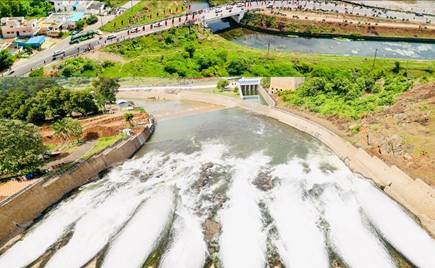
Water being released from the Mettur dam (photo: DD News); assured Cauvery flows are at the heart of the Mekedatu dispute.
Subject: Polity – Inter-State Water Disputes
Syllabus
TNPSC Group I/II: Inter-state relations; Cauvery water dispute; federalism and river water sharing
Context
Farmers’ organisations in Tamil Nadu staged protests on 19 November 2026 against Karnataka’s move to build a balancing reservoir across the Cauvery at Mekedatu, with members of the Desiya Thennidiya Nadigal Innaippu Sangam partially burying themselves in the sand on the dry Cauvery bed in Tiruchi and farmers in Karur district offering special prayers seeking to thwart the project.
Main Body: Multi-Dimensional Analysis
1. The Tiruchi protest: Members of the Desiya Thennidiya Nadigal Innaippu Sangam, led by its president P. Ayyakannu, staged a novel protest by partially burying themselves in the sand on the dry Cauvery bed, contending that if Karnataka builds the dam, not a single crop could be cultivated in Tamil Nadu; police and revenue officials persuaded them to withdraw.
2. The Karur prayers: In Karur district, members of the Cauvery Delta Farmers’ Welfare Association, led by president Mahadhanapuram V. Rajaram, performed special puja and abhishekam to ‘Cauvery’ Vinayagar at Mahadhanapuram, placing a copy of the Supreme Court’s water-sharing order before the deity and performing abhishekam with 108 pots of Cauvery water and 108 coconuts.
3. The farmers’ claim: The association recalled its legal battle of about 25 years to uphold Tamil Nadu’s rights, asserting that Karnataka was refusing to release Tamil Nadu’s share of 177 tmcft as ordered by the Cauvery Water Disputes Tribunal and the Supreme Court, while proceeding with the Mekedatu plan.
4. The Mekedatu project: Karnataka proposes a balancing reservoir at Mekedatu near the inter-State border, which it describes as a drinking water and hydropower project for Bengaluru and surrounding regions, but Tamil Nadu fears it will function as a storage that lets Karnataka regulate flows due to the lower riparian State.
5. Tribunal award and Supreme Court: The Cauvery Water Disputes Tribunal gave its final award in 2007 allocating shares among Tamil Nadu, Karnataka, Kerala and Puducherry; the Supreme Court’s 2018 judgment modified allocations while largely upholding the framework, including Tamil Nadu’s monthly entitlement at the inter-State border.
6. Institutional mechanism: The Cauvery Water Management Authority and the Cauvery Water Regulation Committee, constituted in 2018 on the Supreme Court’s direction, oversee implementation of monthly releases, and Tamil Nadu has repeatedly taken shortfall complaints to these bodies.
7. Constitutional frame: Inter-State river disputes are governed by Article 262 of the Constitution and the Inter-State Water Disputes Act, 1956, under which tribunals are constituted; Entry 56 of the Union List gives Parliament power over inter-State rivers to the extent Parliament declares expedient in the public interest.
8. Political economy: The Cauvery delta depends on timely Mettur releases for the samba crop; any upstream storage perceived as reducing assured flows triggers immediate farmer mobilisation, making Mekedatu one of the most durable inter-State flashpoints in the south.
9. Storage arithmetic: Tamil Nadu’s core objection is hydrological: a new upstream balancing reservoir of meaningful capacity would let Karnataka time its releases, converting a framework of assured monthly flows into discretionary ones during deficit years.
10. Federal institutions: Article 262 empowers Parliament to bar Supreme Court jurisdiction over inter-State water disputes once a tribunal is seized of them, which is why the tribunal-plus-authority track, rather than ordinary litigation, governs the Cauvery question.
11. Monsoon dependence: Both States’ positions harden in weak monsoon years, when the gap between awarded shares and realised flows widens; durable peace on the Cauvery requires deficit-sharing formulas that farmers on both sides consider fair.
12. Delta stakes: The Cauvery delta produces the bulk of Tamil Nadu’s rice bowl output and supports lakhs of farm households across Thanjavur, Tiruvarur, Nagapattinam and Mayiladuthurai, which is why any perceived threat to assured flows produces immediate and emotional mobilisation.
Positives, Negatives, & Government Schemes
| Category | Dimension / initiative | Explanation |
| Positive | Legal clarity exists | A final tribunal award, a Supreme Court judgment and a standing management authority already define Tamil Nadu’s entitlements. |
| Positive | Farmer vigilance | Sustained farmer mobilisation keeps the entitlements politically alive and pressures governments to pursue legal remedies. |
| Negative | Trust deficit | Karnataka’s project pushes and Tamil Nadu’s opposition run on parallel tracks, with each side reading the other’s moves as bad faith. |
| Government scheme | Cauvery Water Management Authority | The standing inter-State body that supervises monthly water releases under the 2018 framework. |
Examples
1. Tamil Nadu has approached the Supreme Court and the CWMA multiple times over shortfalls in monthly releases during deficit monsoon years.
2. Karnataka’s earlier Mekedatu proposals were opposed by Tamil Nadu in the CWMA, where the State argued the project required its consent as the lower riparian.
3. The 2007 tribunal award allocated 419 tmcft to Tamil Nadu, 270 tmcft to Karnataka, 30 tmcft to Kerala and 7 tmcft to Puducherry in a normal year.
4. Mettur dam’s customary opening date of 12 June for samba cultivation depends on realised inflows, which upstream storages directly affect.
5. Farmer protests on the Cauvery bed in Tiruchi are a recurring symbolic form, dramatising the fear of a dry river.
6. The farmers’ demand for 177 tmcft refers to the monthly release entitlements at Billigundulu, the gauging station at the inter-State border, which the CWRC monitors.
7. The Karur farmers’ act of placing the Supreme Court order before the deity symbolises how deeply the legal award is woven into delta farmers’ sense of entitlement and identity.
Way Forward
1. Track Karnataka’s formal submissions on Mekedatu before the CWMA and the Union Jal Shakti Ministry.
2. Follow Tamil Nadu’s legal and technical response, including any fresh litigation.
3. Watch monthly release compliance data published through the CWRC for evidence in the dispute.
4. Note whether the Centre convenes inter-State consultations, its designated role under the 1956 Act.
5. Pursue the complaint within the CWMA-CWRC framework first, reserving litigation for institutional failure, to keep the dispute within the specialised mechanism.
6. Invest in delta-side water use efficiency, from system rice intensification to canal modernisation, so every realised tmcft delivers more crop per drop.
Conclusion
The 19 November protests are the latest chapter in a dispute that has outlived its tribunal award because implementation, not allocation, is the live battleground. Tamil Nadu’s strength lies in its legal entitlements and the standing CWMA mechanism; its challenge is converting paper rights into realised flows, year after year.
Practice Mains Question
Examine the constitutional and institutional framework for resolving inter-State river water disputes in India, with reference to the Cauvery dispute and the Mekedatu project.
Topic 8: Tamil Nadu Creates 1,695 New Nursing Posts, Allocates Rs 42.72 Crore
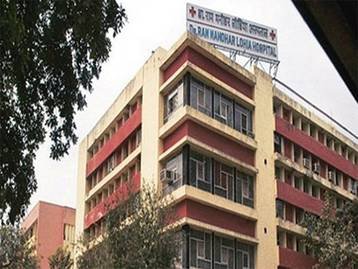
Representative image: a government hospital building (photo: DD News).
Subject: Health – Human Resources for Health
Syllabus
TNPSC Group II/IV: Health administration of Tamil Nadu; public health delivery; government recruitment
Context
The Tamil Nadu government has sanctioned 1,695 new nursing posts on consolidated pay in government hospitals and allocated Rs 42.72 crore for the purpose, through a government order issued on 18 November 2026 flowing from an announcement made during the discussion on the demands for grants for 2026-27, the health and family welfare department said on 19 November 2026.
Main Body: Multi-Dimensional Analysis
1. The sanction: The government order creates 1,695 nursing posts on consolidated pay across government hospitals, with a financial allocation of Rs 42.72 crore, intended to strengthen staffing and improve patient care.
2. Recruitment context: The sanction follows the appointment of 4,724 nurses through district health societies the previous month, appointments the department described as made through a transparent, merit-based selection process.
3. The backlog addressed: No regular recruitment of nurses had taken place in the five years since 2021, leaving several government hospitals with acute shortages that affected essential services for poor patients, the department acknowledged.
4. Pipeline expansion: The State has created 2,585 nursing seats across seven new nursing colleges, with admissions beginning this academic year, expanding the supply of trained nurses for future recruitment.
5. Why nurses matter: Nurses are the largest single cadre in hospital service delivery, driving ward care, maternal and child health services, immunisation and emergency response; staffing ratios directly determine quality and safety outcomes.
6. Consolidated pay caveat: Posts on consolidated pay are contractual rather than regular sanctioned posts with pay scales, so the measure expands service capacity quickly but leaves questions of job security, career progression and parity for the recruited nurses.
7. Demand-side pressure: Outpatient loads, institutional deliveries and non-communicable disease care in Tamil Nadu’s public system have grown steadily, making nurse vacancies one of the most visible gaps in hospital functioning.
8. National benchmark: India’s nurse-population ratio has historically trailed global norms, and States that staff adequately, Tamil Nadu among the better performers, show correspondingly stronger maternal and infant health indicators.
9. Announcement route: The posts flow from a commitment made during the demands for grants debate on the health department’s 2026-27 budget, the standard legislative route by which new sanctioned posts are promised and then formalised by government order.
10. First six months: The department presented the sanction as part of staffing measures taken in the government’s first six months in office, signalling that health human resources are an early administrative priority.
11. Training geography: Locating seven new nursing colleges within the government system keeps training aligned to public service needs, and students trained in government institutions form the natural recruitment pool for government hospitals.
12. Care quality link: Research on hospital outcomes consistently ties nurse staffing levels to mortality, infection rates and patient satisfaction, so the 1,695 posts are a quality intervention, not merely an employment measure.
13. Equity dimension: Government hospitals serve patients who cannot afford private care, so nurse shortages there are not merely an administrative gap but a regressive tax on the poor, paid in waiting time and compromised care.
14. Fiscal prudence: The Rs 42.72 crore allocation for 1,695 posts works out to a modest annual cost per post on consolidated pay, explaining why governments favour this route for rapid expansion within budget constraints.
15. Retention challenge: Creating posts solves vacancies only if nurses stay; workload, accommodation near posting stations and safety on night duty are the everyday determinants of retention that recruitment announcements do not address by themselves.
Positives, Negatives, & Government Schemes
| Category | Dimension / initiative | Explanation |
| Positive | Faster capacity | Consolidated-pay posts let the department fill wards quickly without waiting for a full regular recruitment cycle. |
| Positive | Supply-side reform | Seven new nursing colleges with 2,585 seats address the root constraint, the production of trained nurses. |
| Negative | Contractual fragility | Consolidated-pay positions risk attrition and low morale if they stretch on without regularisation. |
| Government scheme | District health society recruitment | The decentralised hiring route through which 4,724 nurses were recently appointed in Tamil Nadu. |
| Government scheme | New nursing colleges | Seven new government nursing colleges creating 2,585 seats, with admissions begun in the current academic year. |
Examples
1. The 4,724 district health society appointments last month show the State combining decentralised hiring with centralised sanctions to close gaps.
2. Government medical college hospitals in tier-two cities carry the heaviest patient loads per nurse, making them the likely priority for new postings.
3. The five-year recruitment freeze since 2021 illustrates how fiscal and procedural delays translate directly into ward-level shortages.
4. Nursing colleges attached to new government medical colleges anchor training capacity where service demand is highest.
5. Institutional delivery rates above 99 per cent in Tamil Nadu rest substantially on the availability of staff nurses in labour wards round the clock.
6. District health societies, constituted under the National Health Mission framework, allow districts to hire against local vacancies faster than centralised board recruitment permits.
7. The acknowledgement that no regular recruitment occurred since 2021 mirrors a pattern across States where hiring freezes created bulges of vacancies that single sanctions now attempt to unwind.
8. Primary health centres and taluk hospitals, the first referral tiers, depend on staff nurses for nearly every service point, making district-level posting choices as consequential as the total numbers sanctioned.
Way Forward
1. Publish hospital-wise posting plans for the 1,695 posts so underserved districts can be tracked.
2. Set a timeline for converting consolidated-pay posts into regular positions through the Tamil Nadu Medical Services Recruitment Board.
3. Monitor attrition among newly appointed nurses as an early-warning indicator.
4. Align nursing college output with projected vacancies so the pipeline neither starves nor floods.
5. Track whether the consolidated-pay nurses receive parity benefits and timely renewal, the two pressure points where contractual staffing systems typically fray.
6. Set measurable ward-staffing norms for major hospital types and publish compliance, so staffing debates move from anecdote to standard.
Conclusion
The 1,695 posts and Rs 42.72 crore allocation repair part of a five-year recruitment gap and, paired with 4,724 recent appointments and 2,585 new nursing seats, amount to a genuine rebuilding of nursing capacity. Regularising these positions and sustaining the training pipeline will decide whether the gain endures.
Practice Mains Question
Discuss the importance of nursing human resources in public health delivery in Tamil Nadu, and evaluate the State’s recent measures to address staffing shortages.
