
Topic 1: Rural Transport Development Scheme: 340 Rural Roads to Be Upgraded at Rs 1,038 Crore
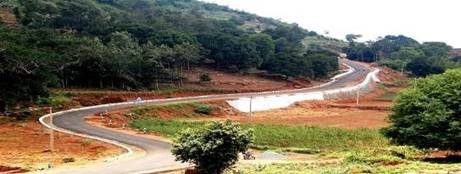
A rural road laid under the State’s rural development programme.
Subject: State Infrastructure – Rural Roads and Connectivity
Syllabus
TNPSC Group I/II/IV: Tamil Nadu government schemes; infrastructure development; rural development; public works administration
Context
Chief Minister C. Joseph Vijay has ordered the upgrading of 340 village panchayat and panchayat union roads with a total length of 797.13 km at an estimated cost of Rs 1,038 crore, as reported in news coverage. The order follows the announcement of the Rural Transport Development Scheme by the Minister for Public Works and Sports Development in the Tamil Nadu Legislative Assembly during the grant demand of the Highways and Minor Ports Department for 2026-27. The scheme aims to improve 2,000 km of rural roads every year at Rs 2,550 crore annually, giving rural residents easier access to schools, medical centres, markets and essential services.
Main Body: Multi-Dimensional Analysis
1. The scheme design: Under the Rural Transport Development Scheme, 1,000 km of single-lane roads in the districts will be widened into intermediate-lane routes each year at an estimated Rs 1,300 crore, and village panchayat and panchayat union roads will be upgraded to the standards of other district roads at about Rs 1,250 crore, as reported in news coverage.
2. The immediate tranche: The current order covers 340 roads totalling 797.13 km for Rs 1,038 crore, as reported in news coverage; the per-kilometre average is a derived arithmetic figure and does not by itself establish the scope or quality of works on any road.
3. Announced in the legislature: The scheme was announced during the demand for grants of the Highways and Minor Ports Department for 2026-27, which anchors it in the budget process; candidates should note that an announcement within a grant demand is not itself the passed appropriation.
4. Access rationale: The stated objective is access: schools, medical centres, markets and essential services. Rural road quality determines effective access to services more than nominal distance does.
5. Road hierarchy logic: Upgrading panchayat roads toward other-district-road standards moves the lowest tier of the road network closer to the maintained hierarchy, reducing the maintenance cliff between categories.
6. Annualised cadence: A 2,000 km per year programme at Rs 2,550 crore gives the scheme a rolling character; exam answers should distinguish the annual envelope from the current tranche of works.
7. Institutional home: The Highways and Minor Ports Department administers district and major roads, while village panchayat roads sit with rural local bodies; a scheme that upgrades panchayat roads to departmental standards implies coordinated execution.
8. Rural development linkage: Road connectivity multiplies the value of other rural investments: buses run, farm produce moves and emergency services reach only where roads allow.
9. Exam lens: For TNPSC, carry the scheme name, the numbers 340 roads, 797.13 km, Rs 1,038 crore, the annual target of 2,000 km at Rs 2,550 crore, and that the announcement came in the Assembly during the 2026-27 grant demand of the Highways and Minor Ports Department.
10. Standing check: Exact per-year targets and outlays are as reported in news coverage; treat them as the announced scheme parameters until a government order or budget document is inspected.
11. Complement to state highways: Rural roads carry the last kilometre of every journey; state highways are only as useful as the panchayat roads that feed them, so upgrading the bottom tier raises the value of the entire network.
12. Maintenance as the test: Rural roads fail first at shoulders and drainage; the scheme’s value depends on funded upkeep after upgrading, and candidates should treat maintenance provision as the exam question such programmes raise.
13. Climate resilience: Upgrading is also an opportunity to raise culverts, side drains and flood-vulnerable stretches; candidates may note that Tamil Nadu’s monsoon variability makes drainage the first casualty of under-built rural roads.
14. Prelims anchor: The numbers to memorise are the pair 340 roads and 797.13 km for Rs 1,038 crore, and the annual envelope of 2,000 km for Rs 2,550 crore; keep the specific order and the annual target distinct.
15. National context: Rural road development in India has been anchored for two decades by the Pradhan Mantri Gram Sadak Yojana, the national rural roads programme under which States build and upgrade village connectivity; State schemes such as this one supplement that national framework with State-funded upgrading.
16. Tamil Nadu’s road network: Tamil Nadu maintains one of the more extensive rural road networks among large States, and the panchayat tier carries the largest share of its village roads; upgrading that tier is where network quality is decided.
Positives, Negatives, & Government Schemes
| Category | Dimension / initiative | Explanation |
| Positive | Access | Upgraded roads directly improve rural access to schools, medical centres, markets and essential services. |
| Positive | Scale | An annual programme of 2,000 km gives the scheme a rolling, budgeted character rather than a one-off announcement. |
| Positive | Standards | Raising panchayat roads toward district-road standards reduces the quality gap at the bottom of the network. |
| Negative | Maintenance | Upgraded roads need funded maintenance; without it, widened surfaces deteriorate within a few monsoons. |
| Institution | Highways and Minor Ports | The scheme was announced during the department’s 2026-27 grant demand, anchoring it in the budget process. |
| Scheme link | Rural development | Road connectivity multiplies the value of schools, health centres and markets that other schemes build. |
Examples
1. The current order’s 340 roads across 797.13 km at Rs 1,038 crore is a concrete works order under the scheme, as reported in news coverage.
2. Widening 1,000 km of single-lane roads to intermediate lanes each year addresses the familiar rural bottleneck of two vehicles being unable to pass.
3. The Assembly announcement route places the scheme inside the department’s stated budget priorities for the year.
4. The scheme’s own stated purpose, access to schools, medical centres and markets, is the standard rural-connectivity rationale used in exam answers.
5. The scheme document flow, Assembly announcement followed by a works order, is the sequence candidates should track.
6. A demand for grants is the stage at which a department presents its planned spending to the Assembly; a scheme named in it still awaits the voting and appropriation steps before money can be drawn.
Way Forward
1. Maintenance funding should be announced alongside upgrading so the new surfaces are preserved.
2. Publication of the road-wise list enables public verification of which habitations benefit.
3. Coordination between the Highways Department and rural local bodies should be institutionalised for roads moving between categories.
4. Year-wise reporting of kilometres widened and upgraded against the 2,000 km target will keep the scheme accountable.
5. Adopt a published prioritisation formula for selecting roads, so that the 340-road list each year is seen to follow need rather than discretion.
Conclusion
The Rural Transport Development Scheme gives Tamil Nadu’s rural road programme a named structure, an annual envelope and a measurable target; its test will be execution against the 2,000 km yearly goal and the maintenance that follows.
Practice Mains Question
Discuss the significance of the Rural Transport Development Scheme for rural connectivity in Tamil Nadu. What institutional and maintenance challenges does such a programme face?
Topic 2: Rs 2.76 Crore Mineral Mixture Subsidy for 50,000 Aavin Heifer Calves
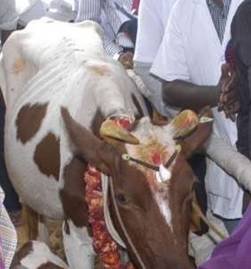
A milch cow at a State livestock distribution programme.
Subject: State Animal Husbandry – Dairy Development and Subsidy Design
Syllabus
TNPSC Group I/II/IV: Tamil Nadu government schemes; animal husbandry and dairy; cooperative institutions; subsidy administration
Context
The Tamil Nadu government has sanctioned Rs 2.76 crore to supply mineral mixture at a 50 per cent subsidy for 50,000 heifer calves owned by Aavin milk producers across the State, as reported in news coverage. The Animal Husbandry, Dairying, Fisheries and Fishermen Welfare Department has issued a Government Order granting administrative and financial sanction. The scheme was originally announced in the 2026-27 Agriculture Budget on 6 August. The year-long initiative aims to improve cattle health, reproductive performance and long-term milk yield.
Main Body: Multi-Dimensional Analysis
1. The instrument: Eligible farmers receive the nutritional supplement for 365 days, requiring an estimated 850 metric tonnes of mineral mixture over the year, as reported in news coverage; government bears 50 per cent of the cost.
2. Beneficiary share: The beneficiaries’ 50 per cent share will be recovered directly through their milk procurement payments, a design that avoids cash collection and ties repayment to the cooperative supply chain.
3. Eligibility: Farmers must be registered members of Aavin Milk Producers’ Cooperative Societies and active milk suppliers; priority goes to producers who already purchase Aavin mineral mixture regularly, as reported in news coverage.
4. Delivery chain: The scheme runs through District Cooperative Milk Producers’ Unions and local societies, which will maintain records of supplies, costs, subsidy amounts and beneficiary contributions.
5. Veterinary oversight: Extension officers will oversee distribution and financial reconciliation, while veterinarians attached to district unions will monitor the health and reproductive status of beneficiary calves.
6. Why heifers: Heifer calves are the future milking herd; mineral supplementation during growth affects reproductive performance and lifetime yield, which is why the scheme targets them rather than adult cattle.
7. GO-based sanction: The administrative and financial sanction flows through a Government Order, the standard instrument that converts a budget announcement into an implementable scheme.
8. Budget lineage: The scheme was announced in the 2026-27 Agriculture Budget on 6 August; tracing announcement-to-GO is the accountability chain candidates should note.
9. Exam lens: Carry the figures: Rs 2.76 crore sanction, 50 per cent subsidy, 50,000 heifer calves, 850 metric tonnes, Aavin cooperatives, recovery through milk payments, GO issued by the Animal Husbandry department, announced in the 2026-27 Agriculture Budget on 6 August.
10. Cooperative model: Aavin, the State cooperative federation, is the channel; the scheme therefore doubles as support to the cooperative dairy structure, not only to individual farmers.
11. Nutrition economics: Mineral deficiency shows up as poor conception and weak calves rather than dramatic disease, so supplementation is a quiet, compounding investment; the scheme’s year-long horizon matches that biology.
12. Cooperative leverage: Because the farmer’s share is deducted from milk payments, the scheme needs no separate recovery machinery, and the cooperative’s daily transaction becomes the collection point.
13. Delivery choice: The scheme keeps delivery inside the existing cooperative chain of Aavin societies rather than creating new machinery, using a producer network that already functions.
14. Dairy economics: The scheme sits inside Tamil Nadu’s effort to raise per-animal yield rather than herd size; mineral supplementation of growing heifers is a low-cost nutrition intervention available to small producers.
15. Prelims anchor: Remember the pairing of Rs 2.76 crore with 50,000 calves and 50 per cent subsidy, and that recovery runs through milk procurement payments, not cash collection.
16. Record keeping: The societies maintain records of supplies, costs, subsidy amounts and beneficiary contributions, as reported in news coverage, which gives the scheme a recorded trail for its supplies and subsidy flows.
17. Monitoring design: Extension officers overseeing distribution and veterinarians tracking calf health, as reported in news coverage, put two different kinds of supervision, administrative and technical, on the same beneficiary set.
18. Aavin’s structure: Aavin is the Tamil Nadu Co-operative Milk Producers’ Federation, the State-level federation of district cooperative milk unions; schemes routed through it reach producers who sell into the cooperative chain every day.
19. Mineral mixture role: Mineral mixtures supply calcium, phosphorus and trace minerals that ordinary feed often lacks; deficiency shows up as poor conception rates and weak growth rather than sudden illness, which is why supplementation is a scheduled, year-long input.
Positives, Negatives, & Government Schemes
| Category | Dimension / initiative | Explanation |
| Positive | Animal health | Year-long mineral supplementation supports growth, fertility and future milk yield of the heifer herd. |
| Positive | Collection design | Recovering the farmer share through milk payments removes collection friction and default risk. |
| Positive | Targeting | Limiting eligibility to active Aavin members directs subsidy to producers inside the formal cooperative chain. |
| Negative | Scale | Rs 2.76 crore for 50,000 calves is a modest, nutrition-level intervention, not a structural dairy reform. |
| Institution | Government Order | The scheme operates through a GO granting administrative and financial sanction, the implementable form of the budget announcement. |
| Scheme link | Agriculture Budget | The 6 August 2026-27 Agriculture Budget announcement is the scheme’s origin, showing the budget-to-GO pipeline. |
Examples
1. The estimated 850 metric tonnes of mineral mixture for 50,000 calves over 365 days, as reported in news coverage, lets candidates compute per-calf quantities as a derived exercise.
2. Recovery through milk procurement payments mirrors check-off systems used in cooperatives elsewhere, where dues are settled at the point of sale.
3. Priority for producers already buying Aavin mineral mixture rewards early adopters inside the cooperative, as reported in news coverage.
4. The scheme’s reliance on District Cooperative Milk Producers’ Unions shows the three-tier cooperative structure doing scheme delivery.
5. Veterinary monitoring of beneficiary calves builds a health record that can outlast the subsidy year.
6. The requirement of 850 metric tonnes over 365 days for 50,000 calves, as reported in news coverage, lets the supply be procured and audited in measurable batches.
7. Aavin’s role as both buyer of milk and channel of subsidy shows the State cooperative acting as scheme infrastructure, a point answers can generalise.
Way Forward
1. Publish district-wise beneficiary counts so coverage can be verified.
2. Measure outcomes, conception rates and first-lactation yield, rather than only quantities distributed.
3. Consider extending the model to calves outside the cooperative fold through private dairy channels.
4. Keep the GO and utilisation reports accessible for public scrutiny.
5. Publish the GO and district-wise allocation so producers can verify their society’s entitlement.
6. Evaluate conception and survival outcomes against a comparison group of non-beneficiary calves.
7. Keep beneficiary lists public at the society level so producers can see the selection is rule-bound.
8. Report the scheme’s utilisation in the department’s annual review so the subsidy shows its outcome record.
Conclusion
The mineral mixture subsidy is a small, well-designed animal nutrition intervention delivered through the cooperative dairy chain; its significance lies in delivery design and targeting, not in its fiscal size.
Practice Mains Question
Examine the design features of Tamil Nadu’s mineral mixture subsidy scheme for Aavin milk producers. How do cooperative institutions aid subsidy delivery?
Topic 3: Rain Deficit: Chief Minister Announces Six-Point Strategy as 22 Districts Fall Below Normal
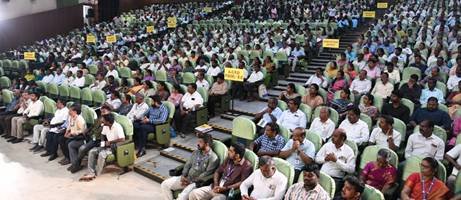
Officials at a State review meeting on northeast monsoon preparedness.
Subject: State Agriculture and Disaster Management – Drought Response
Syllabus
TNPSC Group I/II/IV: agriculture in Tamil Nadu; disaster management; water resources; state administration
Context
Chief Minister C. Joseph Vijay has chalked out a six-point strategy to address deficient rainfall across Tamil Nadu and the emerging drought-like situation, as reported in news coverage. The State received 20 per cent less rainfall than normal between June and November, and 22 districts recorded below-normal rainfall. Water levels in dams located in catchment areas have declined by 32.9 per cent, around 73 per cent of reservoirs hold storage at 50 per cent or below, and the area under crop cultivation has declined by 18.4 per cent compared with the corresponding period last year, according to the government.
Main Body: Multi-Dimensional Analysis
1. Immediate relief trigger: The Chief Minister announced that crop damage enumeration would commence immediately in areas where damage is 33 per cent or more, and that eligible farmers will receive relief assistance once enumeration is complete, as reported in news coverage.
2. Insurance enrolment push: Special camps and intensive awareness programmes are to be conducted so that all eligible farmers are enrolled under the crop insurance scheme, using the deficit year to widen coverage.
3. Field verification: Teams of ministers and officials will conduct field inspections in rainfall-deficient districts and submit reports, while monitoring officers appointed for the districts assess and report in detail.
4. Drinking water planning: Departments have been directed to prepare a comprehensive plan to ensure uninterrupted drinking water supply during the summer, the standard pre-summer instruction in deficit years.
5. Fodder allocation: The government has allocated Rs 13.26 crore towards subsidies and enhancing fodder production to address the anticipated livestock fodder shortage, as reported in news coverage.
6. Collector responsibility: District collectors have been instructed to closely monitor monsoon impact, crop damage and farmers’ requirements, keeping the district administration the pivot of response.
7. The 33 per cent threshold: Damage enumeration at or above 33 per cent crop loss is the recognised trigger level in relief administration, linking the announcement to established relief norms.
8. Data read: A 20 per cent State-level deficit with 22 below-normal districts, a 32.9 per cent fall in catchment dam levels and 73 per cent of reservoirs at or below half storage describes a widespread, not localised, stress, as reported in news coverage.
9. Exam lens: Carry the strategy elements, the figures 20 per cent deficit, 22 districts, 32.9 per cent, 73 per cent, 18.4 per cent, and the Rs 13.26 crore fodder allocation, all as reported in news coverage.
10. Institutional sequence: Enumeration, relief assistance, insurance enrolment, field reports, drinking water planning and fodder support form the standard drought-response sequence in State administration.
11. Second-order effects: A deficit year compresses rural wage work along with crop income; the strategy’s enumeration and relief steps operate on the farm, while the employment effects surface later in the season.
12. Insurance as the quiet winner: If enrolment camps succeed, the deficit year leaves a permanent legacy of higher insurance penetration, converting a crisis into risk-cover expansion.
13. Inter-departmental test: Drought response spans agriculture, revenue, water resources and animal husbandry; the six-point strategy is also a coordination drill for the State secretariat.
14. Prelims anchor: The set 20 per cent, 22 districts, 32.9 per cent, 73 per cent, 18.4 per cent and Rs 13.26 crore is the factual core; attach each figure to its indicator to avoid mix-ups.
15. Relief norms: The 33 per cent damage threshold links the announcement to standing relief practice, so the strategy is administrative routine applied early rather than an improvised package.
16. Water management angle: The 32.9 per cent decline in catchment dam levels against a 20 per cent rainfall deficit shows how inflow depends on where rain falls, not only how much; catchment rainfall matters more than State averages.
17. Pre-summer discipline: Directing departments to plan drinking water supply for summer in November, as reported in news coverage, is the early-action behaviour disaster frameworks prescribe.
Positives, Negatives, & Government Schemes
| Category | Dimension / initiative | Explanation |
| Positive | Speed | Immediate damage enumeration and field inspections front-load the response rather than waiting for the season to end. |
| Positive | Insurance | Special enrolment camps convert a stress year into wider crop insurance coverage. |
| Positive | Fodder | The Rs 13.26 crore fodder allocation addresses the livestock dimension that crop-centric relief misses. |
| Negative | Storage reality | With 73 per cent of reservoirs at or below half storage, summer supply management will be tight. |
| Institution | District administration | Collectors and monitoring officers anchor enumeration, reporting and relief delivery. |
| Scheme link | Crop insurance | Enrolment under the crop insurance scheme is the risk-transfer instrument the strategy leans on. |
Examples
1. The 33 per cent damage threshold for enumeration, as reported in news coverage, is the operational definition that converts ‘drought-like situation’ into payable relief.
2. The 18.4 per cent decline in cultivated area is both a symptom of the deficit and a leading indicator of production loss.
3. Fodder support of Rs 13.26 crore acknowledges that water stress hits dairying within weeks, earlier than crop relief arrives.
4. Field inspections by teams of ministers and officials create the administrative record on which relief and further assistance rest.
5. The direction to plan summer drinking water supply now is the textbook early-warning use of reservoir data.
6. The instruction that monitoring officers submit detailed district reports, as reported in news coverage, creates the paper trail on which any further central or State assistance would rest.
Way Forward
1. Complete enumeration transparently and publish village-level damage data.
2. Use the enrolment camps to close the insurance gap permanently, not only for this season.
3. Prepare summer water supply plans with rationing triggers and tanker logistics in advance.
4. Track fodder allocation utilisation district-wise so the Rs 13.26 crore reaches livestock keepers.
5. Publish the enumeration findings district-wise so relief coverage can be checked against actual damage.
6. Integrate reservoir and rainfall dashboards into weekly district reviews until the summer passes.
7. Treat the deficit year’s reports as the baseline for next year’s water budgeting exercise.
8. Document which districts met the enumeration timeline so accountability attaches to the calendar.
Conclusion
The six-point strategy applies the standard instruments of drought response, enumeration, relief, insurance, drinking water planning and fodder support, to a documented 20 per cent rainfall deficit; execution speed will decide how much distress is prevented.
Practice Mains Question
Discuss the components of Tamil Nadu’s response to the current rainfall deficit. What role do crop insurance and district administration play in drought management?
Topic 4: 148 Houses for Sri Lankan Tamils at Pambar Dam; Enhanced Monthly Cash Assistance Launched
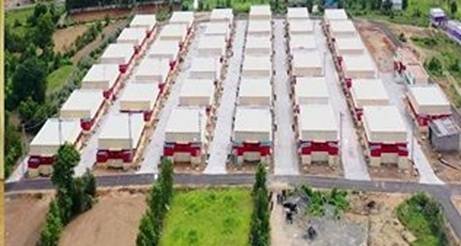
The new houses built for Sri Lankan Tamil families at the Pambaru rehabilitation camp.
Subject: State Welfare – Rehabilitation of Sri Lankan Tamils
Syllabus
TNPSC Group I/II/IV: welfare schemes in Tamil Nadu; rehabilitation policy; refugees and vulnerable groups; social justice
Context
Chief Minister C. Joseph Vijay inaugurated 148 houses built at a cost of Rs 8.52 crore at the Pambar Dam Sri Lankan Tamil Rehabilitation Camp in Krishnagiri district, with basic amenities provided at an additional Rs 1.37 crore, as reported in news coverage. He also commenced disbursal of an enhanced monthly cash assistance scheme benefiting 56,638 Sri Lankan Tamils belonging to 19,710 families in rehabilitation camps across the State, involving additional annual expenditure of Rs 14.95 crore.
Main Body: Multi-Dimensional Analysis
1. The rate revision: Monthly assistance for the head of a family rises from Rs 1,500 to Rs 1,800, for members aged 12 and above from Rs 1,000 to Rs 1,200, and for children below 12 from Rs 500 to Rs 600, as reported in news coverage.
2. Scale of coverage: The enhancement covers 56,638 individuals across 19,710 families in rehabilitation camps State-wide, an average of under three members per family, a derived figure.
3. The housing component: The 148 houses at the Pambar Dam camp cost Rs 8.52 crore, roughly Rs 5.8 lakh per house, a derived figure, with Rs 1.37 crore additionally for basic amenities.
4. Symbol and delivery: At the State secretariat, 16 beneficiaries from four families received the enhanced assistance from the Chief Minister, marking commencement of disbursal.
5. Wider support basket: The government also provides camp residents clothing, utensils, educational scholarships, free LPG connections, stoves and LPG subsidies, plus community investment funds for women’s self-help groups and skill training linked to employment for young people.
6. Policy lineage: Tamil Nadu’s rehabilitation camps for Sri Lankan Tamils date to the civil war influxes of the 1980s and later; cash assistance, housing and welfare benefits form a long-standing State framework that the enhancement updates.
7. Fiscal framing: Rs 14.95 crore of additional annual expenditure is modest in the State budget but meaningful per beneficiary; the revision raises each rate tier by 20 per cent rather than creating a new scheme.
8. Administration: Minister K. Thennarasu and Chief Secretary M. Sai Kumar were present at the function, as reported in news coverage.
9. Exam lens: Carry the numbers 148 houses, Rs 8.52 crore, Rs 1.37 crore, 56,638 beneficiaries, 19,710 families, Rs 14.95 crore, and the revised rates Rs 1,800, Rs 1,200 and Rs 600, all as reported in news coverage.
10. Welfare-state framing: The measures treat long-resident camp populations as welfare beneficiaries of the State, a distinctive feature of Tamil Nadu’s approach to Sri Lankan Tamil refugees.
11. Why camps persist: Sri Lankan Tamil families have remained in Tamil Nadu’s camps across decades because return, local integration and repatriation each carry legal and livelihood complications; the State’s welfare basket manages this long duration with dignity.
12. Housing as de-camping: Permanent houses at Pambar Dam convert a camp address into a home address, which matters for documents, schooling and a sense of permanence.
13. Rate revision practice: Periodic revision of cash rates, as in this enhancement, is how welfare amounts retain value; the three-tier family structure of the rates mirrors household composition.
14. Prelims anchor: Carry 148 houses, Rs 8.52 crore, Rs 1.37 crore, 56,638 individuals, 19,710 families and Rs 14.95 crore as one factual cluster, and the revised rates Rs 1,800, Rs 1,200, Rs 600 as another.
15. Federal dimension: Sri Lankan Tamil rehabilitation in Tamil Nadu operates within India’s refugee approach, which works through ad hoc arrangements rather than a national refugee law; the State’s welfare role is therefore distinctive.
16. Documentation value: Housing at a named camp with civic amenities also regularises residents’ addresses for certificates and school admissions, an unglamorous but decisive welfare effect.
17. Scale honesty: At roughly Rs 2,600 per person per year of additional expenditure, a derived figure, the enhancement is a measured revision of about 20 per cent in each tier, and answers should present it as such rather than as transformation.
Positives, Negatives, & Government Schemes
| Category | Dimension / initiative | Explanation |
| Positive | Rate revision | Raising monthly rates across all three member categories updates assistance against price rise. |
| Positive | Housing | 148 permanent houses with amenities move camp families from temporary to durable shelter. |
| Positive | Coverage | The enhancement reaches all 19,710 camp families State-wide, not a pilot subset. |
| Negative | Camp dependency | Long-term camp residence itself signals unfinished integration; assistance manages, rather than resolves, the condition. |
| Institution | Rehabilitation administration | Camps, assistance and housing are delivered through the State’s rehabilitation machinery with finance department backing. |
| Scheme link | Livelihood support | Community investment funds for women’s SHGs and skill training link relief to livelihoods. |
Examples
1. The revised rates, Rs 1,800 for the family head, Rs 1,200 for members aged 12 and above, Rs 600 for children, show a graded family-assistance structure, as reported in news coverage.
2. The Pambar Dam camp in Krishnagiri district is among the rehabilitation camps housing Sri Lankan Tamils in Tamil Nadu.
3. Commencement through 16 beneficiaries at the secretariat is the customary ceremonial start of a State-wide disbursal.
4. Free LPG connections and stoves, educational scholarships and clothing are the non-cash components of the camp welfare basket.
5. The additional annual outlay of Rs 14.95 crore for 56,638 beneficiaries works out to roughly Rs 2,600 per person per year, a derived figure useful for scale comparison.
6. The enhanced rates apply to 56,638 beneficiaries across camps State-wide, as reported in news coverage, well beyond the 16 who received payments at the launch function.
Way Forward
1. Publish camp-wise housing construction and occupation data for public tracking.
2. Link skill training to actual placements so young people in camps move to work.
3. Review assistance rates periodically against inflation rather than at long intervals.
4. Document the rehabilitation framework so the welfare basket is administered by rule, not discretion.
5. Pair housing with title and address documentation so camp residents gain full civic records.
6. Publish the schedule by which remaining camp housing gaps will be addressed.
Conclusion
The house inauguration and the cash assistance enhancement renew Tamil Nadu’s distinctive welfare framework for Sri Lankan Tamil camp residents, combining durable housing with revised income support.
Practice Mains Question
Discuss Tamil Nadu’s welfare measures for Sri Lankan Tamils in rehabilitation camps. What do the enhanced cash assistance and housing initiatives indicate about the State’s rehabilitation policy?
Topic 5: Model Registration Hubs: Six District Centres Notified in First Phase
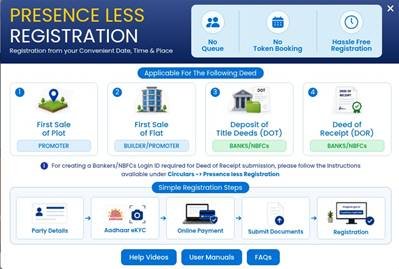
Registration services offered on the State’s online registration portal.
Subject: State Administration – Registration Services and Ease of Services
Syllabus
TNPSC Group I/II/IV: Tamil Nadu administration; public service delivery reforms; Registration Department; statutory framework
Context
The Tamil Nadu government has ordered the establishment of six model registration hubs in the first phase of an overhaul of property registration services, adding Tambaram to the earlier list of five locations, as reported in news coverage. A Government Order issued on 26 November sanctioned new Joint Sub-Registrar offices in Chennai North, Chennai South, Chennai Central, Chengalpattu, Coimbatore North and Tambaram, to be amalgamated with the respective District Registrar offices and to function as model registration hubs bringing registration services under one roof.
Main Body: Multi-Dimensional Analysis
1. The administrative lever: The government order authorises the newly created Joint Sub-Registrars to exercise the powers and discharge the duties of Registrars, as reported in news coverage; the hubs therefore function through an executive order within the registration department’s administration.
2. One-roof design: Amalgamation with District Registrar offices places sub-registry functions and the district head of the department in one location, cutting the movement of files and parties between offices.
3. Programme origin: Commercial Taxes and Registration Minister D. Logesh Tamilselvan announced in the Assembly on 7 September that 25 model registration hubs would be established across the State; the first phase began with five locations and now stands at six with Tambaram, as reported in news coverage.
4. Administrative instruction: The Inspector General of Registration has been directed to issue the administrative instructions needed for the hubs’ functioning, the standard GO-to-circular chain.
5. Coverage logic: The six chosen centres, three in Chennai city plus Chengalpattu, Coimbatore North and Tambaram, are all major urban registration markets, as reported in news coverage.
6. Administrative route: The government has used an executive government order rather than a statutory amendment to create and empower the hubs, as reported in news coverage; an order is quicker to issue and to extend than a legislative change.
7. Citizen-facing gain: One-stop hubs mean document registration, certified copies, encumbrance certificates and related services at a single centre, reducing visits and intermediaries.
8. Exam lens: Carry: six model registration hubs in phase one, Chennai North, Chennai South, Chennai Central, Chengalpattu, Coimbatore North, Tambaram; GO dated 26 November; 25 hubs announced in the Assembly on 7 September, as reported in news coverage.
9. Department structure: The Commercial Taxes and Registration Department handles both taxation and registration; the hubs reform sits in its registration wing under the Inspector General of Registration.
10. Reform trajectory: Model hubs continue a line of registration reforms in the State, from computerisation to online appointments, now moving to service consolidation.
11. Why registration matters to citizens: Property registration is the point where most families meet the revenue-cum-registration machinery; delay and discretion there shape the citizen’s view of the State more than most reforms.
12. Consolidation logic: Co-locating Joint Sub-Registrars with District Registrars shortens the escalation path for disputed or unusual documents, since senior authority sits in the same building.
13. Sequencing risk: A phased rollout can strand districts between old and new systems; the IGR’s instructions must handle documents begun in one office and completed in another.
14. Prelims anchor: The six centres, the 26 November GO and the 7 September announcement of 25 hubs form the testable set; the announced phase two would extend the model to the remaining nineteen locations, as reported in news coverage.
15. Comparative reform: Other service sectors, from transport to revenue, have used hub or single-window consolidation; registration hubs apply the same administrative logic to property documents.
16. Transaction experience: Registration touches large lifetime transactions; a hub that cuts a day of running between offices converts directly into saved wages and reduced broker dependence for ordinary families.
17. Statutory literacy: The episode teaches that administrative reform often rides existing provisions of old Acts; the use of the 1908 Act in 2026 is the illustration.
Positives, Negatives, & Government Schemes
| Category | Dimension / initiative | Explanation |
| Positive | Convenience | Registration services under one roof reduce visits, waiting and dependence on intermediaries. |
| Positive | Administrative footing | The order empowers Joint Sub-Registrars at the hubs to exercise Registrar powers through a government order, as reported in news coverage. |
| Positive | Phasing | A six-centre first phase lets procedures stabilise before the announced 25-hub rollout. |
| Negative | Equity | Citizens outside the six hub locations wait for later phases, so service quality diverges geographically for now. |
| Institution | Inspector General of Registration | The IGR issues the administrative instructions that make the GO operational. |
| Scheme link | Assembly announcement | The 7 September announcement of 25 hubs is the policy origin the 26 November GO implements. |
Examples
1. Chennai gets three hubs, North, South and Central, reflecting the volume of registration transactions in the metropolitan region, as reported in news coverage.
2. Tambaram’s addition as the sixth centre in the first phase shows the rollout responding to demand along the city’s southern corridor.
3. Authorising Joint Sub-Registrars to act as Registrars under the existing Act, as reported in news coverage, avoids the delay of statutory amendment.
4. The direction to the IGR to issue instructions is the administrative step that turns sanctioned posts into functioning counters.
5. The Assembly announcement to GO sequence, 7 September to 26 November, gives candidates a dated policy-implementation timeline.
6. Amalgamating the new Joint Sub-Registrar offices with the respective District Registrar offices brings registration services under one roof, so parties deal with a single office.
Way Forward
1. Publish service-wise turnaround times at the hubs so the model’s performance is measurable.
2. Staff the hubs adequately before expanding, since consolidation concentrates workload.
3. Extend the hub model to the remaining announced hubs on the schedule.
4. Integrate online appointment and document-status systems with the physical hubs.
5. Track waiting times before and after hubs open, and publish the comparison.
6. Set a public dashboard of hub-wise registrations completed per day.
7. Collect citizen feedback at each hub monthly and act on recurring complaints.
8. Plan phase two districts explicitly so the remaining 19 announced hubs have a calendar.
9. Review the hubs after six months against the one-roof objective before announcing the next phase.
Conclusion
The model registration hub order converts an Assembly announcement into functioning offices through the registration department’s administrative framework; the reform’s value will be judged on turnaround times at the six first-phase centres.
Practice Mains Question
Discuss the model registration hub initiative of Tamil Nadu. How does creating the hubs through a government order illustrate administrative reform without fresh legislation?
Topic 6: Kashi Tamil Sangamam 5.0: Fifth Edition in Varanasi from 28 November to 12 December
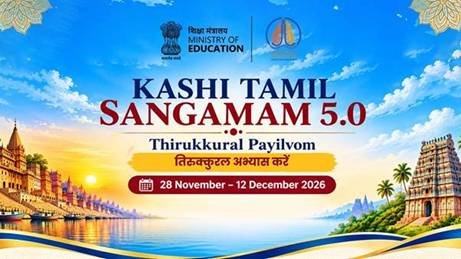
Kashi Tamil Sangamam.
Subject: Culture – Tamil Heritage and National Integration
Syllabus
TNPSC Group I/II/IV: Tamil culture and literature; Thirukkural; Centre-State cultural programmes; Ek Bharat Shreshtha Bharat
Context
The fifth edition of Kashi Tamil Sangamam will be held from 28 November to 12 December 2026 in Varanasi, to be inaugurated by Vice-President C. P. Radhakrishnan, with Union Defence Minister Rajnath Singh scheduled to attend the valedictory session, according to the Press Information Bureau. The event will bring together over 1,400 delegates to celebrate the cultural, linguistic and civilisational ties between Tamil Nadu and Kashi, and is organised by the Department of Higher Education, Union Ministry of Education, with IIT Madras, Banaras Hindu University, the Central Institute of Classical Tamil, the Uttar Pradesh government and several Central departments.
Main Body: Multi-Dimensional Analysis
1. The theme: KTS 5.0 carries the theme ‘Thirukkural Payilvom, Thirukkural Abhyas Karen’, meaning ‘Let us learn the Thirukkural’, focusing awareness on the text among students and youth, according to the PIB release.
2. The text at the centre: The Thirukkural, authored by Thiruvalluvar, contains 1,330 couplets across three parts, Aram (virtue), Porul (wealth) and Inbam (love), covering ethics, governance, human relationships, compassion, discipline and responsible living.
3. Delegate structure: Around 1,400 participants from Tamil Nadu, organised into seven groups of about 200 each, undertake an eight-day journey of four days of travel and four days of visits and structured programmes, covering Varanasi, Prayagraj and Ayodhya.
4. Institutional partners: The collaboration of IIT Madras, BHU and the Central Institute of Classical Tamil puts academic institutions, not only governments, at the centre of the cultural exchange.
5. Ek Bharat Shreshtha Bharat: The Sangamam is presented as an initiative inspired by the Prime Minister’s vision to strengthen bonds between the two regions under the Ek Bharat Shreshtha Bharat spirit, according to the release.
6. Tamil Nadu linkage: For the State, the event projects classical Tamil literature onto a national stage and links Tamil cultural institutions with north Indian academic centres.
7. Edition history: This is the fifth edition of the Sangamam; candidates should track editions, venues and themes as a cultural-current-affairs set.
8. Exam lens: Carry: fifth edition, 28 November to 12 December 2026, Varanasi; inaugurated by the Vice-President; Defence Minister at the valedictory; over 1,400 delegates; theme on learning the Thirukkural; organisers Department of Higher Education with IIT Madras, BHU and CICT.
9. Centre-State frame: The Sangamam is organised under the Union Ministry of Education’s Ek Bharat Shreshtha Bharat programme with the Uttar Pradesh government, so the event works as a Centre-State institutional collaboration, as the release notes.
10. Thirukkural facts: The 1,330 couplets in three sections and the text’s ethical breadth are standard TNPSC cultural facts, and the theme makes them directly examinable this cycle.
11. Soft-power reading: The Sangamam works as cultural diplomacy within the nation, pairing the oldest living Tamil tradition with Kashi’s civilisational status.
12. Why the Thirukkural travels: The text is ethical rather than sectarian, which lets it anchor a national cultural event without religious framing.
13. Institutional pairing: IIT Madras partnering with BHU pairs a technical institute from Tamil Nadu with one of the oldest universities of the north, showing cultural exchange carried by academic bodies.
14. Series as policy: A fifth edition means the Sangamam has moved from one-off event to recurring institution; continuity across editions is itself a cultural-integration outcome.
15. Prelims anchor: Fifth edition, 28 November to 12 December 2026, Varanasi, the Vice-President inaugurating, over 1,400 delegates, and the Thirukkural theme are the testable facts.
16. Text facts: The Thirukkural’s 1,330 couplets across Aram, Porul and Inbam are permanent TNPSC cultural content, refreshed this cycle by the theme.
17. Theme focus: The edition’s Thirukkural theme gives the cultural exchange a specific literary core, as announced in the programme details.
18. Delegate economics: Seven groups of about 200, travelling eight days each, according to the release, make the Sangamam a logistics exercise as much as a cultural one, and its smooth running is part of the message.
Positives, Negatives, & Government Schemes
| Category | Dimension / initiative | Explanation |
| Positive | Cultural visibility | The Sangamam places Tamil classical literature before a national audience in Varanasi. |
| Positive | Youth focus | A learning theme centred on the Thirukkural targets students and youth rather than ceremony alone. |
| Positive | Institutional depth | IIT Madras, BHU and the CICT give the event academic substance beyond protocol. |
| Negative | Symbolic risk | Cultural events must be matched by sustained academic exchange, or they remain pageantry. |
| Institution | Ministry of Education | The Department of Higher Education anchors the programme with partner institutions. |
| Scheme link | Ek Bharat Shreshtha Bharat | The event sits inside the national paired-State cultural integration framework. |
Examples
1. The 1,400 delegates travelling in seven groups of about 200 show a structured immersion design rather than a single ceremony, according to the PIB release.
2. The itinerary covering Varanasi, Prayagraj and Ayodhya combines academic, cultural and spiritual engagement across three cities.
3. The edition’s theme text, the Thirukkural, is a classical Tamil work on ethics that has been translated into many languages.
4. The Vice-President inaugurating and the Defence Minister attending the valedictory mark the protocol level of the event.
5. The Central Institute of Classical Tamil’s participation brings the custodian institution for classical Tamil into the partnership.
6. The eight-day structure, four days of travel and four of programmes, according to the PIB release, treats the journey itself as part of the immersion.
Way Forward
1. Convert the event into year-round exchange programmes between Tamil and Kashi institutions.
2. Publish editions’ outcomes, participants, publications and collaborations, for continuity.
3. Deepen Thirukkural teaching materials jointly produced by CICT and BHU.
4. Track delegate experiences to keep the immersion design improving.
5. Create a digital archive of each edition’s lectures and performances for year-round access.
6. Rotate thematic focus across Tamil classical works in future editions to widen the curriculum.
7. Invite Tamil departments of more universities into the partnership to widen academic depth.
8. Use the delegate alumni as ambassadors for subsequent editions in their districts.
9. Publish the full programme schedule so schools and colleges can plan participation.
10. Document each edition’s theme, partners and delegate count so the series builds an examinable record.
11. Pair every edition with a small publication on the chosen text in Hindi and English.
Conclusion
Kashi Tamil Sangamam 5.0 continues a now-established cultural bridge, with this edition’s Thirukkural theme giving it a specific, examinable literary core.
Practice Mains Question
Discuss the objectives and significance of the Kashi Tamil Sangamam. How does the fifth edition’s focus on the Thirukkural serve cultural integration?
Topic 7: Tamil Nadu Notifies GST Amendments: Tyres, Fertilisers, EV Services and Reverse Charge Changes
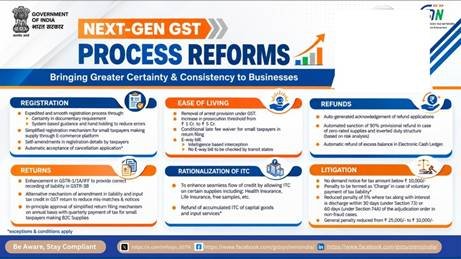
GST process reforms announced for taxpayers.
Subject: State Finance – GST Implementation
Syllabus
TNPSC Group I/II/IV: taxation in India and Tamil Nadu; GST structure; commercial taxes administration; fiscal federalism
Context
Tamil Nadu has notified a series of amendments to the State GST framework, covering tax rates, exemptions and reverse-charge provisions, as reported in news coverage. The amendments were notified on 18 November with effect from 1 November, as verified against the government gazette. The changes were issued by the Commercial Taxes and Registration Department through government orders.
Main Body: Multi-Dimensional Analysis
1. Rate changes: Retreaded tractor tyres move to the 2.5 per cent State GST schedule while other retreaded or used pneumatic rubber tyres remain at 9 per cent; psyllium seeds (isabgol) enter the exemption list, as reported in news coverage; note that 2.5 per cent is the State GST component, so the corresponding total GST, Central plus State, is 5 per cent.
2. Fertiliser treatment: Pre-packaged and labelled animal and plant fertilisers and organic fertilisers attract 2.5 per cent State GST under the amendments, as reported.
3. Reverse charge expansion: Registered businesses purchasing used cooking oil, plastic waste, discarded tyres and electrical and electronic waste from unregistered suppliers must pay GST under the reverse-charge mechanism, extending tax responsibility to buyers in waste supply chains.
4. Electric vehicle services: Passenger transport by electric vehicles and EV rental services attract 2.5 per cent State GST, with the same rate for goods transport by EVs; battery charging cost must be included in the rental value, with input tax credit restrictions specified, as reported.
5. Input tax credit conditions: Rules for input tax credit on hotel accommodation, restaurant and outdoor catering services change, allowing credit for services received from another establishment in the same chain within specified limits, but credit above the 2.5 per cent State tax paid is not available.
6. Delivery services: For delivery services other than postal and courier, supplied through e-commerce platforms, tax liability depends on the supplier’s registration status; where the supplier is not liable to register, liability shifts to the platform, as reported.
7. Exemptions added: Warehousing of agricultural produce and coffee curing services for cultivators receive exemption; toll collection rights on roads and highways are also exempted, as reported.
8. Seed definition widened: The definition of seeds is expanded to include grains, millets, pulses, oilseeds, fibre crops, fodder crops, fruits, vegetables, spices, flowers and ornamental plants, plus planting material such as seedlings, tubers, roots, grafts and tissue-culture plants.
9. Exam lens: Carry: notified 18 November effective 1 November 2026; retreaded tractor tyres 2.5 per cent; isabgol exempt; reverse charge on specified waste purchases; EV services 2.5 per cent; all as reported in news coverage.
10. Federal design: State GST notifications mirror decisions taken in the GST Council; the State’s Commercial Taxes and Registration Department issues the State-side orders that give Council decisions legal effect in Tamil Nadu.
11. Reverse charge as formalisation: Making the registered buyer pay GST on purchases from unregistered waste sellers converts the buyer into the tax collector, the standard technique for taxing informal supply chains.
12. Green rates as signal: A 2.5 per cent rate on EV transport and rental tells the market the State wants electric mobility to scale; tax schedules increasingly carry industrial-policy messages.
13. Compliance watchpoint: Conditional input tax credits, as for hotels and catering, are where small businesses most often err; clear circulars decide whether the amendment simplifies or confuses.
14. Prelims anchor: Retreaded tractor tyres at 2.5 per cent, other retreaded tyres at 9 per cent, isabgol exempt, reverse charge on specified waste, EV services at 2.5 per cent, effective 1 November 2026: the rate list is the testable core.
15. Notification discipline: The effective 1 November changes were published on 18 November, as verified against the government gazette; reading the effective date beside the notification date is the habit that prevents factual errors in answers.
16. Waste chain effect: Reverse charge on used cooking oil, plastic waste, discarded tyres and e-waste, as reported in news coverage, gives the circular economy a tax paper trail, useful for both revenue and environmental tracking.
17. Rate symmetry: The identical 2.5 per cent rate on EV passenger transport, EV rental and goods EV services keeps the green rate simple to remember and to apply.
Positives, Negatives, & Government Schemes
| Category | Dimension / initiative | Explanation |
| Positive | Green incentive | A 2.5 per cent rate on EV transport and rental services supports electric mobility adoption. |
| Positive | Farm relief | Exemptions for warehousing of agricultural produce and coffee curing ease cultivator costs. |
| Positive | Waste formalisation | Reverse charge on waste purchases pulls informal waste trade into the tax record. |
| Negative | Complexity | Multiple rate schedules and conditional credits raise compliance complexity for small businesses. |
| Institution | Commercial Taxes and Registration | The department issues the government orders implementing GST changes in the State. |
| Scheme link | GST Council | State amendments track Council decisions, illustrating the dual-notification structure of GST. |
Examples
1. Retreaded tractor tyres at 2.5 per cent versus other retreaded tyres at 9 per cent shows classification-sensitive rate setting, as reported in news coverage.
2. Reverse charge on used cooking oil and plastic waste makes registered buyers the tax point in supply chains dominated by unregistered sellers.
3. The expanded seed definition, covering even tissue-culture plants, modernises an agricultural tax definition to current farming practice.
4. EV rental with battery charging included in value illustrates how tax law adapts to bundled green services.
5. The 18 November notification applying from 1 November, as verified against the government gazette, shows effect dates can precede notification dates within an amendment cycle.
6. Isabgol entering the exemption list, as reported in news coverage, illustrates how specific agricultural products move between schedules through such notifications.
Way Forward
1. Publish plain-language guidance so small businesses can apply the rate and credit changes correctly.
2. Monitor reverse-charge compliance in waste supply chains without burdening small recyclers.
3. Review the EV services rate’s effect on adoption after a year of operation.
4. Align departmental circulars so field formations apply the amendments uniformly.
5. Issue a consolidated rate chart after each notification cycle so traders do not track scattered orders.
6. Publish early collections data on the new reverse-charge categories to test compliance.
Conclusion
The notified amendments update Tamil Nadu’s GST schedules across agriculture, mobility and waste chains, illustrating how State notifications operationalise the evolving GST framework.
Practice Mains Question
Discuss the recent GST amendments notified by Tamil Nadu. What do the reverse-charge expansion and EV service rates indicate about the direction of State tax policy?
Topic 8: Vetri Magalir Goat Rearing and Free Milch Cow Schemes: 100 Per Cent Subsidy for Rural Women
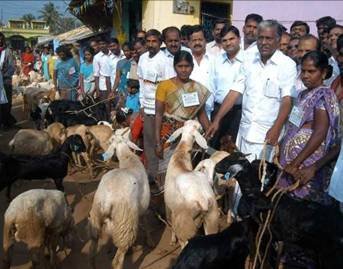
Goats distributed to women beneficiaries under the State livestock scheme.
Subject: State Animal Husbandry – Women’s Livelihood Schemes
Syllabus
TNPSC Group I/II/IV: Tamil Nadu government schemes; women’s welfare; animal husbandry; rural livelihoods
Context
The Animal Husbandry Department of the Government of Tamil Nadu is providing sheep or goats with a 100 per cent subsidy to eligible rural women under the Vetri Magalir (Successful Women) Goat Rearing Scheme in the current year, according to district administration press releases. The department is also implementing a scheme providing milch cows free of cost to rural women to support their livelihoods and increase milk production. District administrations, including the Nilgiris, Tiruchirappalli, Tirunelveli and Tiruvallur, have invited applications, with Tiruvallur notifying free goats at 100 per cent subsidy for 408 eligible beneficiaries.
Main Body: Multi-Dimensional Analysis
1. Scheme intent: The Vetri Magalir Goat Rearing Scheme aims to improve the livelihoods and economic development of women in rural areas by transferring a productive asset, small ruminants, with full subsidy, according to district press releases.
2. Asset-based design: Free distribution of goats or milch cows creates an income-generating asset rather than a cash transfer; the asset produces continuing income through milk, breeding and sale of stock.
3. Full subsidy: The 100 per cent subsidy removes the beneficiary contribution that many livestock schemes require, opening the scheme to the poorest rural women who cannot raise a margin, as the releases describe.
4. Geographic rollout: Application invitations from the Nilgiris, Tiruchirappalli, Tirunelveli and Tiruvallur districts in late November 2026 show the scheme operating State-wide through district machinery in the current year.
5. Beneficiary scale example: Tiruvallur district has invited applications for free goats at 100 per cent subsidy for 408 eligible beneficiaries, giving a district-level sense of unit scale, per its press release.
6. Milch cow complement: The parallel free milch cow scheme for rural women pursues the same livelihood logic through dairying, explicitly to raise milk production alongside income, per the releases.
7. Departmental anchor: Both schemes sit with the Animal Husbandry Department, which handles veterinary support, breed quality and follow-up, the technical backbone that asset-transfer schemes need.
8. Women’s economic role: Targeting women recognises their central role in small livestock and dairy work in rural Tamil Nadu, directing the asset and its income to the woman of the household.
9. Exam lens: Carry: Vetri Magalir Goat Rearing Scheme, 100 per cent subsidy, rural women, Animal Husbandry Department, current-year rollout through districts; free milch cow scheme for rural women; Tiruvallur’s 408-beneficiary notification, all from district administration press releases.
10. Livelihood-policy framing: Such schemes belong to the asset-transfer family of anti-poverty interventions, distinct from cash transfers, with outcomes dependent on veterinary support and market access.
11. Why livestock for women: Goats and cows match the asset base rural women already manage; the schemes build on existing skill rather than imposing a new occupation.
12. The 100 per cent choice: Full subsidy deliberately includes women with no savings; the trade-off is fiscal cost per beneficiary, which is why beneficiary selection and follow-up carry the scheme’s credibility.
13. From asset to income: A goat unit pays back through breeding and milk only if veterinary care, feed and markets exist; the department’s field network is the scheme’s real guarantee.
14. Prelims anchor: Vetri Magalir Goat Rearing Scheme, 100 per cent subsidy, rural women, Animal Husbandry Department; the free milch cow scheme; Tiruvallur’s 408 beneficiaries: these are the testable facts.
15. Policy family: The schemes belong with earlier livestock-distribution programmes in the State’s welfare tradition, where assets, from milch animals to goats, carry livelihood policy.
16. Selection integrity: Application-based selection, as the district invitations describe, makes eligibility criteria and beneficiary lists the integrity checkpoint of a 100 per cent subsidy scheme.
17. Complementarity: Goat units suit landless women while milch cows suit households with some feed access; running both lets the department match asset to household capacity.
Positives, Negatives, & Government Schemes
| Category | Dimension / initiative | Explanation |
| Positive | Asset creation | A goat unit or milch cow is a productive asset that generates continuing income for the woman. |
| Positive | Full subsidy | The 100 per cent subsidy includes women unable to contribute any margin. |
| Positive | Women-focused | Assets are placed in women’s hands, supporting their economic standing within the household. |
| Negative | Follow-up dependence | Without veterinary care and feed support, distributed livestock can sicken or die, wasting the asset. |
| Institution | Animal Husbandry Department | The department implements through district administrations with technical support. |
| Scheme link | Rural livelihoods | The schemes complement dairy and livestock programmes such as cooperative milk societies. |
Examples
1. Tiruvallur’s notification of 408 beneficiaries for free goats shows application-based selection at district level, per its press release.
2. The Nilgiris district release frames the scheme as improving livelihoods and economic development of rural women.
3. Tiruchirappalli’s invitations in both Tamil and English show the district-level publicity machinery for scheme access.
4. The free milch cow scheme’s stated twin goals, women’s livelihood and higher milk production, link household income to supply-side dairy policy.
5. District administrations including the Nilgiris, Tiruchirappalli, Tirunelveli and Tiruvallur have issued application calls in the current year, according to district press releases.
6. Application invitations issued across the Nilgiris, Tiruchirappalli, Tirunelveli and Tiruvallur, per district press releases, confirm the scheme is open for applications in those districts this year.
7. The district press releases explicitly frame both schemes around women’s livelihood improvement, keeping the gender objective on record rather than implied.
Way Forward
1. Publish district-wise beneficiary lists and livestock survival data for accountability.
2. Bundle veterinary check-ups and feed support with the distributed animals.
3. Link beneficiaries to milk cooperatives and local markets so produce sells predictably.
4. Review outcomes after a year to calibrate the asset mix between goats and cows.
5. Record each beneficiary’s livestock and income outcome for at least one year after distribution.
6. Coordinate with milk cooperatives so new milch cow owners find assured buyers from day one.
7. Digitise applications so rural women can apply without repeated office visits.
8. Publish beneficiary selection criteria in every district invitation, as a standing rule.
9. Review animal health outcomes at three and twelve months through the department’s veterinary network.
10. Align future distributions with the fodder and feed position of each district so new animals are supportable.
Conclusion
The Vetri Magalir goat and free milch cow schemes put subsidised productive assets in rural women’s hands through the Animal Husbandry Department; their success rests on veterinary follow-up and market linkage.
Practice Mains Question
Discuss asset-transfer schemes for rural women’s livelihoods in Tamil Nadu, with reference to the Vetri Magalir Goat Rearing Scheme and the free milch cow scheme.
