
Editorial Analysis 1: Bridging the Divide: The SEHAT Mission and the Future of Nutritional Security
Context
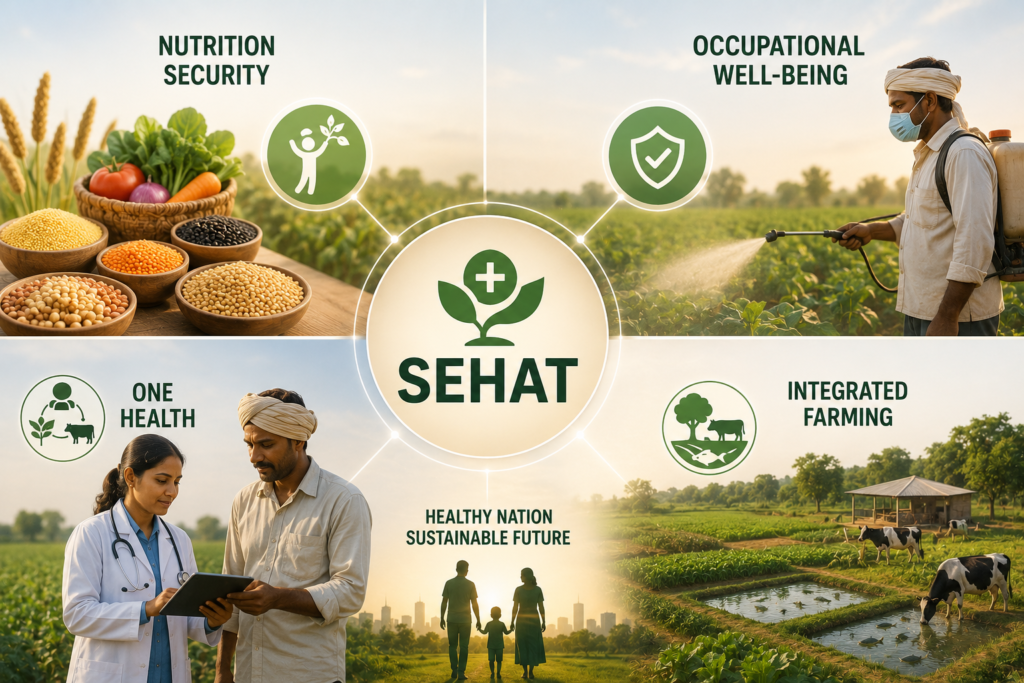
In a landmark move to address the chronic disconnect between food production and public health outcomes, the Indian Council of Medical Research (ICMR) and the Indian Council of Agricultural Research (ICAR) have jointly launched the SEHAT (Science Excellence for Health through Agricultural Transformation) mission. This national mission-mode programme aims to translate agricultural advancements into tangible health outcomes, shifting the national focus from mere food security to holistic nutritional security and occupational well-being in the agrarian sector.
Syllabus
- GS Paper II: Issues relating to poverty and hunger; Issues relating to development and management of Social Sector/Services relating to Health, Education, Human Resources.
- GS Paper III: Major crops-cropping patterns in various parts of the country; e-technology in the aid of farmers; Science and Technology- developments and their applications and effects in everyday life.
Main Body: Multi-Dimensional Analysis
1. The Nutritional Dimension: Moving Beyond Caloric Sufficiency India has successfully managed caloric sufficiency through the Green Revolution and the Public Distribution System (PDS). However, the country is grappling with a severe “hidden hunger” crisis—deficiencies in micronutrients such as iron, zinc, and vitamin A.
- Biofortification as a Panacea: The SEHAT mission prioritizes the development and evaluation of biofortified and nutrient-dense crop varieties. Unlike artificial fortification during food processing, biofortification embeds nutrients directly into the crops during the growth phase, making it a highly sustainable and cost-effective method to deliver nutrition to the poorest populations.
- Dietary Diversification: By promoting integrated farming systems, the initiative encourages moving away from the cereal-centric (wheat and rice) dietary patterns toward a more diverse intake involving millets, pulses, horticulture, and dairy.
2. The Occupational Health Dimension: Protecting the Agrarian Workforce A critical yet often ignored aspect of agriculture is the occupational hazard faced by millions of farm workers.
- Pesticide Exposure and Zoonotic Diseases: Agricultural workers face chronic exposure to toxic agrochemicals, leading to respiratory and dermatological issues, alongside risks of zoonotic spillovers from livestock.
- Ergonomics and Physical Stress: Prolonged physical labor using outdated tools leads to severe musculoskeletal disorders. SEHAT’s focus on addressing these occupational health risks through targeted, evidence-based medical and ergonomic interventions marks a paradigm shift in viewing farmers not just as producers, but as a vulnerable workforce requiring dedicated health infrastructure.
3. The Economic and Environmental Dimension
- Resilience and Farm Incomes: Climate change is rapidly altering crop yields and nutritional profiles. Rising CO2 levels are known to reduce the protein and mineral content of staple crops. SEHAT’s mandate to strengthen integrated farming systems builds climate resilience. A farmer cultivating crops alongside livestock and fisheries creates a circular economy, hedging against climate shocks and improving overall farm income.
- Reducing the Health Burden: The economic cost of malnutrition and agriculture-related morbidities in India is staggering, leading to massive out-of-pocket health expenditures for rural households. By treating agriculture as a preventive healthcare tool, SEHAT can significantly reduce the long-term burden on rural primary healthcare centers.
4. The Institutional Dimension: Overcoming Silos Historically, the Ministry of Agriculture and the Ministry of Health have operated in strict silos.
- Institutional Synergy: The ICMR-ICAR collaboration represents a “One Health” approach, acknowledging that human health is inextricably linked to plant and animal health. This institutional convergence is essential for designing policies that do not work at cross-purposes (e.g., subsidizing water-guzzling, low-nutrient crops while fighting waterborne diseases and malnutrition).
Key Matrix: Policy Impacts & Frameworks
| Aspect | Positives | Negatives / Challenges | Related Government Initiatives |
|---|---|---|---|
| Crop Development | Mainstreams nutrient-dense, climate-resilient crops into the national food grid. | Farmers may resist adopting new varieties if Minimum Support Price (MSP) incentives remain skewed toward traditional cereals. | Shree Anna (Millet Mission): Promotes millets as a nutritional staple. |
| Health Outcomes | Direct reduction in anemia, stunting, and wasting among rural women and children. | Biofortified seeds might be expensive or inaccessible to marginal farmers without state subsidies. | POSHAN Abhiyaan: Aims to improve nutritional outcomes for children and pregnant women. |
| Occupational Safety | Institutional recognition of agricultural hazards; better protective gear and protocols. | Enforcement of occupational safety standards in the vast, unorganized agrarian sector is administratively complex. | PM-JAY (Ayushman Bharat): Provides health coverage, mitigating out-of-pocket expenses for treatments. |
Way Forward
- Realigning the MSP Regime: The success of biofortified crops and dietary diversification hinges on economic incentives. The government must introduce a “Nutritional MSP” that offers premium procurement prices for biofortified staples and millets, encouraging farmers to adopt them at scale.
- Integration with Welfare Schemes: The outputs of the SEHAT mission must be directly plugged into the PM-POSHAN (Mid-Day Meal) scheme and the Integrated Child Development Services (ICDS) to ensure that the most vulnerable demographics receive the biofortified produce.
- Strengthening Extension Services: The Krishi Vigyan Kendras (KVKs) must be trained not just in agronomy, but in the basic tenets of public health. Extension workers should act as dual conduits, delivering both modern farming techniques and occupational health advisories to the grassroots.
- Dedicated R&D Funding: A sustained financial pipeline is required to map the long-term clinical efficacy of biofortified crops on human health. Independent audits must be conducted to ensure that the promised nutritional gains translate into real-world physiological improvements.
Conclusion
The SEHAT mission is a visionary acknowledgment that the battle against malnutrition and disease cannot be fought in hospitals alone; it must begin in the fields. By structurally converging agricultural science with medical research, India is adopting a preventive, holistic approach to human capital development. However, the true test of this mission will lie in its ability to dismantle bureaucratic silos and make nutritional farming economically viable for the smallholder farmer.
Practice Mains Question
Q. “The convergence of agricultural practices and public health policies is imperative to transition India from food security to nutritional security.” In the context of the recently launched SEHAT mission, analyze the multidimensional linkages between agriculture and health, highlighting the challenges in implementing a ‘One Health’ approach. (15 Marks, 250 Words)
Editorial Analysis 2: Securing Digital India: The I4C-RBIH Blueprint Against Cyber Financial Fraud
Context
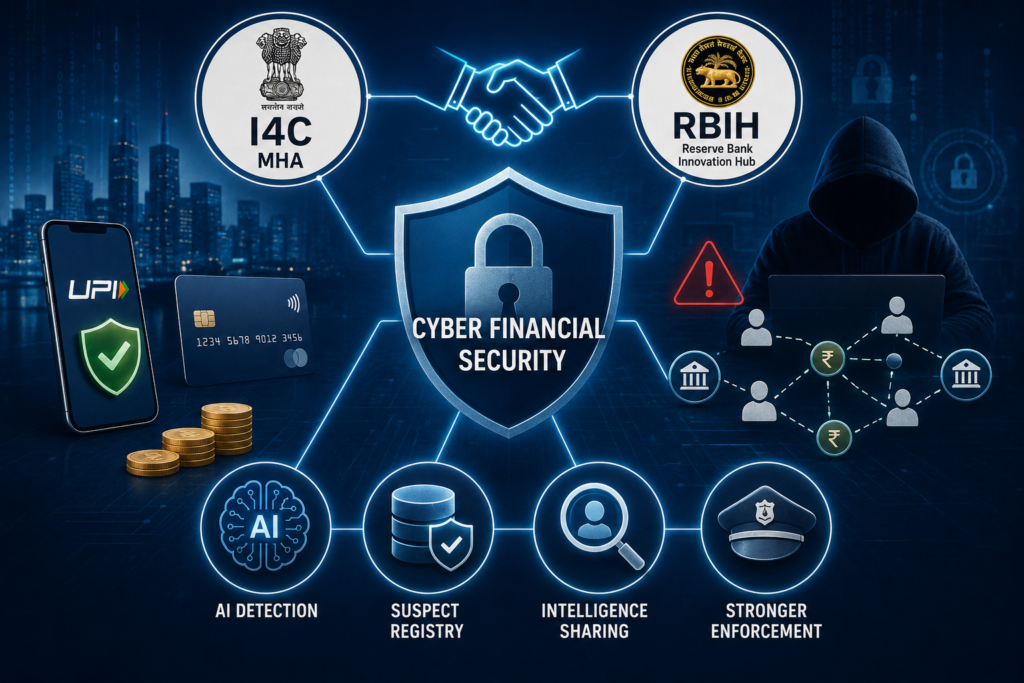
As India rapidly scales its digital public infrastructure, the underbelly of this digital revolution—cyber-enabled financial fraud—has grown exponentially. In a decisive countermeasure, the Indian Cyber Crime Coordination Centre (I4C), operating under the Ministry of Home Affairs, and the Reserve Bank Innovation Hub (RBIH) have signed a Memorandum of Understanding (MoU). This collaboration aims to deploy advanced AI-driven tools, such as MuleHunter.ai™, and integrate intelligence sharing through a centralized Suspect Registry to dismantle the financial networks of cyber syndicates.
Syllabus
- GS Paper III: Challenges to internal security through communication networks, role of media and social networking sites in internal security challenges, basics of cyber security; money-laundering and its prevention.
- GS Paper II: Statutory, regulatory and various quasi-judicial bodies.
Main Body: Multi-Dimensional Analysis
1. The Security Dimension: Tackling the ‘Mule Account’ Epidemic Cybercriminals rarely use their own bank accounts to park stolen funds. They rely on a vast network of “mule accounts”—often opened using the compromised KYC details of unaware citizens, or rented from vulnerable individuals.
- The Suspect Registry: The I4C’s creation of a centralized Suspect Registry is a game-changer. Previously, a mule account flagged by a bank in Maharashtra might remain undetected by a cooperative bank in West Bengal. A centralized database ensures that intelligence on suspicious accounts is federated across the entire banking ecosystem in real-time.
- Disrupting the Kill Chain: By targeting the financial off-ramps (mule accounts), law enforcement is attacking the most critical vulnerability of cyber syndicates: their ability to monetize the crime.
2. The Technological Dimension: AI as the First Line of Defense Traditional rule-based fraud detection systems are struggling to keep pace with the velocity and volume of modern digital transactions.
- MuleHunter.ai™ and Predictive Policing: The integration of AI-driven systems like MuleHunter.ai allows for behavioral biometrics and anomaly detection. AI can analyze thousands of transaction patterns instantly—such as a dormant account suddenly receiving multiple small deposits followed by immediate withdrawal via crypto-exchanges—and freeze the account autonomously before the funds cross international borders.
3. The Economic Dimension: Trust in Digital Public Goods India’s Unified Payments Interface (UPI) is a global success story, clocking billions of transactions monthly. However, the rise of sophisticated phishing, deepfake voice cloning, and OTP frauds threatens to erode public trust in digital payments.
- Protecting Financial Inclusion: The victims of these frauds are increasingly from Tier-2 and Tier-3 cities—individuals who have recently entered the formal digital economy. Protecting their assets is not just a law enforcement issue; it is a prerequisite for sustaining India’s financial inclusion drive.
4. The Institutional and Legal Dimension
- Breaking Regulatory Silos: Cybercrime sits at the intersection of law enforcement (Home Ministry), financial regulation (RBI), and telecommunications (DoT). The MoU between I4C and RBIH represents a structural maturation, moving from reactive policing to proactive, cross-agency intelligence syndication.
- Jurisdictional Hurdles: Cyber fraud is inherently borderless. A perpetrator in Jamtara or a server operating out of Southeast Asia can target a victim in Kerala. While domestic coordination improves via this MoU, international extradition and mutual legal assistance treaties (MLATs) remain sluggish.
Key Matrix: Policy Impacts & Frameworks
| Aspect | Positives | Negatives / Challenges | Related Frameworks |
|---|---|---|---|
| AI Integration | Enables real-time detection and freezing of illicit funds at a massive scale. | Risk of false positives; legitimate accounts belonging to small merchants might be frozen automatically, causing distress. | National Cyber Security Policy: Outlines the roadmap for protecting critical information infrastructure. |
| Data Sharing | Eliminates blind spots between commercial banks, payment aggregators, and law enforcement. | Concerns regarding data privacy and the potential misuse of the Suspect Registry without stringent oversight. | Digital Personal Data Protection (DPDP) Act: Governs how financial entities handle consumer data. |
| Enforcement | Deters the renting out of accounts by establishing swift penal consequences. | Understaffed and under-trained local cyber cells struggle to act upon the highly technical intelligence provided by I4C. | Prevention of Money Laundering Act (PMLA): Used to attach assets derived from cyber fraud. |
Way Forward
- Capacity Building at the Grassroots: The intelligence generated by RBIH and I4C must trickle down to the local police station level. State governments need to heavily invest in training local constabulary in digital forensics and rapid FIR registration through the National Cyber Crime Reporting Portal (NCRP).
- Refining KYC Frameworks: The telecom and banking sectors must employ continuous, dynamic KYC rather than a one-time onboarding check. Biometric re-verification triggered by suspicious transaction spikes can drastically reduce the lifecycle of a mule account.
- Consumer Liability and Redressal: The RBI must tighten the turnaround time for the reversal of fraudulently siphoned funds. A unified, toll-free national helpline integrated directly with the API of all major banks is required to implement an absolute “golden hour” freeze on disputed transactions.
- International Cyber Diplomacy: India must lead the charge in establishing a global framework for real-time cyber intelligence sharing, particularly focusing on the rapid tracing of funds converted into unregulated cryptocurrencies.
Conclusion
The strategic partnership between the I4C and RBIH marks a transition from a fragmented, reactionary approach to a unified, proactive defense against cyber-financial terrorism. By weaponizing Artificial Intelligence to hunt down mule networks, India is reinforcing the structural integrity of its digital economy. However, technology alone cannot serve as a substitute for vigilant law enforcement, robust consumer awareness, and strict data privacy safeguards.
Practice Mains Question
Q. “The exponential rise in cyber-enabled financial frauds threatens to undermine the gains of India’s digital financial inclusion.” Discuss this statement in light of the recent collaborative measures taken by internal security agencies and financial regulators to dismantle illicit financial networks. (15 Marks, 250 Words)
