
Topic 1: The Delimitation Bill Returns: Government Weighs a Special Session

File image: the Lok Sabha chamber during an earlier sitting (photo: DD News).
Subject: Polity – Delimitation and Women’s Reservation
Paper: GS Paper 2: Constitution – amendment, representation; Parliament
UPSC Relevance: The government is mulling a special Session of Parliament to pass the Delimitation Bill, 2026, which it links to operationalising the Women’s Reservation Act, 2023; sources claim the Centre has at least 15-16 votes more than needed, The Hindu reported on 12 November 2026.
Why in News
Government sources said on 12 November 2026 that a special Session may be convened to attempt the Delimitation Bill, 2026, without disclosing dates or duration. The proposed amendment would raise Lok Sabha strength from 543 to a maximum of 850 seats, paving the way for 33% reservation for women in Parliament and State Assemblies, based on the 2011 Census. Under Article 368, the amendment must pass each House by a majority of its total membership – more than half of all seats, irrespective of vacancies or absentees – and by a majority of not less than two-thirds of the members present and voting, so the two-thirds limb moves with attendance. If all 540 sitting members are present and vote, the two-thirds limb requires at least 360 votes while the total-membership limb requires at least 272 – so 360 is the operative bar in a full vote, and it drops with lower attendance down to the 272 floor.
Background
Delimitation has been attempted four times since Independence – the Delimitation Commissions of 1952, 1962, 1972 and 2002 (the last under Justice Kuldip Singh) – and each redrew constituencies without altering state-wise seat shares after 1976. The 42nd Amendment (1976) froze inter-state Lok Sabha and Assembly seat allocation on the 1971 Census until 2001; the 84th Amendment (2002) extended that freeze until the first census after 2026, which is why the 2011 figures and the 850-seat design matter now. The Women’s Reservation Act, 2023 (106th Amendment, the Nari Shakti Vandan Adhiniyam) inserted Articles 330A and 332A but deferred its own operation until a census and a fresh delimitation – making the present Bill the legal key to the reservation. A similar amendment fell short in the Lok Sabha on 17 April 2026 during a special sitting of the Budget Session, losing by over 50 votes on the Opposition’s count. The Monsoon Session was adjourned sine die on 13 August but never prorogued – 91 days and counting, past the 87-day record of 2008 – which keeps a two-day-notice extended sitting possible, while a fresh Session needs 14 days’ notice.
Key Dimensions
1. The arithmetic: A two-thirds majority in a House without a brute NDA two-thirds strength needs Opposition crossovers or abstentions – the 15-16 vote cushion the government claims is the whole story.
2. The women’s reservation link: The 2023 Act awaits a census and delimitation; the Bill is the vehicle the government chose to operationalise 33% reservation before the 2029 polls, and Articles 330A/332A sit inert until then.
3. The southern question: Any delimitation redrawing seats by population penalises states that controlled population growth; in April outreach, the government proposed a 50% seat increase for all states to preserve inter-state ratios based on the 1971 Census, and there is now talk of amending the Bill to include that assurance – preserving ratios, though not power shares, in an enlarged House.
4. The federalism test: Articles 82 and 170 tie readjustment to each census; freezing was the federal bargain of 1976, and unfreezing it without consensus would reopen the north-south settlement that has held for fifty years.
5. The Opposition framing: Congress communications chief Jairam Ramesh called the move “bluff and bluster”, recalling the April defeat – signalling the Opposition will contest both numbers and motive.
Significance
1. Delimitation is the most consequential unfinished business of Indian democracy: it decides who sits where in the Lok Sabha for a generation, reopens the 1976 federal bargain, and determines whether women’s reservation becomes real before 2029.
Challenges
1. The Bill must clear the Article 368 double test in both Houses; southern anxieties about representation, the census basis (2011 vs a fresh count), and the April defeat all make the numbers genuinely uncertain.
Way Forward
1. Watch whether the Monsoon Session is prorogued or extended – the procedural route signals intent.
2. Track the promised 50% uniform seat-increase amendment text.
3. Note southern parties’ positions as the numbers game unfolds.
4. Follow the census timeline, which underlies the entire design.
Prelims Value Addition
- The Delimitation Bill, 2026 proposes raising Lok Sabha strength from 543 to a maximum of 850 seats.
- The Women’s Reservation Act, 2023 (106th Amendment) provides 33% reservation via Articles 330A and 332A, effective after census and delimitation.
- A Constitution amendment under Article 368 needs two-thirds of members present and voting plus a majority of total membership in each House.
- Inter-state Lok Sabha ratios are frozen on the 1971 Census – first by the 42nd Amendment (1976), extended by the 84th Amendment (2002) until the first census after 2026.
- Delimitation Commissions have been constituted four times, under the Acts of 1952, 1962, 1972 and 2002; the 2002 panel was headed by Justice Kuldip Singh.
- Under Article 329(a), delimitation orders have the force of law and cannot ordinarily be challenged in court.
- Article 82 mandates readjustment of Lok Sabha seats after each census; Article 170 does the same for State Assemblies.
Mains Value Addition
- “Delimitation is where representation and federalism collide.” Discuss in the context of the 2026 Bill.
- Examine the linkage between the Women’s Reservation Act, 2023 and delimitation.
Topic 2: Roads Along the LAC: Centre Sanctions New Border Infrastructure in Arunachal

Illustrative image: a BRO-built mountain bridge (PIB photo), not one of the 26 newly sanctioned roads.
Subject: Security and Defence – Border Infrastructure
Paper: GS Paper 3: Security – border management; infrastructure
UPSC Relevance: Amid continuing face-offs with the Chinese Army along the Line of Actual Control in Arunachal Pradesh since late July, the ITBP has sanctioned new border infrastructure in the state, and 26 roads are to be built along the LAC under the CCS-cleared ICBR-III project, The Hindu reported on 13 November 2026.
Why in News
A senior government official told The Hindu that the Indo-Tibetan Border Police has sanctioned construction of new border infrastructure in Arunachal Pradesh as face-offs with the Chinese Army continue since late July. In February, the Cabinet Committee on Security cleared the third phase of the Indo-China Border Roads project, under which 26 roads are to be constructed along the LAC in Arunachal Pradesh; the government has not officially announced ICBR-III or publicly disclosed these details.
Background
The ICBR programme is India’s dedicated road scheme for the China frontier: ICBR-I (sanctioned 1999) covered 61 roads, and ICBR-II (2020) a further 32, mostly executed by the Border Roads Organisation, which was raised in 1960 with the motto “Shramena Sarvam Sadhyam”. Since the 2020 eastern Ladakh standoff, India has treated border infrastructure as a strategic instrument: the 255-km Darbuk-Shyok-Daulat Beg Oldie road, the Sela Tunnel in Arunachal (inaugurated March 2024, the world’s longest bi-lane tunnel above 13,000 ft) and the Vibrant Villages Programme for border habitation all shrink mobilisation time and alter the local military balance. China’s parallel build-up – model villages, highways and rail toward the LAC – has made Arunachal Pradesh, which Beijing claims as South Tibet, the eastern theatre of the contest.
Key Dimensions
1. Infrastructure as deterrence: Every kilometre of road toward the LAC reduces India’s mobilisation disadvantage against China’s highway-fed deployments; Sela Tunnel cut the Tawang approach from hours over the pass to an all-weather drive.
2. The Arunachal focus: Face-offs since late July and the 26-road sanction show the eastern sector getting the attention eastern Ladakh received after 2020.
3. The opacity choice: Not officially announcing ICBR-III keeps escalation signalling low while the work proceeds – a deliberate quiet-build strategy.
4. The CCS clearance: February approval by the Cabinet Committee on Security marks border roads as a top-level national security priority, not a routine works programme.
Significance
1. Roads decide outcomes before shots are fired: the sanction converts the LAC face-off from a patrol contest into a permanent capability race India intends to run, from Daulat Beg Oldie to Tawang.
Challenges
1. High-altitude construction faces short working seasons, fragile ecology and landslide-prone geology; China responds to every Indian road, so the race has no finish line.
Way Forward
1. Track completion schedules of the 26 sanctioned roads.
2. Watch Chinese infrastructure responses opposite Arunachal.
3. Note budget allocations for ICBR phases in the next Union Budget.
4. Follow any official announcement of ICBR-III as a signalling event.
Prelims Value Addition
- The CCS cleared the ICBR-III project in February 2026; 26 roads are planned along the LAC in Arunachal Pradesh.
- The ITBP, raised in 1962, guards the India-China border and has sanctioned new infrastructure amid face-offs since late July 2026.
- The Border Roads Organisation was raised in 1960 and executes most ICBR roads.
- ICBR-I (1999) sanctioned 61 roads and ICBR-II (2020) 32 roads along the China frontier.
- The Sela Tunnel, inaugurated in March 2024 in Arunachal Pradesh, is the world’s longest bi-lane tunnel above 13,000 feet.
- The Darbuk-Shyok-Daulat Beg Oldie road runs about 255 km along the LAC in Ladakh.
- The Line of Actual Control is the de facto India-China boundary; China calls Arunachal Pradesh “South Tibet”.
Mains Value Addition
- “Border roads are strategy cast in concrete.” Discuss with reference to the India-China frontier.
- Examine the role of border infrastructure in India’s China deterrence posture.
Topic 3: Sonam Wangchuk and Section 163: A Restriction That Dare Not Speak Its Name
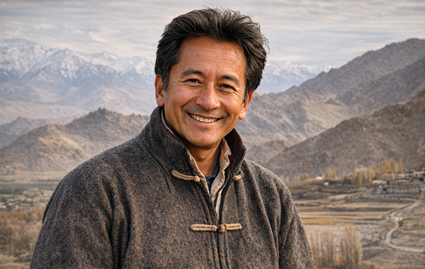
File photo: Sonam Wangchuk (photo: DD News).
Subject: Polity – Civil Liberties and Preventive Powers
Paper: GS Paper 2: Fundamental rights; preventive detention and public order law
UPSC Relevance: Ladakh activist Sonam Wangchuk on 12 November 2026 called the restrictions on him “bad in law, arbitrary, vague and disproportionate”, after the administration invoked Section 163(1) of the BNSS, shifted him from a protest venue to his Leh residence and stationed 20-22 armed police around it.
Why in News
The Ladakh administration on 11 November 2026 evening moved Wangchuk from a protest venue to his residence, invoking Section 163(1) of the Bharatiya Nagarik Suraksha Sanhita, and he has allegedly been restrained from leaving home. In a letter to Ladakh officials and the Union Home Ministry, Wangchuk said the Additional District Magistrate’s order discloses no reasons, identifies no continuing threat, never uses the words house arrest, detention or confinement, and leaves the scope of restrictions to the discretion of police at his door. The Tribune reported the restrictions run 60 days.
Background
Section 163 BNSS (the successor to Section 144 CrPC) empowers magistrates to issue urgent orders to prevent obstruction, danger to life or public disturbance. Its constitutional limits come from a long line of cases: Babulal Parate (1961) upheld Section 144 itself, Madhu Limaye (1970) narrowed it to genuine emergencies, Ramlila Maidan (2012) faulted a pre-dawn eviction order, and Anuradha Bhasin v Union of India (2020) held that restrictions on liberty must be published, reasoned, necessary and the least restrictive available. Article 19(1)(b) protects assembly, subject to “reasonable restrictions” under 19(3); proportionality is now the operative test. Wangchuk was arrested under the National Security Act, 1980 – which permits preventive detention of up to 12 months – in September last year and released in March this year. The curbs come as Ladakh prepares for panchayat and municipality polls on 21 November and hill council elections on 4 December, while the Leh Apex Body and Kargil Democratic Alliance demand postponement of the council polls to April-May next year and continue their Sixth Schedule and statehood campaign.
Key Dimensions
1. The legal craftsmanship: An order that restrains without naming detention, and defines no scope, is engineered to resist judicial review – vagueness is the point, and Wangchuk’s letter attacks exactly that, in the vocabulary Anuradha Bhasin supplied.
2. The proportionality test: Preventive orders must state necessity and proportionality; a 60-day restriction with no recorded reasons invites the arbitrariness challenge now made.
3. The electoral context: Restrictions landing days before local polls, amid civil-society demands for postponement, blur the line between public order and political management.
4. The pattern: NSA detention last year, movement curbs now: Ladakh’s most prominent activist is being managed through successive legal instruments while the Sixth Schedule dialogue stalls.
Significance
1. The case tests whether the BNSS’s preventive powers carry the same constitutional discipline – reasons, proportionality, review – that courts demanded of Section 144 from Madhu Limaye to Anuradha Bhasin.
Challenges
1. Civil liberties in a strategically sensitive border UT sit in tension with genuine security concerns; courts must scrutinise without second-guessing every order.
Way Forward
1. Watch for a court challenge to the 163(1) order and its 60-day span.
2. Track whether the 21 November and 4 December polls proceed on schedule.
3. Note the administration’s formal reply to Wangchuk’s letter.
4. Follow the Leh Apex Body and KDA demands on poll timing and Sixth Schedule status.
Prelims Value Addition
- Section 163 of the BNSS corresponds to Section 144 of the CrPC; it is a magistrate’s urgent preventive order.
- Anuradha Bhasin v Union of India (2020) requires restrictions on fundamental freedoms to be published, reasoned, necessary and proportionate.
- The National Security Act, 1980 permits preventive detention of up to 12 months without charge.
- Sonam Wangchuk was detained under the NSA in September last year and released in March this year.
- Ladakh is a Union Territory without a legislature, administered by a Lieutenant Governor; the Leh Apex Body and Kargil Democratic Alliance demand statehood and Sixth Schedule inclusion.
- Article 19(1)(b) guarantees peaceful assembly; Article 19(3) permits reasonable restrictions in the interest of public order.
Mains Value Addition
- “Vague preventive orders are the hardest to challenge and the most important to review.” Discuss with reference to the restrictions on Sonam Wangchuk.
- Examine the constitutional limits on preventive public-order powers under the BNSS.
Topic 4: Postponed Dialogue: India-Bangladesh Ties Drift Further
File photo: Foreign Secretary Vikram Misri (photo: DD News).
Subject: International Relations – India and Bangladesh
Paper: GS Paper 2: International relations – neighbourhood
UPSC Relevance: The fifth India-Bangladesh consular dialogue, scheduled for 17-18 November, has been postponed, a diplomatic source confirmed – days after deposed Prime Minister Sheikh Hasina, sheltered in India, requested Dhaka for a new passport and national identity card.
Why in News
The postponement of the consular dialogue was confirmed on 12-13 November 2026. It follows reporting that Sheikh Hasina, in India since her August 2024 ouster, has sought a new Bangladeshi passport and national identity card from Dhaka. The dialogue handles visa, consular access and citizens’ issues between the two countries.
Background
India-Bangladesh relations have been cold since the interim government under Muhammad Yunus took over in Dhaka after the August 2024 uprising that ended Hasina’s fifteen-year rule. Her presence in India – and Dhaka’s extradition request under the 2013 bilateral extradition treaty – is the central irritant. The relationship was once the showcase of India’s Neighbourhood First policy: the 2015 Land Boundary Agreement (the 100th Constitutional Amendment) exchanged enclaves and settled the 4,096-km border, and the 1996 Ganges Water Sharing Treaty managed the Farakka flows for thirty years – a treaty whose 2026 expiry adds a hard deadline to an already frozen agenda. China’s growing role in Dhaka, including discussions around the Teesta project and port access, fills the space India vacates.
Key Dimensions
1. The trigger: Hasina’s passport request puts Dhaka in the position of issuing documents to the leader it deposed and wants extradited – the postponement reads as Dhaka’s discomfort.
2. The machinery gap: Consular dialogues are low-politics, high-utility: visas, detainees, fishermen, documents; losing them hurts ordinary citizens first.
3. The extradition shadow: India’s response to the extradition request under the 2013 treaty remains the relationship’s defining unanswered question.
4. The wider field: China’s growing role in Dhaka and Pakistan-Bangladesh thawing make the drift strategically expensive for India; the 1996 water treaty’s expiry adds a resource dimension to the estrangement.
Significance
1. When even consular machinery stalls, a bilateral relationship is running on habit; the postponement is a small event marking a large deterioration – with the Ganga Treaty clock now ticking in the background.
Challenges
1. The interim government’s domestic politics rewards distance from India; India must protect citizens’ interests, border stability and river cooperation while the political track stays frozen.
Way Forward
1. Watch for a rescheduled date as a thaw indicator.
2. Track India’s formal response on the Hasina extradition request.
3. Note visa and border-mechanism disruptions affecting citizens.
4. Follow Chinese and Pakistani engagement with Dhaka in the gap, and any move to renegotiate the 1996 Ganges Treaty.
Prelims Value Addition
- The fifth India-Bangladesh consular dialogue was scheduled for 17-18 November 2026 and postponed.
- Sheikh Hasina has been in India since August 2024; Muhammad Yunus heads the interim government in Dhaka.
- The 2015 Land Boundary Agreement, implemented through the 100th Constitutional Amendment, settled the India-Bangladesh enclave exchange.
- The 1996 Ganges Water Sharing Treaty runs for thirty years and falls due for renewal in 2026.
- India and Bangladesh signed an extradition treaty in 2013, amended in 2016.
- The India-Bangladesh border is about 4,096 km – India’s longest with any neighbour.
Mains Value Addition
- “Neighbours can postpone dialogues, not geography.” Discuss India’s options with post-Hasina Bangladesh.
- Examine the role of consular mechanisms in managing strained bilateral relationships.
Topic 5: PSLV’s Way Back: ISRO Clears the Third-Stage Static Test
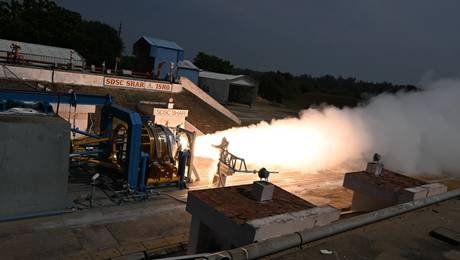
ISRO photo of the 12 November 2026 PSLV third-stage static test at Sriharikota.
Subject: Science and Technology – Space
Paper: GS Paper 3: Science and technology – space programme
UPSC Relevance: ISRO successfully carried out the ground static test of the PSLV third stage (PS3) at the Static Test Facility in Satish Dhawan Space Centre, Sriharikota, on 12 November 2026, as it works to return its workhorse launcher to flight after back-to-back mission anomalies.
Why in News
ISRO announced on 12 November 2026 the successful ground static test of the PSLV third stage at Sriharikota. The test is part of the effort to get the Polar Satellite Launch Vehicle back on track after anomalies grounded the fleet. A static test fires the stage while it is held on the ground to validate motor performance, propellant burn, chamber pressure behaviour and structural integrity across the full burn duration.
Background
The PSLV has been ISRO’s most reliable launcher since its first successful flight in 1994 (after the 1993 debut failed), lifting Chandrayaan-1 (2008), the Mars Orbiter Mission (2013) and a record 104 satellites on a single rocket in February 2017. The four-stage vehicle alternates solid and liquid propulsion: a large solid first stage with strap-ons, a Vikas liquid second stage, the solid third stage (PS3) now under requalification, and a liquid fourth stage. Its aura cracked with the PSLV-C61/EOS-09 failure of 18 May 2025, which ISRO traced to a third-stage chamber-pressure anomaly, and a subsequent mission anomaly deepened the grounding – making stage-by-stage requalification, not a quick relaunch, the only credible path back. The commercial context adds pressure: an HAL-L&T consortium is contracted to build five PSLVs under the 2022 technology-transfer deal, and NSIL markets the vehicle abroad.
Key Dimensions
1. Why a stage test matters: A grounded launcher returns only stage by stage; each qualified stage removes a specific failure path and rebuilds confidence with data, not assurances. PS3 was the implicated stage in the C61 failure, so its requalification is the crux of return-to-flight.
2. The PSLV’s niche: The vehicle anchors India’s small-and-medium satellite launches, including commercial rideshare; its absence squeezes both strategic and revenue payloads and pushes customers toward foreign riders.
3. The reliability culture: ISRO’s practice of full-duration ground testing before flight embodies the conservatism that built the PSLV’s name for reliability over three decades.
4. The industrial stakes: The HAL-L&T production contract presumes a flying vehicle; every month of grounding delays the transfer of PSLV from ISRO-built to industry-built.
Significance
1. A successful static test is an unglamorous milestone with a decisive meaning: the workhorse is one validated stage closer to carrying payloads again, and India’s commercial-space ambitions depend on that return.
Challenges
1. Return-to-flight requires clearing every implicated system; schedule pressure from waiting missions must not shortcut the qualification sequence that the C61 failure made unavoidable.
Way Forward
1. Watch for the remaining stages’ qualification tests and the announced return-to-flight mission.
2. Track payloads reassigned during the PSLV grounding.
3. Note any ISRO statement on the failure analysis behind the grounding.
4. Follow the HAL-L&T consortium build schedule and commercial launch bookings returning to the vehicle.
Prelims Value Addition
- ISRO static-tested the PSLV third stage (PS3) on 12 November 2026 at the Static Test Facility, Sriharikota.
- The PSLV’s first successful flight was in 1994; it launched Chandrayaan-1 (2008) and the Mars Orbiter Mission (2013).
- PSLV set a world record, since surpassed, by placing 104 satellites in orbit on a single mission in February 2017.
- The PSLV alternates solid and liquid stages; PS3 is a solid stage, and its chamber-pressure anomaly caused the C61/EOS-09 failure of May 2025.
- A static test fires a rocket stage held on the ground to validate performance before flight clearance.
- An HAL-L&T consortium is contracted to produce five PSLVs under a 2022 deal; NSIL is ISRO’s commercial arm.
Mains Value Addition
- “Reliability in rocketry is rebuilt one test at a time.” Discuss with reference to the PSLV’s return-to-flight effort.
- Examine the importance of the PSLV to India’s space programme and commercial launch market.
Topic 6: Fire in the Gulf: Houthis Hit Saudi Pipeline as Hormuz Stays Strangled

Illustrative image: tankers at sea (DD News file photo), not the vessels reported ablaze.
Subject: International Relations and Economy – Energy Security
Paper: GS Paper 2: International relations – West Asia; GS Paper 3: Energy security
UPSC Relevance: Yemen’s Houthis said on 12 November 2026 they targeted Pumping Station No. 7 on Saudi Arabia’s East-West pipeline with a drone and the Yanbu oil facility with a ballistic missile, while Iran said an “accident” left two tankers carrying over four million barrels ablaze in the Strait of Hormuz.
Why in News
Houthi spokesman Yahya Saree announced the two operations on 12 November 2026. The East-West pipeline, ending at the Red Sea port of Yanbu, has grown in importance because Iran blockaded the Strait of Hormuz at the outset of the West Asia war in late February. Separately, Iran’s Revolutionary Guards said two tankers with over four million barrels of oil caught fire after an accident on an unauthorised route in the strait, whose traffic Tehran has heavily restricted.
Background
The Strait of Hormuz is the world’s most important oil chokepoint: about 21 miles wide at its narrowest, with two-mile shipping lanes, it carries roughly a fifth of global petroleum liquids in normal times. Saudi Arabia’s East-West Pipeline (Petroline) – about 1,200 km from the Abqaiq fields to Yanbu on the Red Sea, carrying about 5 million barrels a day before recent expansions lifted it toward 7 million – was commissioned in 1981 and expanded later that decade as the Iran-Iraq Tanker War exposed the danger of depending on Gulf shipping: exporting crude without the strait. Its targeting now closes the historical loop. India is among the most exposed large economies, importing over 85% of its crude, with Strategic Petroleum Reserves of 5.33 million tonnes at Visakhapatnam, Mangaluru and Padur covering only days of demand; diversification toward Russian and Atlantic-basin crude since 2022 is the buffer now being tested.
Key Dimensions
1. The pipeline becomes the front: With Hormuz constrained, the East-West pipeline is Saudi Arabia’s pressure valve; hitting Pumping Station No. 7 and Yanbu attacks the workaround itself – the same logic as the Tanker War four decades ago.
2. The tanker fires: Iran’s “accident” explanation for two burning tankers on an unauthorised route doubles as enforcement theatre: only Tehran-approved passage is safe passage.
3. The price transmission: Attacks on alternative routes remove the last buffer between the blockade and global prices; war-risk insurance and freight costs compound the physical loss for every importer.
4. India’s exposure: Restricted Gulf flows hit India’s crude sourcing, freight costs and inflation management; 5.33 million tonnes of strategic reserves buy days, and diversification buys options – neither buys immunity.
Significance
1. The war’s economic centre of gravity has shifted to energy logistics: whoever controls the remaining routes out of the Gulf controls the price of the war for everyone else, from Riyadh to refiners in Jamnagar.
Challenges
1. Escalation against energy infrastructure invites wider retaliation; for importers like India, the challenge is securing supply and managing prices without being drawn into the conflict’s politics.
Way Forward
1. Track Saudi statements on pipeline and Yanbu damage and repair timelines.
2. Watch crude prices, freight rates and war-risk insurance premiums.
3. Follow India’s crude sourcing mix and strategic petroleum reserve posture.
4. Note any diplomatic movement on reopening Hormuz traffic.
Prelims Value Addition
- The Houthis claimed drone and missile strikes on Saudi Arabia’s East-West pipeline and Yanbu on 12 November 2026.
- The Strait of Hormuz, about 21 miles wide at its narrowest, lies between Iran and Oman and carries roughly a fifth of global oil trade.
- Saudi Arabia’s East-West Pipeline (Petroline) runs about 1,200 km to the Red Sea port of Yanbu; commissioned in 1981, its capacity has grown from about 5 million to roughly 7 million barrels per day.
- India imports over 85% of its crude oil requirement.
- India’s Strategic Petroleum Reserves of 5.33 million tonnes are stored at Visakhapatnam, Mangaluru and Padur.
- The East-West pipeline was commissioned in 1981 and expanded during the late-1980s Tanker War to bypass Gulf shipping risk.
Mains Value Addition
- “Energy infrastructure has become the battlefield of the West Asia war.” Discuss.
- Examine India’s energy-security options amid prolonged disruption in the Strait of Hormuz.
Topic 7: The NIA and the Online Radicalisation Pipeline
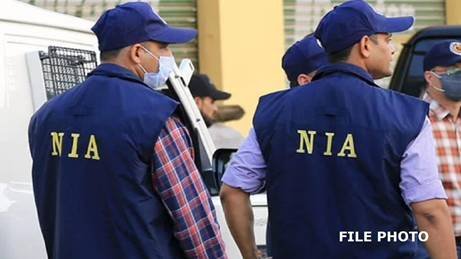
File photo: National Investigation Agency personnel (photo: DD News).
Subject: Internal Security – Radicalisation
Paper: GS Paper 3: Internal security – terrorism, cyber dimension
UPSC Relevance: The National Investigation Agency on 12 November 2026 registered a case to probe the online radicalisation of Indian youths by Pakistan-based gangster Shahzad Bhatti and other ISI agents, who allegedly intended to carry out terror attacks in India.
Why in News
The NIA case, registered on 12 November 2026, stems from a case first registered by the Uttar Pradesh Anti-Terrorist Squad in April this year. The probe targets a network in which a Pakistan-based gangster and ISI handlers allegedly radicalised Indian youths online for planned attacks.
Background
Cross-border handlers increasingly use encrypted messaging, social media and gaming-adjacent platforms to identify, indoctrinate and task recruits without physical contact – the gangster-terror nexus adding criminal logistics to ideological motivation. The NIA, created under the NIA Act, 2008 in the wake of the 26/11 Mumbai attacks, is empowered to take over scheduled terror offences with inter-state or international linkages; the 2019 amendment gave it extra-territorial reach and dedicated sessions courts. Substantive offences are drawn chiefly from the Unlawful Activities (Prevention) Act, 1967 – amended in 2019 to let the Centre designate individuals, not just organisations, as terrorists. The agency reported a 100% conviction rate in cases decided in 2024, and online-radicalisation modules have featured in its recent docket across several states, including the ISIS-linked networks its Tamil Nadu raids targeted.
Key Dimensions
1. The gangster-terror nexus: A gangster front gives ISI deniability, criminal funds and local logistics while keeping ideological handlers in the background – Dawood Ibrahim’s D-Company wrote the template in the 1990s; the internet merely scaled it.
2. The online pipeline: Recruitment without travel or camps lowers costs and raises volume; radicalisation now scales through algorithms, encrypted rooms and gaming voice-chats rather than physical camps.
3. The ATS-to-NIA handoff: A state ATS case graduating to the NIA signals assessed inter-state and cross-border linkages beyond one state’s jurisdiction – the federal design working as intended.
4. The prevention gap: Detection still trails recruitment; families, teachers and platforms notice radicalisation before the state does, yet no structured referral channel exists.
Significance
1. The case confirms that the frontier of counter-terrorism in India is now a phone screen, and the recruiter is often a criminal proxy rather than a named terrorist organisation.
Challenges
1. Encrypted platforms, jurisdictional friction and the sheer volume of online content make early detection hard; overbroad monitoring risks rights and the community trust that counter-radicalisation depends on.
Way Forward
1. Strengthen state ATS cyber capacity for early detection of online grooming.
2. Build structured channels for platform reporting of radicalisation content.
3. Invest in de-radicalisation and family-intervention programmes.
4. Prosecute the financial and logistical layers, not only end recruits.
Prelims Value Addition
- The NIA registered a case on 12 November 2026 into online radicalisation by Pakistan-based gangster Shahzad Bhatti and ISI agents.
- The case originated with a UP ATS FIR in April 2026.
- The NIA was established under the NIA Act, 2008 after the 26/11 Mumbai attacks; the 2019 amendment extended its jurisdiction abroad.
- The UAPA, 1967 was amended in 2019 to permit designation of individuals as terrorists.
- The NIA reported a 100% conviction rate in cases decided in 2024.
- The gangster-terror nexus refers to criminal networks providing funds and logistics to terror operations.
Mains Value Addition
- “Radicalisation has moved from the madrasa wall to the smartphone screen.” Discuss India’s counter-radicalisation challenge.
- Examine the gangster-terror nexus as an instrument of cross-border terrorism.
Topic 8: A Third Force in Lucknow: Owaisi, Azad and the Samajik Parivartan Morcha

File image: Nirvachan Sadan, Election Commission of India headquarters (photo: DD News).
Subject: Polity – Elections and Political Parties
Paper: GS Paper 2: Polity – political parties, elections; social justice
UPSC Relevance: AIMIM chief Asaduddin Owaisi and Azad Samaj Party (Kanshiram) president Chandrashekhar Azad announced the Samajik Parivartan Morcha in Lucknow on 12 November 2026, naming Azad as the alliance’s chief ministerial face for the 2027 Uttar Pradesh Assembly election.
Why in News
At a joint press conference in Lucknow on 12 November 2026, Owaisi announced the formation of the Samajik Parivartan Morcha to jointly contest the 2027 UP polls, with Chandrashekhar Azad as its chief ministerial candidate. The alliance pairs AIMIM’s Muslim-vote outreach with the Azad Samaj Party’s Dalit assertion platform.
Background
Uttar Pradesh’s opposition space has fragmented since the BSP’s decline: the party that won a majority on its own in 2007 took a single Assembly seat in 2022, leaving Muslim (19.26% of the state’s population, Census 2011) and Dalit (20.7%) voters – once the cores of the SP-BSP social coalition – partially unmoored. AIMIM, revived by the Owaisi family from the old Majlis tradition of Hyderabad, has contested UP seats with modest returns while winning five seats in Bihar in 2020; Chandrashekhar Azad built a following through the Bhim Army, founded in Saharanpur in 2015, and won the Nagina Lok Sabha seat in 2024. The bipolar 2022 result – BJP 255, SP 111 of 403 – shows the bar a third force must clear; the 2024 Lok Sabha result, SP 37 and BJP 33, shows how quickly UP’s arithmetic can move.
Key Dimensions
1. The social arithmetic: A Muslim-Dalit platform aims at two of UP’s largest voting blocs; even a single-digit vote share reorders outcomes in multi-cornered contests, and a double-digit share reorders the government.
2. The CM-face choice: Naming a Dalit chief ministerial face inverts the usual pattern of senior partner taking the billing – a signal about whose assertion leads the alliance, and a deliberate contrast with the BSP’s top-down model.
3. The spoiler question: The BJP benefits when the opposition vote splits; the SP will frame the Morcha as a vote-cutter, the Morcha as the only honest representation – the classic third-front dilemma.
4. The organisational test: Neither party has a booth-level machine across 403 seats; converting visibility into votes is the alliance’s real examination, as AIMIM’s thin 2017 and 2022 returns showed.
Significance
1. The Morcha is less about winning Lucknow in 2027 than about who owns the post-BSP space for Dalit-Muslim assertion in India’s biggest state – a constituency larger than most countries.
Challenges
1. Limited organisation, the first-past-the-post penalty on third forces, and the risk of splitting the anti-incumbent vote all constrain the alliance’s ceiling.
Way Forward
1. Track seat-sharing announcements and candidate quality.
2. Watch the SP and BSP responses to the alliance.
3. Note whether the Morcha attracts smaller caste-based parties.
4. Follow ground reports on its booth-level organisation.
Prelims Value Addition
- The Samajik Parivartan Morcha was announced in Lucknow on 12 November 2026 by AIMIM and the Azad Samaj Party (Kanshiram).
- Chandrashekhar Azad, who founded the Bhim Army in 2015 and won Nagina in 2024, is the alliance’s chief ministerial face for 2027.
- Uttar Pradesh has a 403-member Assembly; the 2022 result was BJP 255, SP 111, BSP 1.
- Muslims form 19.26% and Dalits 20.7% of UP’s population (Census 2011) – the blocs the alliance targets.
- AIMIM won five seats in the 2020 Bihar Assembly election.
- In the 2024 Lok Sabha election in UP, the SP won 37 seats and the BJP 33.
Mains Value Addition
- “Third forces in Uttar Pradesh shape outcomes more often than they win power.” Discuss.
- Examine the significance of caste-community alliances in Indian electoral politics.
