
Topic 1: Sluggish Growth in the Index of Eight Core Industries (ICI)
Syllabus
- GS Paper III: Indian Economy and issues relating to planning, mobilization of resources, growth, development, and employment. Infrastructure: Energy, Ports, Roads, Airports, Railways, etc.
Context
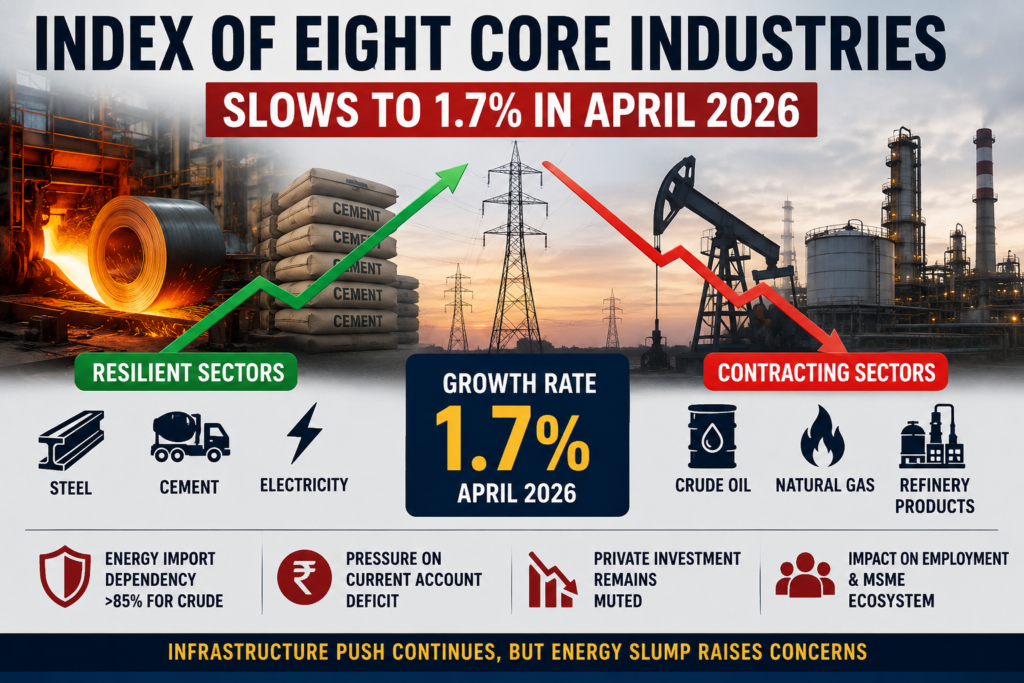
- The Index of Eight Core Industries (ICI) for April 2026 highlighted an economic deceleration, registering a modest growth rate of just 1.7%.
- A stark divergence emerged among the core sectors: while steel, cement, and electricity demonstrated resilience, critical energy segments like crude oil, natural gas, and refinery products faced contraction, raising structural concerns about industrial momentum.
Main Body: Multi-Dimensional Analysis
- Economic Dimension:
- The 1.7% growth signifies a sharp drop from historical averages, indicating structural bottlenecks in capital-intensive sectors.
- As core industries constitute 40.27% of the weight of items included in the Index of Industrial Production (IIP), this slowdown acts as a leading indicator of a broader cooling in manufacturing output.
- Contraction in crude oil and natural gas directly affects downstream chemical, petrochemical, and fertilizer industries, creating a cascading supply-chain crunch.
- Infrastructure & Investment Dimension:
- The steady growth in steel and cement indicates that public sector capital expenditure (CapEx) on highways, railways, and urban infrastructure remains active.
- However, the private sector’s investment in heavy machinery and primary industrial capacity remains muted, demonstrating a reliance on government-led crowding-in rather than organic market demand.
- Energy Security & Fiscal Dimension:
- Declining domestic output of crude oil and natural gas exacerbates India’s energy import dependency (which hovers above 85% for crude).
- This stagnation strains the current account deficit (CAD) and leaves the domestic economy highly vulnerable to global geopolitical shocks and currency volatility.
- Employment & Structural Dimension:
- Core industries are highly capital-intensive but generate substantial indirect employment through micro, small, and medium enterprises (MSMEs) in logistical and processing ecosystems.
- A prolonged slump in these heavy sectors limits the formal job-creation capacity required to absorb workforce transition from agriculture.
Comparative Evaluation
| Positives | Negatives | Relevant Government Schemes |
| • Infrastructure push reflected in stable growth of steel and cement production. • Robust electricity generation ensures baseline power grid reliability for manufacturing hubs. | • Critical contraction in core energy assets (crude oil and natural gas). • High baseline inflation and borrowing costs depressing private infrastructure financing. | • National Infrastructure Pipeline (NIP): Directing capital into greenfield projects. • PM GatiShakti: National Master Plan for multi-modal connectivity to lower logistics costs. |
Examples
- Steel Capacity Expansion: Domestic steel majors increasing production capacity due to consistent demand from the Indian Railways’ upgrade initiatives.
- The Offshore Stagnation: Production drops in aging fields managed by ONGC and OIL highlighting the technological limitations in domestic deep-water extraction.
Way Forward
- Expedite Energy Exploration Reforms: Streamline single-window clearances for Open Acreage Licensing Policy (OALP) to revive declining domestic hydrocarbon exploration.
- Incentivize Private CapEx: Introduce targeted production-linked incentives (PLI) for core-adjacent manufacturing to stimulate private asset creation.
- Logistical Cost Optimization: Deploy PM GatiShakti frameworks rapidly to reduce Indian logistics costs from ~13% of GDP to global benchmarks of 8%, improving core sector competitiveness.
- Deepen Bond Markets: Enhance corporate bond market liquidity to give infrastructure developers long-term, low-cost debt options outside commercial banks.
Conclusion
The divergence in the Index of Eight Core Industries highlights an economy transitioning through structural adjustments. While state-backed infrastructure projects sustain steel and cement, revitalizing the energy and primary manufacturing cores is critical to turning baseline survival into robust macro-economic growth.
Practice Mains Question
Q. The Index of Eight Core Industries serves as a reliable barometer for India’s macroeconomic health. In light of recent divergent growth trends among core sectors, evaluate the structural bottlenecks impeding private sector investment in Indian infrastructure. (15 Marks, 250 Words)
Topic 2: Launch of UMMID Programme Phase-II (Biotechnology & Rare Diseases)
Syllabus
- GS Paper II: Issues relating to development and management of Social Sector/Services relating to Health, Education, Human Resources.
- GS Paper III: Science and Technology- developments and their applications and effects in everyday life; Bioinformatics and Biotechnology.
Context
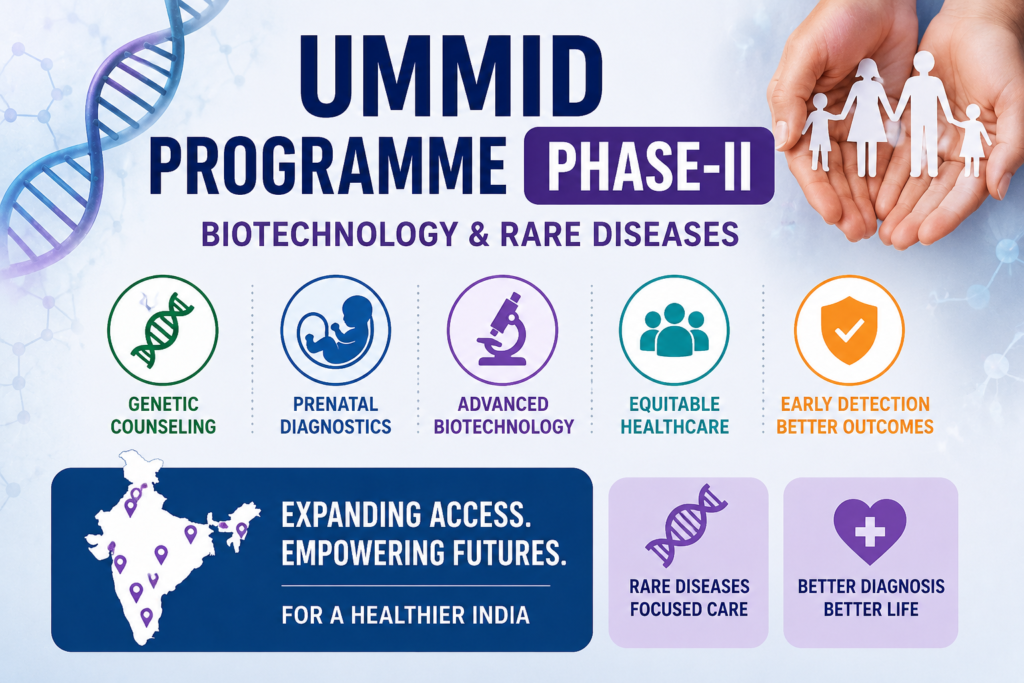
- The Union Ministry of Science & Technology launched Phase-II of the Unique Methods of Management and Treatment of Inherited Disorders (UMMID) programme.
- Spearheaded by the Department of Biotechnology (DBT), Phase-II scales up genetic counseling, prenatal diagnostics, and therapeutic frameworks to tackle the growing burden of rare congenital and inherited disorders across India.
Main Body: Multi-Dimensional Analysis
- Healthcare & Equity Dimension:
- Rare genetic disorders affect an estimated 70–90 million individuals in India, heavily skewed toward rural populations with restricted access to advanced clinical evaluations.
- By expanding NIDAN (National Inherited Diseases Administration) Kendras, UMMID Phase-II decentralizes genomic healthcare from elite urban labs to Tier-II and Tier-III government medical colleges.
- Socio-Economic Dimension:
- The long-term management of congenital disorders causes catastrophic out-of-pocket health expenditure, pushing vulnerable families into deep financial distress.
- Early diagnostic interventions through newborn screening reduce the long-term economic burden on both individual families and public healthcare infrastructure.
- Scientific & Technological Dimension:
- Phase-II accelerates India’s capability in high-throughput genomic sequencing, digital health registries, and precision medicine.
- The data generated fuels indigenous biomedical research, allowing scientists to map India-specific genetic variations and move away from Eurocentric genetic baselines.
- Administrative & Ethical Dimension:
- Implementing large-scale genetic screenings requires strict administrative guardrails for data privacy and patient confidentiality.
- Furthermore, early diagnosis must be accompanied by affordable therapeutic pipelines, preventing situations where a condition is diagnosed but remains completely untreatable due to drug monopolies.
Comparative Evaluation
| Positives | Negatives | Relevant Government Schemes |
| • Establishes a systematic architecture for early screening and genetic counseling. • Democratizes complex biotechnology tools for public health use. | • Prohibitive cost of orphan drugs and gene therapies limits post-diagnosis care. • Severe shortage of trained medical geneticists across rural clinics. | • National Policy for Rare Diseases (NPRD): Providing financial support up to ₹50 lakhs for specified conditions. • Ayushman Bharat (PM-JAY): Tertiary care network integration. |
Examples
- Beta-Thalassemia Screening Hubs: Successful localized pre-marital and prenatal screening models in states like Maharashtra and Gujarat significantly reducing thalassemia major births.
- Indigenous Diagnostic Kits: DBT-backed start-ups manufacturing low-cost screening chips for G6PD deficiency, reducing test costs by 80%.
Way Forward
- Integrate Screening into Primary Healthcare: Embed mandatory basic newborn screening into the existing maternal and child health tracking systems at Anganwadi levels.
- Domestic Orphan Drug Manufacturing: Utilize compulsory licensing or provide production incentives to domestic pharma companies to create generic alternatives for rare disease drugs.
- Human Resource Capacity Building: Introduce dedicated medical genetics and genetic counseling curricula across central and state medical universities.
- Public-Private Philanthropic Partnerships: Create a centralized crowdfunding platform alongside corporate social responsibility (CSR) mandates to subsidize treatment for life-threatening genetic disorders.
Conclusion
UMMID Phase-II transitions biotechnology from a high-end research pursuit into a pragmatic public health intervention. While screening structures are vital, the long-term success of the initiative hinges on closing the gap between advanced genetic diagnosis and affordable, life-saving therapeutic solutions.
Practice Mains Question
Q. Genomic technology holds the potential to transform public health delivery from reactive treatment to proactive prevention. Discuss how initiatives like the UMMID programme can address India’s public health challenges concerning inherited and rare disorders. (15 Marks, 250 Words)
Topic 3: Marco Rubio’s Visit and Realigning India-US Strategic Ties
Syllabus
- GS Paper II: Bilateral, regional and global groupings and agreements involving India and/or affecting India’s interests. Effect of policies and politics of developed and developing countries on India’s interests.
Context
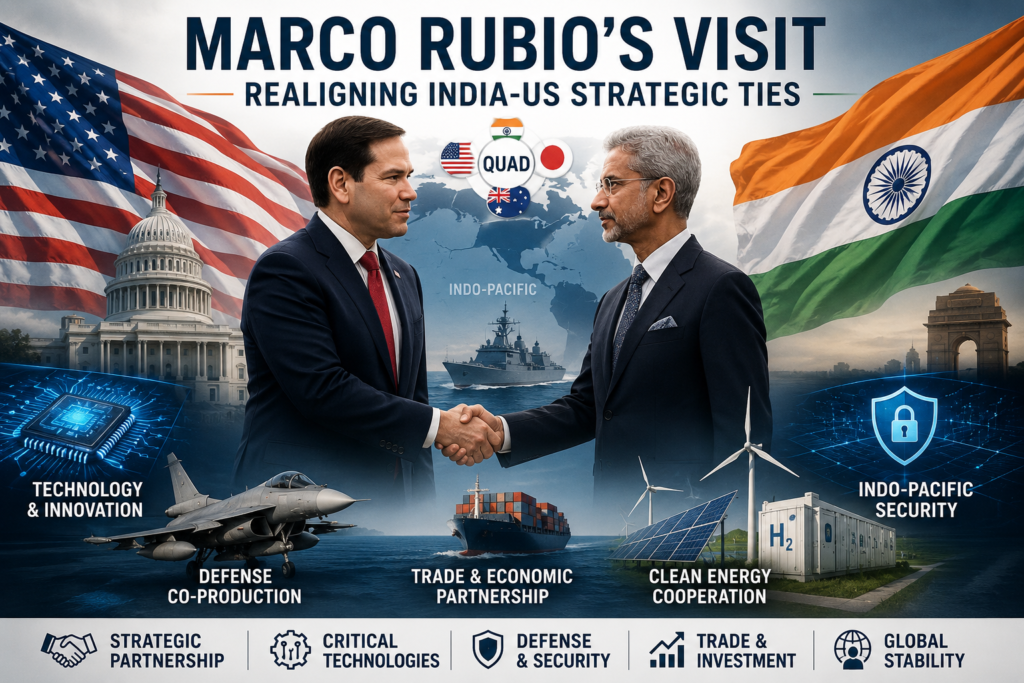
- U.S. Secretary of State Marco Rubio’s arrival in India for an extensive diplomatic visit marks a pivotal phase in India-US relations.
- The visit prioritizes stabilizing bilateral points of friction, accelerating co-development under the Initiative on Critical and Emerging Technology (iCET), and coordinating strategic postures ahead of the upcoming Quad Foreign Ministers’ meet.
Main Body: Multi-Dimensional Analysis
- Geopolitical & Security Dimension:
- The visit underscores the shared focus on a free, open, and rules-based Indo-Pacific, specifically countering assertive maritime maneuvers in the South China Sea and Indian Ocean Region.
- Strengthening the Quad framework during this visit projects a united front, enhancing maritime domain awareness (MDA) and undersea warfare collaboration.
- Technology & Defense Dimension:
- The focus is moving beyond simple buyer-seller defense dynamics toward joint development and technology transfers.
- Cooperation under iCET—focusing on semiconductor supply chains, defense innovation (INDUS-X), artificial intelligence, and space exploration—is cementing an institutional interdependence that outlasts changing political administrations.
- Economic & Energy Friction Points:
- Bilateral trade tensions continue over intellectual property rights (IPR), market access barriers for agricultural goods, and visa regulations for Indian IT professionals.
- Furthermore, Washington’s focus on decoupling global supply chains from geopolitical adversaries contrasts with New Delhi’s pragmatic requirement to maintain strategic autonomy, including complex energy imports from sanctioned nations.
- Global Governance & Strategic Autonomy:
- While the US views India as a critical global counterweight, India guards its strategic autonomy, prioritizing independent relationships with the Global South and Eurasian powers.
- Bridging this conceptual gap requires the relationship to operate on mutual interest convergence rather than strict treaty alliances.
Comparative Evaluation
| Positives | Negatives | Relevant Government Schemes |
| • Accelerated co-production of critical military platforms (e.g., GE jet engines). • Enhanced commercial alignment through semiconductor supply chain partnerships. | • Diplomatic friction over trade protections and immigration regulations. • Divergent approaches toward localized geopolitical crises in Eurasia. | • Make in India: Fostering defense manufacturing partnerships. • India Semiconductor Mission (ISM): Capitalizing on Western supply chain diversification. |
Examples
- GE-F414 Engine Agreement: The pathbreaking technology transfer deal to manufacture fighter jet engines locally in India via HAL.
- Supply Chain Diversification: Global technology giants expanding production hubs across southern India, actively operationalizing the “friend-shoring” concept.
Way Forward
- Resolve Trade Irritants: Institutionalize a dedicated, fast-track dispute settlement mechanism under the Trade Policy Forum (TPF) to handle tariff issues.
- Operationalize Defense Co-Production: Accelerate pending clearances for joint projects under INDUS-X, ensuring small and medium defense start-ups receive cross-border funding.
- Expand Energy Cooperation: Launch a joint Clean Energy and Climate Action work plan focusing on next-generation battery storage systems and green hydrogen tech.
- Strengthen Institutional Minilaterals: Leverage the Quad to provide tangible public goods—such as secure subsea cables and vaccine logistics—across the wider Indo-Pacific to counter alternative influence.
Conclusion
Marco Rubio’s visit shows that the India-US partnership is shifting from a relationship defined by shared values to one anchored in hard strategic utility. By managing bilateral trade friction while building deep technology linkages, both nations can maintain a stable, institutional balance of power across the Indo-Pacific.
Practice Mains Question
Q. While the India-US strategic partnership is frequently termed a ‘defining alliance of the 21st century,’ it remains susceptible to divergent economic priorities and differing interpretations of strategic autonomy. Critically analyze. (15 Marks, 250 Words)
Topic 4: India-Norway Green Strategic Partnership and Arctic Geopolitics
Syllabus
- GS Paper II: Bilateral, regional and global groupings and agreements involving India and/or affecting India’s interests. Effect of policies and politics of developed and developing countries on India’s interests.
Context
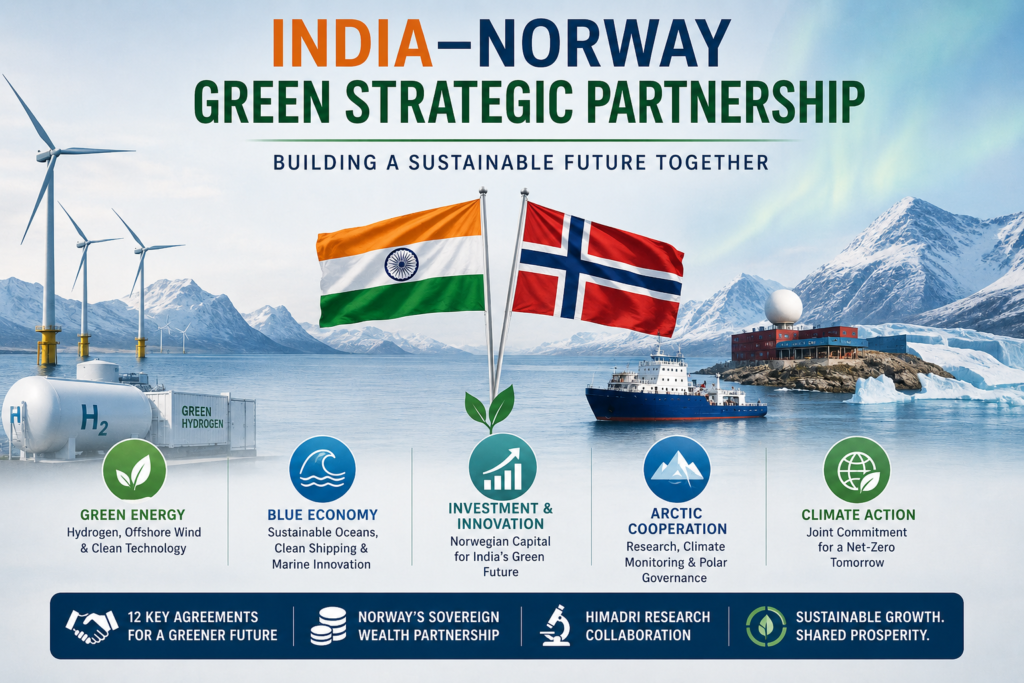
- Prime Minister Narendra Modi was conferred the Royal Norwegian Order of Merit Grand Cross by King Harald V in Oslo during a multi-nation European tour.
- The visit officially elevated bilateral relations to a “Green Strategic Partnership,” yielding 12 core agreements focused on blue economy initiatives, renewable energy technology, and sustainable infrastructure development.
Main Body: Multi-Dimensional Analysis
- Environmental & Climate Dimension:
- The Green Strategic Partnership positions Norway’s advanced green tech alongside India’s massive scale, creating a pipeline for hydrogen energy, carbon capture and storage (CCS), and offshore wind development.
- Cooperation helps accelerate India’s commitment to achieving net-zero emissions by 2070, particularly by decarbonizing heavy maritime transport and industrial manufacturing.
- Economic & Sovereign Wealth Dimension:
- Norway’s Government Pension Fund Global (the world’s largest sovereign wealth fund) holds massive investment potential for India’s green bond market and physical infrastructure.
- The 12 agreements establish a simplified regulatory fast-track for Nordic investments into India’s National Investment and Infrastructure Fund (NIIF), reducing capital acquisition timelines for greenfield projects.
- Geopolitical & Arctic Dimension:
- Norway plays a central role in the Arctic Council. Deepening this relationship strengthens India’s scientific footprint in the Arctic region (centered at the Himadri research station).
- As climate change opens new Arctic shipping routes, India’s strategic partnership ensures a seat at the table regarding global polar governance and resource exploration, counterbalancing aggressive moves by other non-Arctic states.
- Maritime & Blue Economy Dimension:
- Norway’s expertise in deep-sea technology, sustainable aquaculture, and marine spatial planning aligns directly with India’s maritime modernization ambitions.
- Joint initiatives target marine plastic pollution and clean shipping corridors along India’s 7,500-km coastline, combining ecology with coastal economic growth.
Comparative Evaluation
| Positives | Negatives | Relevant Government Schemes |
| • Secures high-end technology transfers for offshore wind and green hydrogen production. • Opens a massive avenue for low-cost Nordic institutional capital into domestic markets. | • High regulatory and tax barriers in India continue to delay Nordic project execution. • Differing domestic priorities regarding commercial exploitation vs. absolute preservation of Arctic resources. | • Deep Ocean Mission: Exploring deep-sea resources and marine biodiversity. • National Green Hydrogen Mission: Scaling green hydrogen production and exports. |
Examples
- The Himadri Station Expansion: Upgrading India’s Arctic research facility in Svalbard with Norwegian technological assistance for real-time climate monitoring.
- Gujarat Offshore Wind Project: A joint pilot framework modeling large-scale offshore wind turbines using Norwegian deep-water anchorage engineering.
Way Forward
- Establish a Joint Green Hydrogen Taskforce: Standardize regulatory and certification frameworks to facilitate smooth cross-border green hydrogen trade.
- Deeper Integration with the Arctic Council: Leverage Norway’s diplomatic backing to secure a permanent, expanded role for India in Arctic ecological and maritime policy drafting.
- Sovereign Wealth Fund Mobilization: Create specialized green infrastructure investment trusts (InvITs) tailored explicitly to match the risk-return profile required by Norway’s Pension Fund.
- Skill Development in Ocean Mechanics: Institute joint degree and research fellowships between Indian Institutes of Technology (IITs) and Norwegian universities specializing in marine engineering.
Conclusion
The elevation of India-Norway relations to a Green Strategic Partnership proves that modern diplomacy is moving past traditional defense pacts toward survival-driven ecological alliances. By matching Norway’s capital and technology with India’s implementation capacity, this partnership forms a crucial pillar of India’s green transition.
Practice Mains Question
Q. Assess the strategic significance of the newly elevated India-Norway Green Strategic Partnership. How can this alliance strengthen India’s climate commitments and its geopolitical objectives in the Arctic region? (15 Marks, 250 Words)
Topic 5: Indo-Mediterranean Connectivity and the India-Italy 2027 Alignment
Syllabus
- GS Paper II: Bilateral, regional and global groupings and agreements involving India and/or affecting India’s interests. Geopolitical dynamics of the Mediterranean and Indo-Pacific regions.
Context
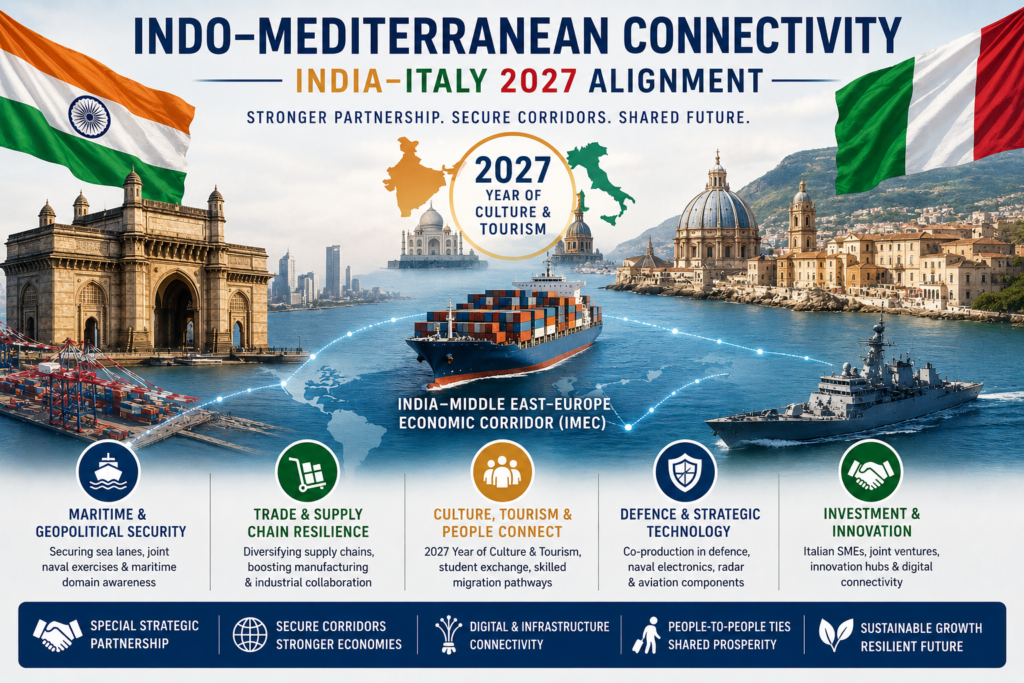
- India and Italy announced they will observe 2027 as the joint ‘Year of Culture and Tourism’ to expand their Special Strategic Partnership.
- The announcement marks a broader effort to strengthen supply chain resilience, secure critical shipping lanes in the Indo-Mediterranean corridor, and operationalize the India-Middle East-Europe Economic Corridor (IMEC) frameworks.
Main Body: Multi-Dimensional Analysis
- Geopolitical & Maritime Corridor Dimension:
- Italy serves as India’s primary gateway into Southern and Central Europe, making it a critical anchor for the IMEC initiative.
- Amid recurring disruptions in the Red Sea and Bab-el-Mandeb strait, joint naval patrolling, maritime domain awareness, and anti-piracy exercises between India and Italy are essential for securing international trade.
- Economic & Supply Chain Dimension:
- The economic relationship focuses on diversifying manufacturing supply chains away from over-reliance on single-source East Asian economies.
- Italy’s advanced manufacturing, automotive engineering, and industrial design sectors offer clear partnership opportunities for India’s expanding electronics and defense production lines.
- Soft Power & Human Migration Dimension:
- Designating 2027 as the ‘Year of Culture and Tourism’ utilizes historical linkages to build modern economic capital, boosting hospitality, aviation, and creative industries.
- This soft-power push is backed by the Migration and Mobility Partnership Agreement, creating legal, structured pathways for Indian student enrollment and skilled IT/engineering professionals in Italy.
- Defense & Strategic Tech Dimension:
- The relationship has successfully moved past past diplomatic strains, shifting toward active defense co-production in naval electronics, radar systems, and military aviation components.
- This aligns with India’s broader strategy to diversify its defense inventory away from traditional legacy suppliers toward multi-alignment with European partners.
Comparative Evaluation
| Positives | Negatives | Relevant Government Schemes |
| • Enhances India’s strategic footprint in the Mediterranean maritime theater. • Solidifies structured legal migration frameworks for skilled Indian workers. | • Geopolitical volatility in the Middle East continues to delay physical construction along IMEC lines. • Complex EU-level data adequacy regulations complicate seamless IT service exports. | • Pravasi Tejas: Skill training and placement framework for overseas Indian workers. • Make in India (Defense): Promoting indigenous assembly with European defense tech. |
Examples
- Fincantieri-Cochin Shipyard Collaboration: The joint venture between Italy’s shipbuilding giant and India’s Cochin Shipyard for high-tech naval vessel design.
- The Indo-Mediterranean Digital Corridor: Private-led initiatives laying ultra-high-speed subsea fiber optic cables connecting Mumbai directly to Palermo, Italy.
Way Forward
- Accelerate IMEC Virtual Testing: Develop digital custom protocols, unified bills of lading, and maritime data clearinghouses to simulate IMEC functionality despite physical port delays.
- Institutionalize the Mediterranean Naval Dialogue: Elevate current ad-hoc maritime exercises into a recurring, structured bilateral naval dialogue focused on the security of the wider Western Indian Ocean.
- Expand SME Co-Investment Hubs: Create dedicated industrial parks in India for Italian Small and Medium Enterprises (SMEs), particularly in food processing and precision machinery.
- Deepen Academic Research Chairs: Set up joint research hubs across universities to co-develop sustainable urban planning and heritage preservation methodologies.
Conclusion
The strategic convergence between New Delhi and Rome highlights the growing importance of the Indo-Mediterranean space. By combining the soft power of the 2027 cultural push with the hard security requirements of maritime defense and economic corridors, India and Italy are building a resilient, long-term partnership.
Practice Mains Question
Q. The Indo-Mediterranean corridor is rapidly emerging as a vital geopolitical space for India’s economic and maritime security. Discuss this transformation with special reference to the growing strategic alignment between India and Italy. (15 Marks, 250 Words)
Topic 6: The $300 Million ‘North Star’ Clean Energy Initiative
Syllabus
- GS Paper III: Infrastructure: Energy. Conservation, environmental pollution and degradation, environmental impact assessment. Growth, development, and employment.
Context
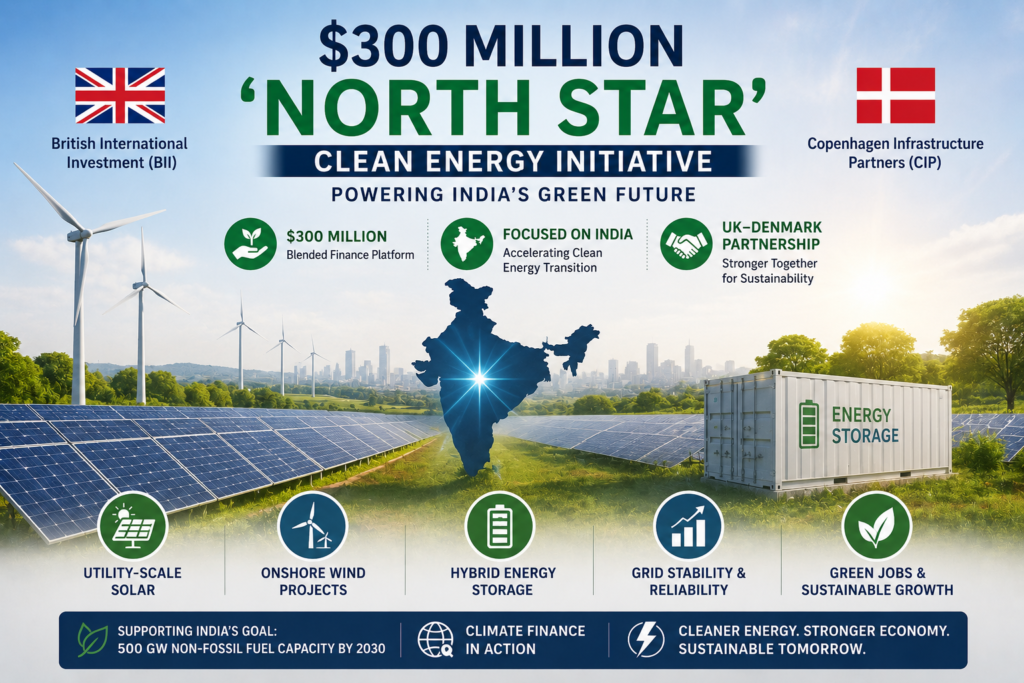
- The UK’s British International Investment (BII) and Denmark’s Copenhagen Infrastructure Partners (CIP) joined forces to launch ‘North Star’, a $300 million renewable energy investment platform focused on India.
- Announced via the Press Information Bureau, this joint initiative channels large-scale blended finance directly into India’s utility-scale solar, onshore wind, and hybrid energy storage ecosystems to accelerate India’s target of 500 GW of non-fossil fuel capacity by 2030.
Main Body: Multi-Dimensional Analysis
- Financial & Investment Dimension:
- The ‘North Star’ platform models how international development finance institutions (DFIs) can pool capital to lower risk profiles for green investments in emerging economies.
- Using a blended finance model, the platform absorbs early-stage project risks, helping crowd-in commercial private equity that typically avoids greenfield renewable projects in developing markets.
- Technology & Grid Stability Dimension:
- Adding 300 million dollars in targeted funding addresses a critical technological challenge: grid integration for variable renewable energy (VRE).
- The platform prioritizes hybrid installations (solar-wind combinations backed by Battery Energy Storage Systems), ensuring a stable power supply to the national grid and mitigating the intermittency issues common to pure solar or wind farms.
- Diplomatic & Multilateral Dimension:
- This initiative demonstrates a practical application of the India-UK 2030 Roadmap and the India-Denmark Green Strategic Partnership on a single platform.
- It moves international climate finance from abstract pledges made at COP summits to verifiable, on-the-ground capital deployment in the Global South.
- Socio-Economic & Employment Dimension:
- Building utility-scale clean energy installations creates substantial direct construction jobs and long-term asset management roles in rural, low-income districts where these plants are typically located.
- By adding clean power capacity, it supports India’s domestic manufacturing sector, helping ensure that manufacturing expansions are not tied to increased coal consumption.
Comparative Evaluation
| Positives | Negatives | Relevant Government Schemes |
| • Lowers cost of capital for high-risk hybrid renewable installations. • Brings Danish technical expertise in onshore/offshore wind integration directly to Indian developers. | • Fluctuating state-level power purchase agreements (PPAs) introduce long-term revenue risks. • Supply chain constraints on domestic solar module sourcing slow down swift deployment. | • PM-KUSUM: De-centralizing solar power generation across agricultural zones. • National Program on High-Efficiency Solar PV Modules: PLI scheme driving domestic solar manufacturing. |
Examples
- The Pavagada Solar-Wind Hybrid Expansion: Anticipated funding allocations toward retrofitting existing single-source solar parks in Karnataka with wind turbines and storage capabilities.
- BII Green Bond Issuance: BII using itsAAA-rated balance sheet to issue localized green rupee bonds, insulating Indian projects from international currency exchange shocks.
Way Forward
- Standardize Interstate Transmission Waiver Extensions: Maintain long-term transmission charge waivers for hybrid projects funded via international clean energy platforms to secure revenue predictability.
- Establish Localized Battery Storage Mandates: Tie ‘North Star’ funding rounds to local co-location of battery storage units, preventing raw power surges from destabilizing regional load dispatch centers.
- Streamline State-Level Land Acquisition: Create pre-cleared land banks for projects funded by international consortia to minimize early-stage project delays.
- Deepen Technical Knowledge Transfers: Form a dedicated CIP-India technical secretariat to train state utility engineers on advanced predictive algorithms for wind and solar generation forecasting.
Conclusion
The launch of the ‘North Star’ platform marks a shift toward highly practical international climate financing. By building robust hybrid systems and using structured blended finance, it provides a replicable blueprint for fueling India’s industrial growth without compromising its global emission reduction commitments.
Practice Mains Question
Q. International blended finance mechanisms are critical to bridging the funding gap in the Global South’s transition to clean energy. Evaluate this statement in the context of the newly launched ‘North Star’ clean energy platform in India. (15 Marks, 250 Words)
Topic 7: India Hosts the 68th APO Governing Body Meeting
Syllabus
- GS Paper II: Important International institutions, agencies and fora – their structure, mandate. Bilateral, regional and global groupings and agreements involving India and/or affecting India’s interests.
- GS Paper III: Indian Economy and issues relating to planning, mobilization, of resources, growth, development and employment.
Context
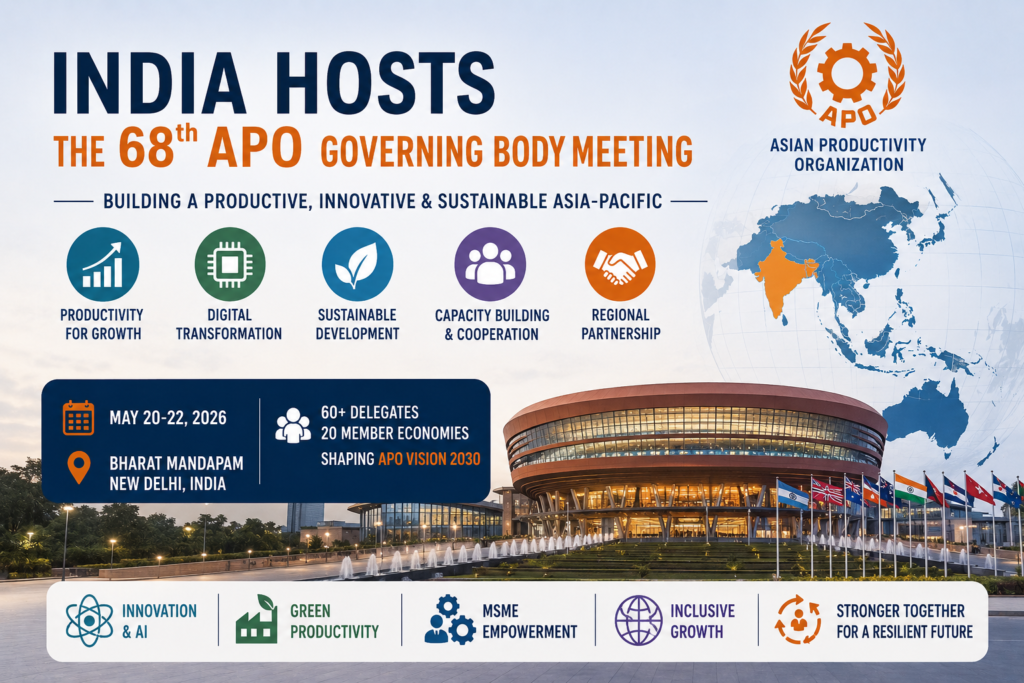
- India, currently chairing the Asian Productivity Organization (APO), hosted the 68th Governing Body Meeting (GBM) at Bharat Mandapam in New Delhi from May 20-22, 2026.
- Attended by over 60 delegates from 20 member economies, the session focused on implementing the “APO Vision 2030” framework, emphasizing innovation, sustainable development, and digital transformation to drive productivity-led economic growth across the Asia-Pacific region.
Main Body: Multi-Dimensional Analysis
- Economic & Productivity Dimension:
- The core theme of the meeting highlighted that modern productivity extends far beyond traditional manufacturing efficiency; it now encompasses resilience, digital inclusion, and equitable growth.
- By reviewing the APO Vision 2030, member nations are aligning their economic strategies to escape the middle-income trap, leveraging shared knowledge in process optimization and advanced automation.
- Technological & Digital Dimension:
- A significant portion of the deliberations centered on the role of Artificial Intelligence (AI) and digital transformation in scaling operations for Micro, Small and Medium Enterprises (MSMEs).
- India positioned its indigenous digital public infrastructure (DPI) and startup ecosystem as replicable models for other member nations, advocating for technology as a democratizing force rather than an exclusionary tool.
- Governance & Institutional Reforms:
- The session addressed internal governance frameworks, pushing for structural reforms within the APO Secretariat to enhance operational efficiency and financial transparency for the 2027–28 biennium budget.
- A leadership transition marked the strategic rotation of power, with Indonesia assuming the APO Chair for 2026–27, succeeding India, ensuring a diverse representation of priorities from developing economies.
- Diplomatic & Regional Cooperation Dimension:
- Hosting the GBM reinforced India’s leadership role in the Indo-Pacific, utilizing soft power through institutional capacity building and technical cooperation.
- The presence of observers from Central Asian nations (Kazakhstan, Uzbekistan) and Bhutan signals an expanding geographical footprint for productivity dialogue, aligning with India’s “Extended Neighbourhood” policy.
- Sustainability & Green Growth:
- Discussions heavily prioritized “Green Productivity,” aligning industrial output targets with climate resilience and the broader United Nations Sustainable Development Goals (SDGs).
- Collaborating with entities like the Global Green Growth Institute ensures that future manufacturing models minimize carbon footprints, crucial for a region highly vulnerable to climate change.
Comparative Evaluation
| Positives | Negatives | Relevant Government Schemes |
| • Facilitates vital knowledge-sharing and capacity building among Asia-Pacific economies. • Strengthens India’s institutional soft power and regional economic leadership. | • Differing levels of technological readiness among member states complicate uniform policy implementation. • Non-binding nature of APO recommendations limits strict enforcement. | • Make in India: Aligning domestic manufacturing with global productivity standards. • Digital India: Expanding digital literacy and DPI for MSME efficiency. |
Examples
- Digital Transformation Models: India showcasing the success of the Open Network for Digital Commerce (ONDC) to APO delegates as a tool for democratizing retail productivity.
- APO National Awards: Recognizing technical experts and advocates, such as leaders from the National Productivity Council (NPC) of India, who have successfully implemented energy-efficient manufacturing processes in the chemical sector.
Way Forward
- Establish Regional AI Frameworks: Develop standardized, open-source AI productivity tools specifically tailored for the MSME sector across APO member economies.
- Enhance Green Certification Integration: Harmonize “Green Productivity” certifications among member nations to streamline intra-regional trade of sustainably manufactured goods.
- Cross-Border Skill Mobility: Create an APO-backed skill accreditation system to facilitate the seamless movement of technical experts and certified labor across the Asia-Pacific.
- Deepen Central Asian Engagement: Transition observer nations like Uzbekistan and Kazakhstan into full members to integrate landlocked, resource-rich markets into broader Asian supply chains.
Conclusion
Hosting the 68th APO Governing Body Meeting allowed India to transition from a participant to a central architect of regional economic policy. By championing “APO Vision 2030,” India is actively shaping a future where productivity is inextricably linked to technological inclusion, environmental sustainability, and collaborative resilience across the Asia-Pacific.
Practice Mains Question
Q. The concept of ‘productivity’ in the 21st century has evolved from mere industrial efficiency to encompass digital inclusion and sustainability. In this context, analyze the role of the Asian Productivity Organization (APO) and India’s leadership in fostering resilient economic growth in the Asia-Pacific region. (15 Marks, 250 Words)
Topic 8: Successful Testing of Vayu Astra-1 Loitering Munition
Syllabus
- GS Paper III: Science and Technology – developments and their applications and effects in everyday life. Indigenization of technology and developing new technology. Security challenges and their management in border areas.
Context
- Pune-based private defense firm Nibe Limited successfully completed No-Cost, No-Commitment (NCNC) technical trials of its indigenous loitering munition system, Vayu Astra-1.
- The trials were conducted across diverse terrains—demonstrating a 100-km strike range in the Pokhran desert (Rajasthan) and high-altitude endurance over 14,000 feet in Joshimath (Uttarakhand)—marking a major leap in India’s precision-guided indigenous weapon capabilities.

Main Body: Multi-Dimensional Analysis
- Technological & Operational Dimension:
- Loitering munitions (often termed “kamikaze drones”) bridge the gap between cruise missiles and unmanned aerial combat vehicles (UCAVs). They can orbit a target area, search for threats, and execute precision strikes.
- Vayu Astra-1 demonstrated advanced features: a Circular Error Probable (CEP) of less than one meter, night-strike capability using IR cameras, and the critical ability to abort an attack and re-engage, minimizing collateral damage.
- Strategic & Battlefield Flexibility Dimension:
- The successful transfer of operational control from a Ground Control Station (GCS) to a Forward Control Station (FCS) 70 km away drastically enhances frontline command flexibility and operator survivability.
- With a 10 kg warhead—significantly larger than standard anti-tank missiles—it provides theater commanders with a versatile asset capable of destroying heavy armor, fortified bunkers, or troop concentrations up to 100 km behind enemy lines.
- Indigenization & Defense Manufacturing:
- Developed based on advanced Israeli technology but adapted for Indian conditions, the system highlights the success of the “Make in India” initiative in absorbing foreign technology and scaling it through the domestic private sector.
- The rapid execution of these trials following emergency procurement RFPs demonstrates an increasingly agile defense acquisition ecosystem that leverages private-sector efficiency.
- Terrain-Specific Warfare Dimension:
- The dual-environment testing is highly relevant to India’s unique border challenges. The 90-minute endurance flight at altitudes exceeding 14,000 feet in Malari proves its viability against high-altitude adversaries along the Line of Actual Control (LAC).
- The ability to recover the drone via parachute if no target is engaged provides a massive cost advantage over traditional single-use artillery or missiles.
Comparative Evaluation
| Positives | Negatives | Relevant Government Schemes |
| • Provides low-cost, high-precision deep strike capability without risking manned aircraft. • Enhances private sector integration into critical defense R&D. | • Susceptibility to advanced electronic warfare (EW) and GPS jamming in heavily contested airspace. • Dependency on foreign (Israeli) foundational technology for core components. | • iDEX (Innovations for Defence Excellence): Fostering innovation in deep-tech defense startups. • Make in India (Defence): Phased indigenization of military hardware. |
Examples
- Night Anti-Armour Strike: The system successfully engaged simulated tank formations in complete darkness at Pokhran using thermal/IR targeting, proving its 24/7 combat readiness.
- High-Altitude Recovery: Demonstrating sustainable logistics in Joshimath by recovering an unexploded Vayu Astra-1 via its built-in parachute system after a 90-minute surveillance patrol.
Way Forward
- Harden Electronic Countermeasures (ECM): Accelerate R&D to equip loitering munitions with anti-jamming navigation systems (like NAVIC integration) to ensure operability in heavy electronic warfare environments.
- Swarm Integration: Develop networked communication protocols allowing multiple Vayu Astra units to operate autonomously as a swarm to overwhelm enemy air defense systems.
- Boost Local Supply Chains: Incentivize domestic production of high-grade composite materials and IR sensors to reduce reliance on imported sub-components for mass manufacturing.
- Standardize Tri-Service Procurement: Establish a unified procurement doctrine for loitering munitions across the Army, Navy, and Air Force to achieve economies of scale and interoperability.
Conclusion
The successful validation of the Vayu Astra-1 loitering munition signifies a paradigm shift in India’s tactical strike capabilities. By marrying private sector innovation with specialized military requirements across extreme terrains, India is effectively neutralizing asymmetric border threats while advancing its goal of total defense self-reliance.
Practice Mains Question
Q. Loitering munitions are fundamentally altering the dynamics of modern tactical warfare. Discuss the strategic significance of indigenous systems like the ‘Vayu Astra-1’ in enhancing India’s border security and advancing defense indigenization. (15 Marks, 250 Words)
